

Top In-the-Moment Research Platforms for Real-Time Consumer Insights

Ever asked someone how they felt about an experience a few days later and gotten a slightly different story? Memory softens emotion and fills in the gaps. That’s why more teams are moving their questions closer to the moment itself.
Plenty of platforms can help, but they come from different corners of the market. Some are built for qualitative research and mobile ethnography, while others are customer experience (CX) tools designed for always-on listening and service recovery.
This guide walks through seven options so you can match the tool to the job. For the full methodology, see our guide to in-the-moment research.
How to find the best in-the-moment research platform
In-the-moment research is really a timing strategy. You capture feedback while an experience is happening, or close enough that the details are still fresh.
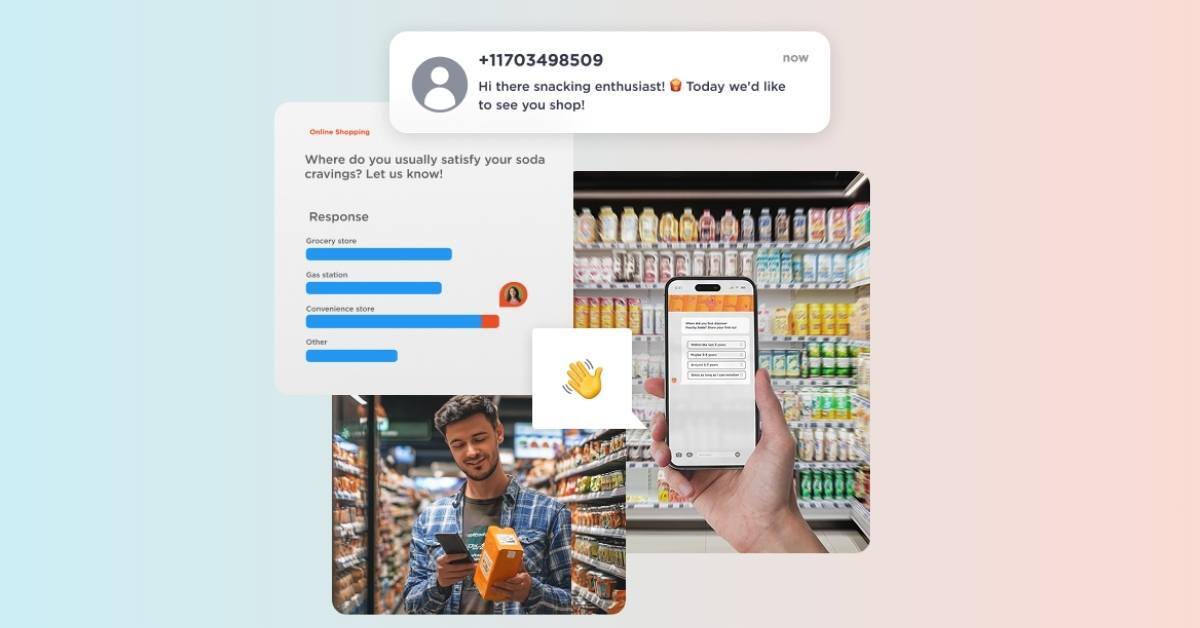
Most studies take one of two shapes. In a mission-based study, you recruit people ahead of time and ask them to complete a task. In an intercept study, you invite people who are already in the experience through a QR code, link or prompt.
Whichever you pick, these capabilities make the biggest difference:
- Mobile-first participation through SMS, QR codes or app notifications
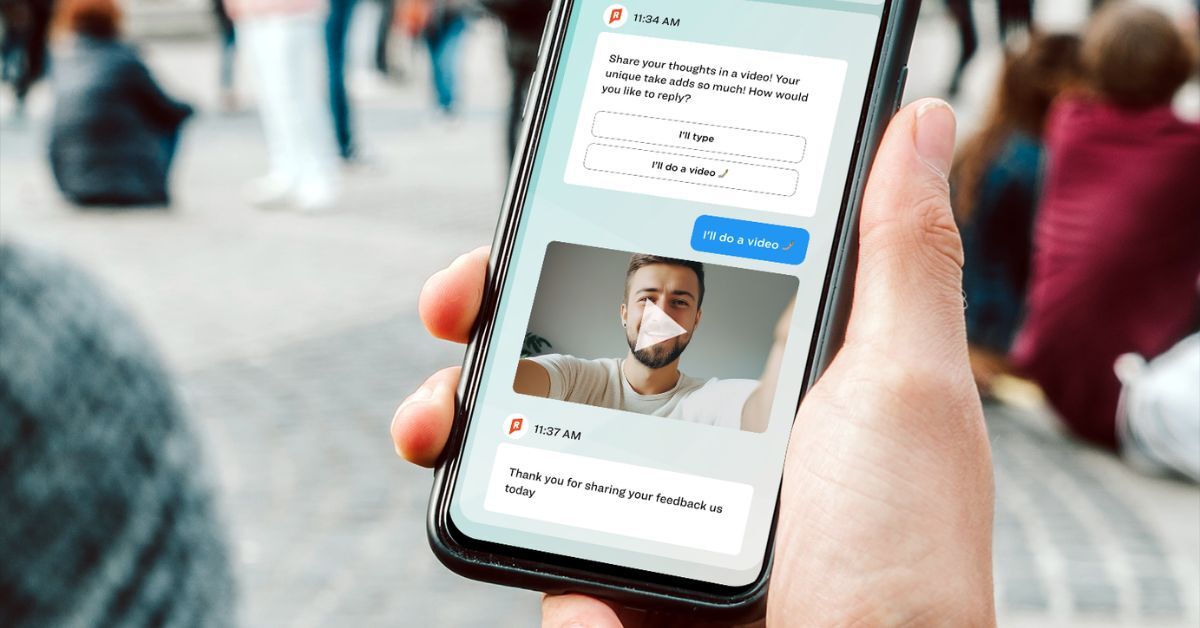
- Context capture with photo, video and open-ended responses, not just scores
- Follow-up probing that responds to what someone actually said
- Recontact, so you can compare the immediate reaction with memory and behavior later
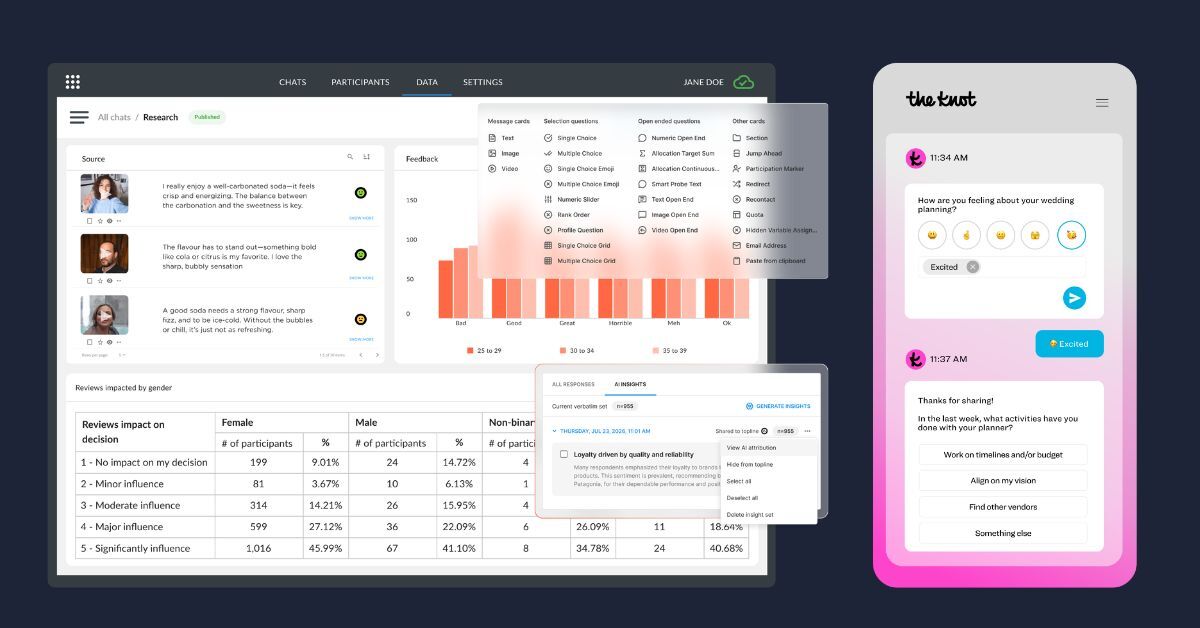
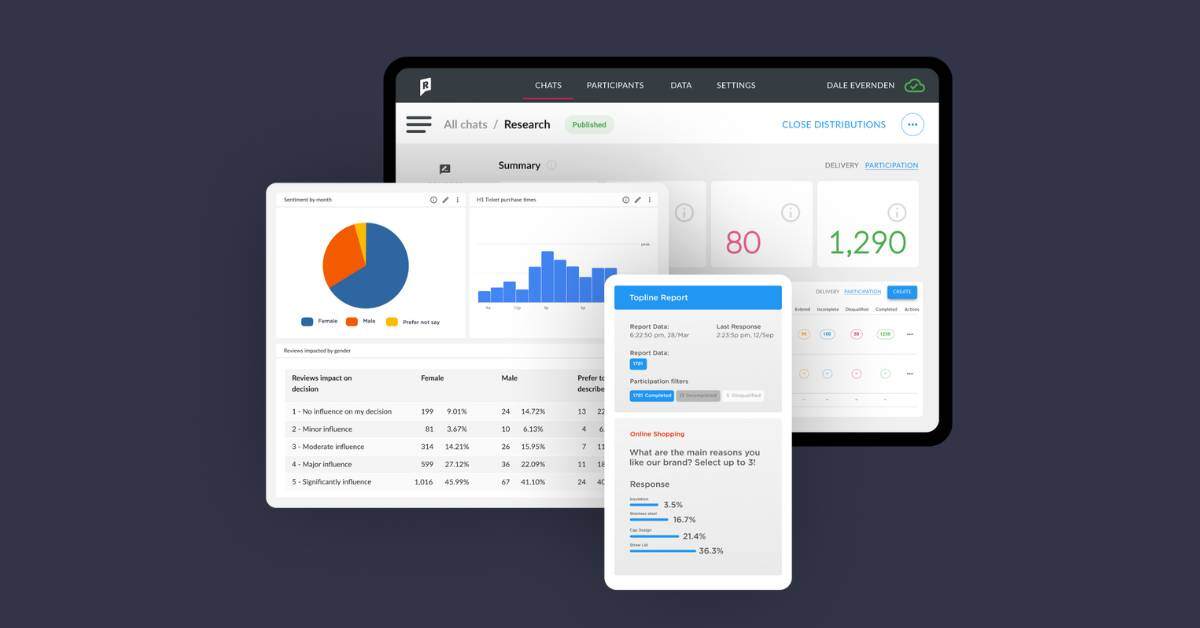
- Speed to action, through dashboards, alerts or rapid toplines
You rarely need all five. The more emotion, context or sequence matters to your question, the more they count. If you want to widen your shortlist, Insight Platforms keeps a handy list of tools for mobile ethnography.
Top Platforms for In-the-Moment Research
Rival Technologies
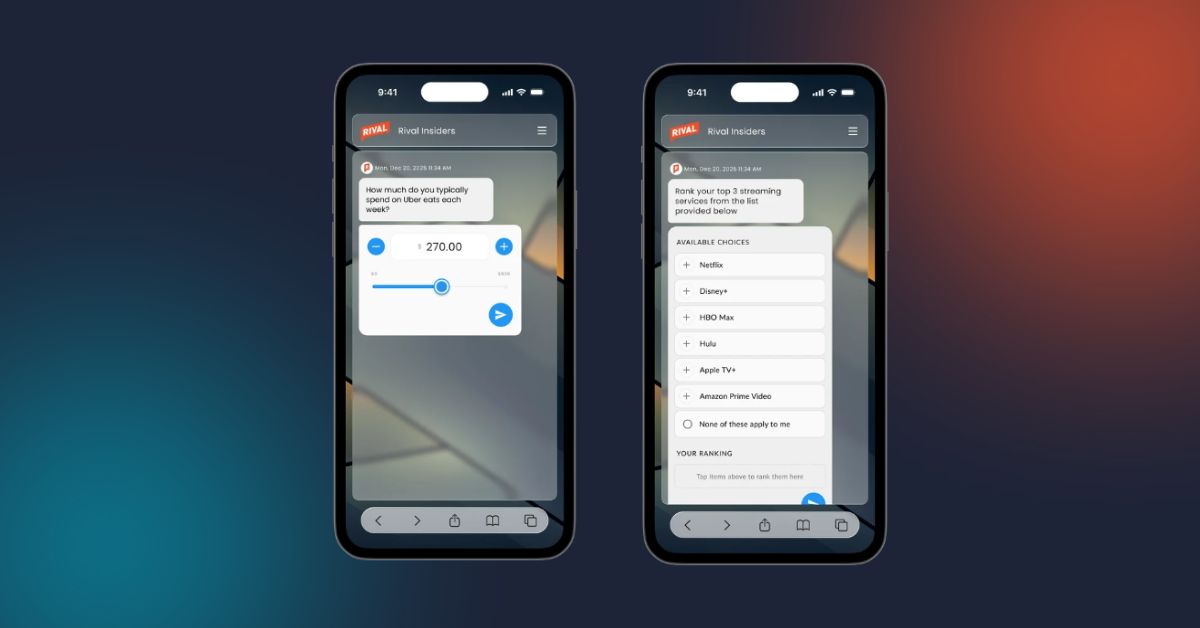
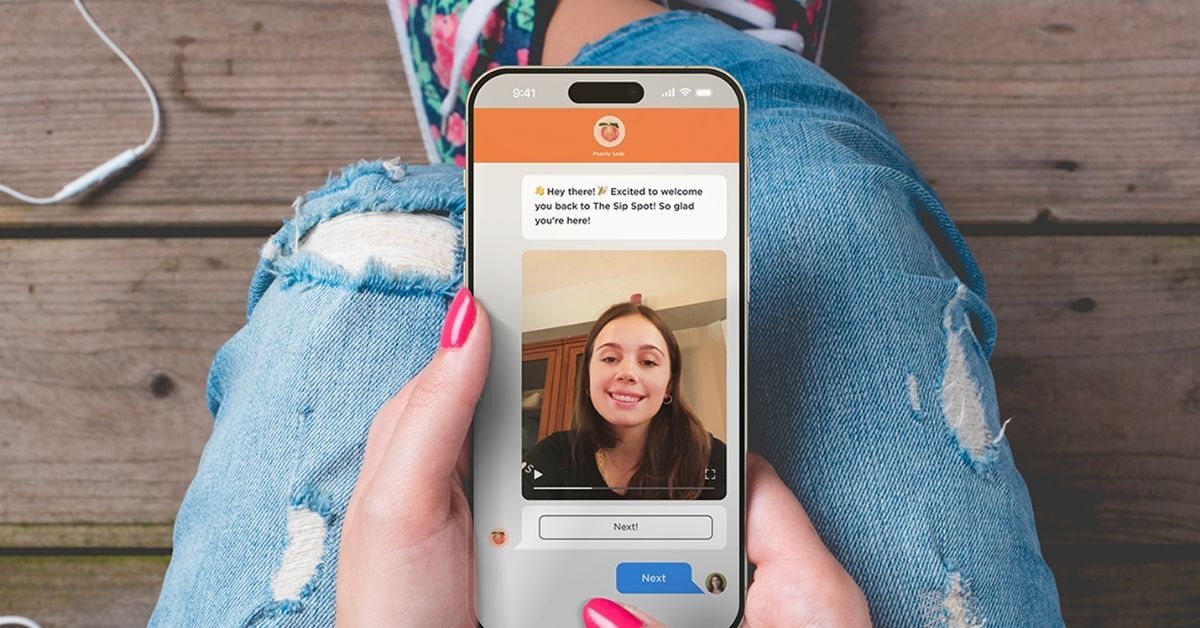
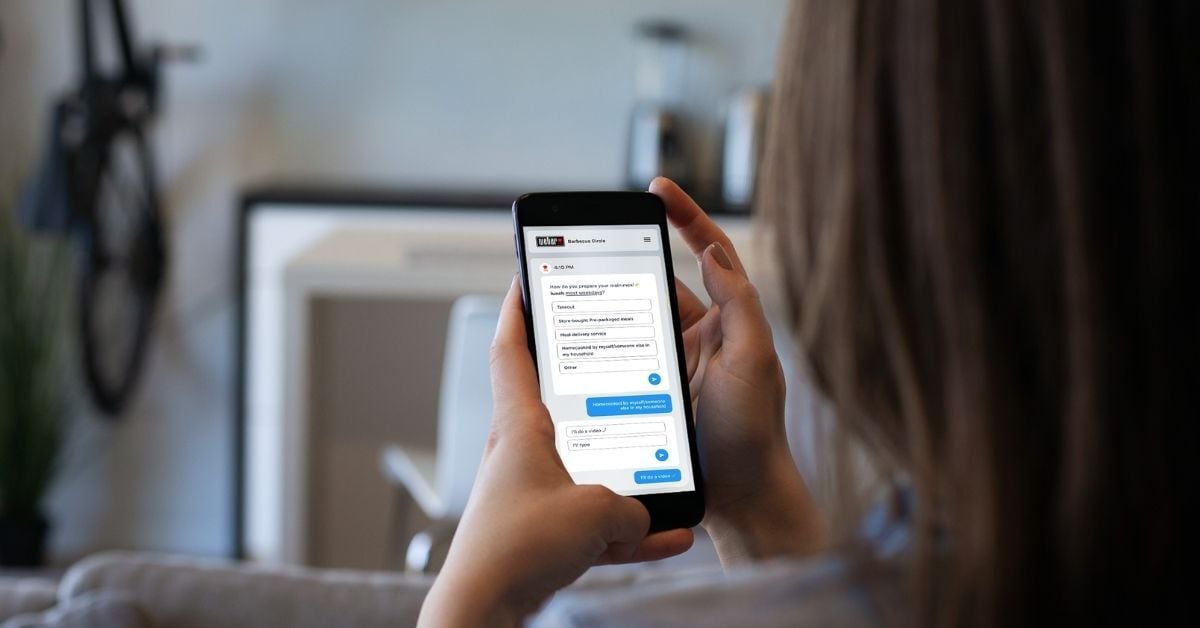
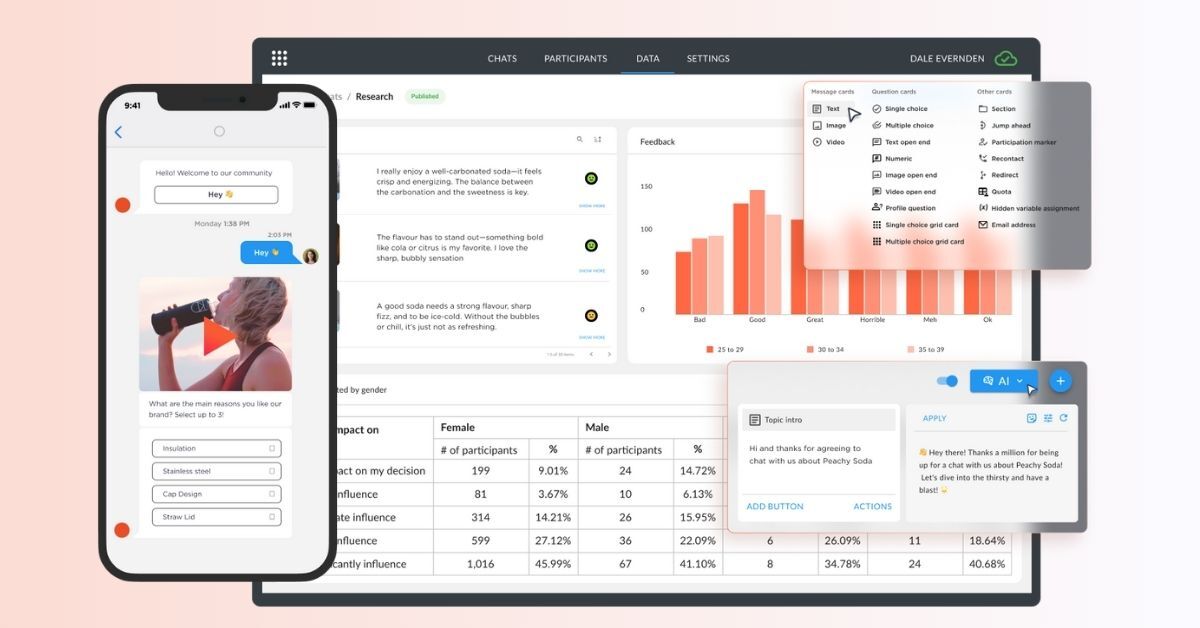
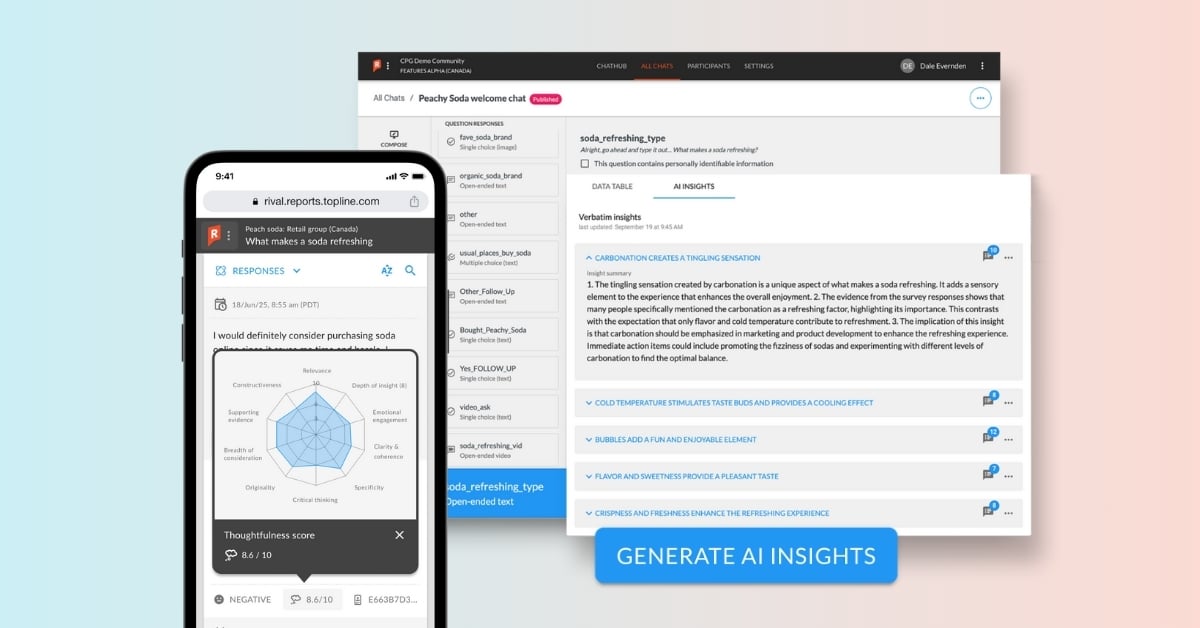
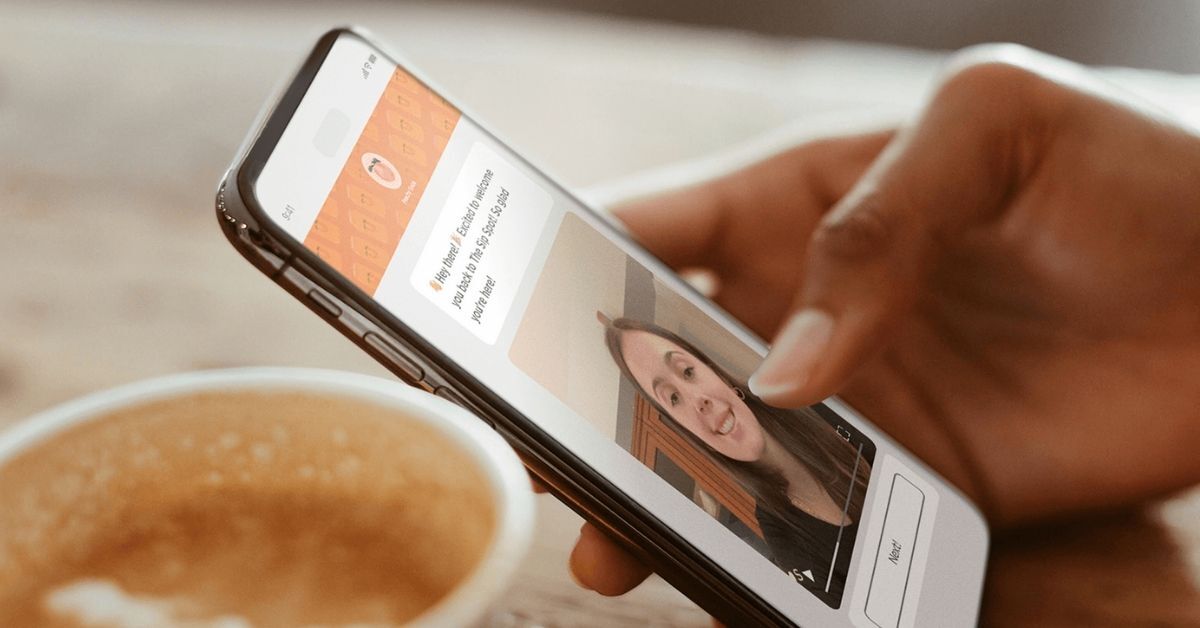
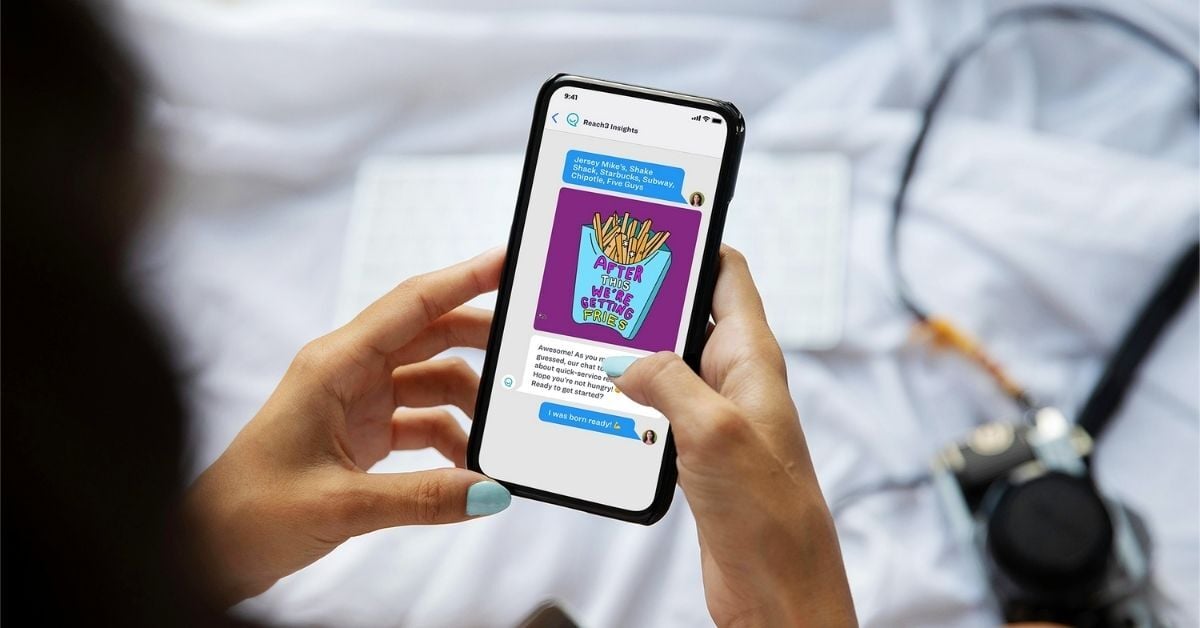
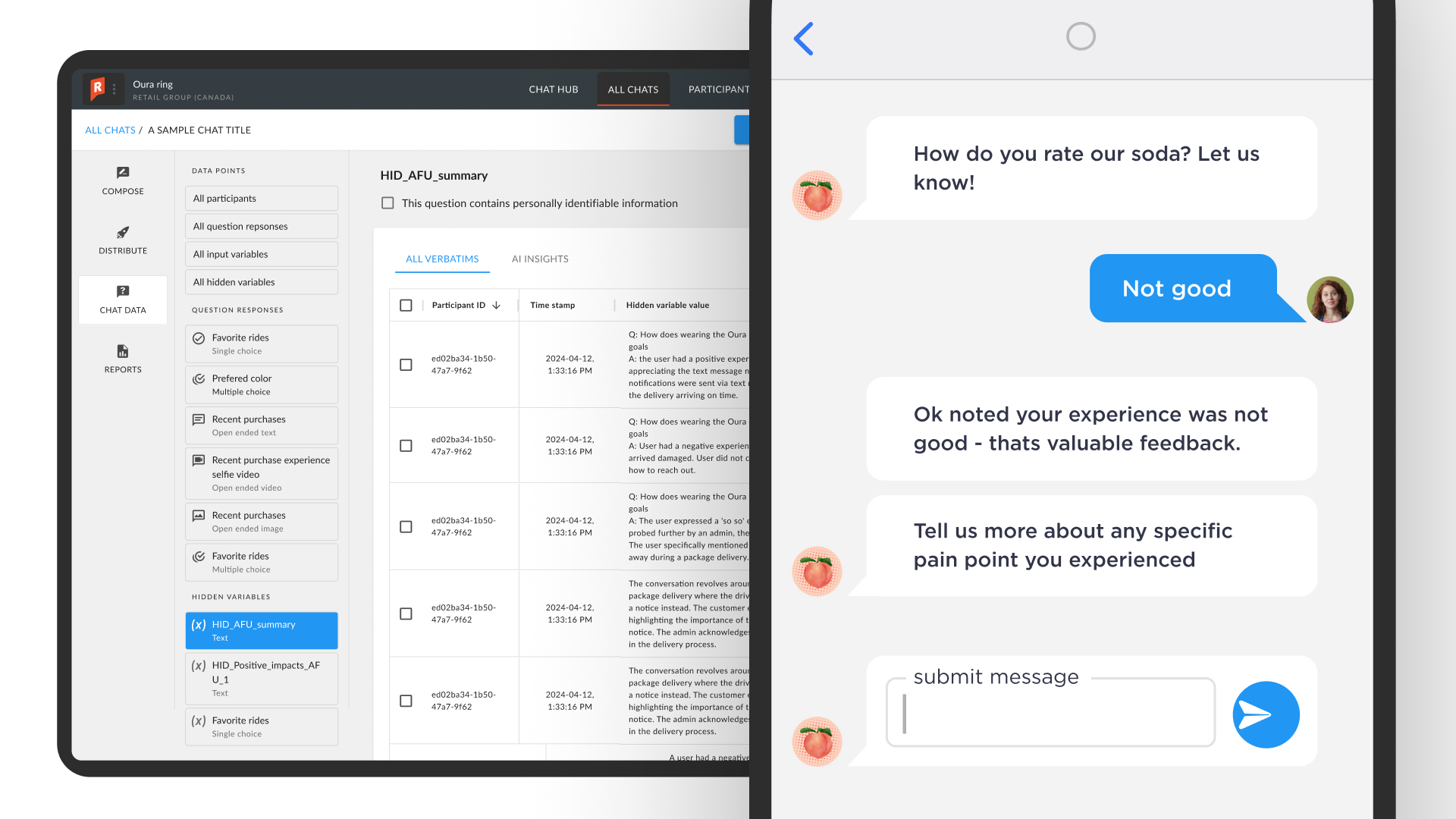
Rival Technologies is a conversational, mobile-first research platform built for agile, self-serve studies. Participants answer in a chat-style format on their phones, so responding feels more like texting than filling out a survey. You can bring your own participants or use Rival Audiences for on-demand sample.
Insight Platforms includes Rival in its top tools for mobile ethnography. On G2, reviewers rate it 4.6 out of 5 and often mention the intuitive interface and responsive support.
Why teams consider Rival Technologies for in-the-moment work:
- A conversational format that keeps people engaged. Rival studies typically see 60%+ response and 80%+ completion rates. In research with more than 2,000 people in the U.S. and Canada, conversational studies reached 87% completion and video responses up to 8x longer than text open ends.
- Works for both missions and intercepts. Red Lobster used table QR codes to collect 10,444+ completed surveys at a 64% completion rate. In a World Cup study from Angus Reid, a Rival Group company, fans surveyed by SMS during the match reported different emotions than fans asked three days later.
- Probing, recontact and triggers in one place. Smart Probe asks relevant follow-ups without turning a live activity into a long interview, and recontact rates in the benchmark study topped 65%. APIs can also start a conversation automatically after an event like a purchase.
Get high-quality real-time insights using Rival
book a demodscout
dscout is an experience research platform best known for mobile “missions,” where participants capture video, photos and text as they go about their day. It also supports diary studies, live interviews and unmoderated tasks, which is why UX and product teams like it. On G2, it holds 4.5 out of 5 across 184 reviews.
Why teams consider dscout:
- Video-first mission design. Participants show what they’re doing and thinking in context, which suits product and UX questions.
- Recruiting built in. G2 reviewers say it’s quick to set up a study and start collecting responses.
- Strong support. Helpful customer support is the most frequently praised theme in G2 reviews.
Worth noting: G2 reviewers also mention limits in analysis, tagging and export tools, narrower international coverage, and cost.
Indeemo
Indeemo is a smartphone app for mobile ethnography and diary studies. Insight Platforms describes it as a hybrid of managed service and DIY, used for quick, contextual feedback. It holds 4.7 out of 5 across 68 reviews on G2.
Why teams consider Indeemo:
- Built around ethnography. Participants capture video, images and screen recordings in everyday settings, from home to the store aisle.
- Flexible service model. You can run studies yourself or lean on the team for support.
- Strong review scores. Its G2 rating is the highest in this group.
Worth noting: Indeemo is designed around qualitative video and diary capture. If you also need large-sample quantitative measurement, you may want to pair it with another tool like Rival Technologies.
Recollective
Recollective is an online qualitative platform that covers diaries, insight communities and in-the-moment research. Its mobile missions and shop-alongs capture reactions and decisions as they happen, and AI transcripts, summaries and automatic translation help with multilingual work. Insight Platforms also lists it in its mobile ethnography roundup.
Why teams consider Recollective:
- Many methods in one place. Missions, diaries, forums and interviews can live in the same project.
- Multilingual support. Automatic translation cuts down on the work of global studies.
- Friendly reviewer sentiment. G2 reviewers give it 4.5 out of 5 across 19 reviews and call it easy to use.
Worth noting: The review base is small. Individual reviewers mention cost, trouble uploading data from other platforms, and a wish for more quantitative output from video.
Medallia
Medallia is an enterprise experience management platform with a long track record in customer feedback programs. Its in-the-moment toolkit includes QR codes, SMS short codes, in-app surveys and messaging channels like WhatsApp. On G2, the Customer Experience product holds 4.5 out of 5 across about 210 reviews.
Why teams consider Medallia:
- Lots of ways to capture feedback. Teams can reach customers on web, in-app, SMS and on-site touchpoints.
- Real-time alerts and closed-loop follow-up. Employees can respond to a customer issue while the visit or interaction is still fresh.
- Enterprise scale. About two-thirds of G2 reviewers come from enterprise organizations.
Worth noting: G2 reviewers mention a learning curve and reporting limitations. Medallia is built around ongoing CX programs, so it suits continuous listening more than one-off research studies.
InMoment
InMoment offers its Experience Improvement (XI) Platform for CX programs that combine surveys, reviews and analytics. It supports invitations by link, email and QR code, short microsurveys by SMS and in-app, and image, video and audio feedback. On G2, it holds 4.7 out of 5 across 319 reviews.
Why teams consider InMoment:
- Easy to use. G2 reviewers highlight an intuitive interface and a responsive support team.
- Quick microsurveys. Two-question surveys can go out through digital channels, with fatigue rules to avoid over-asking.
- Action built in. Case management and a mobile app help frontline teams follow up on feedback.
Worth noting: One G2 reviewer mentions that finding data for a specific time period is difficult, and another says report changes can be slow. Like Medallia, it’s designed for CX programs rather than standalone studies.
Qualtrics
Qualtrics is a broad enterprise survey and experience management platform. Teams that already use it for CX programs often extend it to feedback collected close to an interaction. G2 reviewers rate Qualtrics Strategy & Research 4.4 out of 5 across roughly 3,000 reviews.
Why teams consider Qualtrics:
- Depth of survey logic and analytics. G2 reviewers point to a comprehensive toolset for complex survey design.
- Enterprise reach. Nearly half of G2 reviewers come from enterprise organizations.
- An existing footprint. If you’re already licensed, you can start without adding a vendor.
Worth noting: G2 reviewers often cite a steep learning curve and pricing that can be high for smaller teams. A chat-style participant experience isn’t its core design. Because of pricing as well as customer support, many teams are considering top Qualtrics alternatives like Rival Technologies.
What to consider when evaluating in-the-moment market research platforms
If you're actively looking for a partner, these are some questions you might want to ask:
Are you running a study or a program? If you have a specific question to answer, like a launch, a live event or a store visit, a research platform with missions and recontact fits well. If you want continuous listening across locations and journeys, CX platforms are built for that.
What kind of moment are you capturing? If you know when the experience will happen, recruit ahead and use missions. If the experience itself is the recruiting environment, as in a restaurant or store, look for strong QR and intercept workflows.
How much depth do you need? Video-led ethnography tools are great for context. If you want hundreds or thousands of completes with open-ended and visual input, look for a platform that handles both.
Do you want to follow up later or automate? If you’ll compare reactions with memory or behavior, confirm recontact is built in. If a purchase or service issue should start the conversation, ask about APIs and CRM integrations.
How much support do you want? Some teams love self-serve, and others want a research partner. Reach3 Insights and Angus Reid are full-service options for teams that want strategic support running conversational research on the Rival platform.
FAQs about in-the-moment market research platforms
What is an in-the-moment research platform or software?
It's technology or software designed to capture feedback while an experience is happening, or soon enough afterward that people still remember the details. It reduces recall bias and often adds context through photos, video and open-ended responses.
What is Rival and how does it work?
Rival Technologies is built for this use case. Its conversational, mobile-first format supports both missions and intercepts, with Smart Probe for follow-up, built-in recontact and API connections to customer systems. Teams doing deep video ethnography may also shortlist dscout or Indeemo.
How does Rival Technologies compare to CX platforms like Medallia and InMoment?
Medallia and InMoment are built for always-on listening and closed-loop service recovery at enterprise scale. Rival Technologies is designed for research studies where context, probing and recontact matter. Some teams use both, depending on the question.
Is there a full-service option for in-the-moment research?
Yes. Reach3 Insights and Angus Reid are Rival Group’s full-service research teams. They run conversational research on the Rival platform, including live-event and experiential studies.
Can I compare in-the-moment feedback with later feedback?
Yes, if you plan for it up front. Recontact lets you ask the same participants what they remember and whether their behavior changed.
What is recall bias and how can an in-the-moment market research platform help?
Recall bias happens when people reconstruct an experience from memory instead of reporting it as it happened. Details fade, emotions soften and people fill in gaps without realizing it. You end up measuring the memory of the experience rather than the experience itself.
A World Cup study from Angus Reid, a Rival Group company, shows how big the gap can be. Fans surveyed during Canada’s opening match reported more frustration (24%) and stress (23%) than fans asked three days later (7% and 14%). Same game, but two different emotional stories.
An in-the-moment research platform helps by moving your questions closer to the experience. Participants can respond by SMS, QR code or mobile notification while they’re in the store aisle, at the event or using the product. That keeps the feedback fresh and lets you capture photos, video and open-ended comments that show what people are reacting to.
The best platforms also let you probe the “why” with short follow-up questions and recontact the same participants later. That way you can compare the immediate reaction with what people remember, and see whether perceptions or behavior changed.
You don’t need to capture everything in the moment. A good rule of thumb is to ask now for what you could lose by waiting, and ask later for what you want people to reflect on.