


Every few months, when I’m at market research conference, someone in the industry pulls me aside and says some version of the same thing:
“Conversational research sounds cool — but it’s really only good for quick, simple stuff… right?”
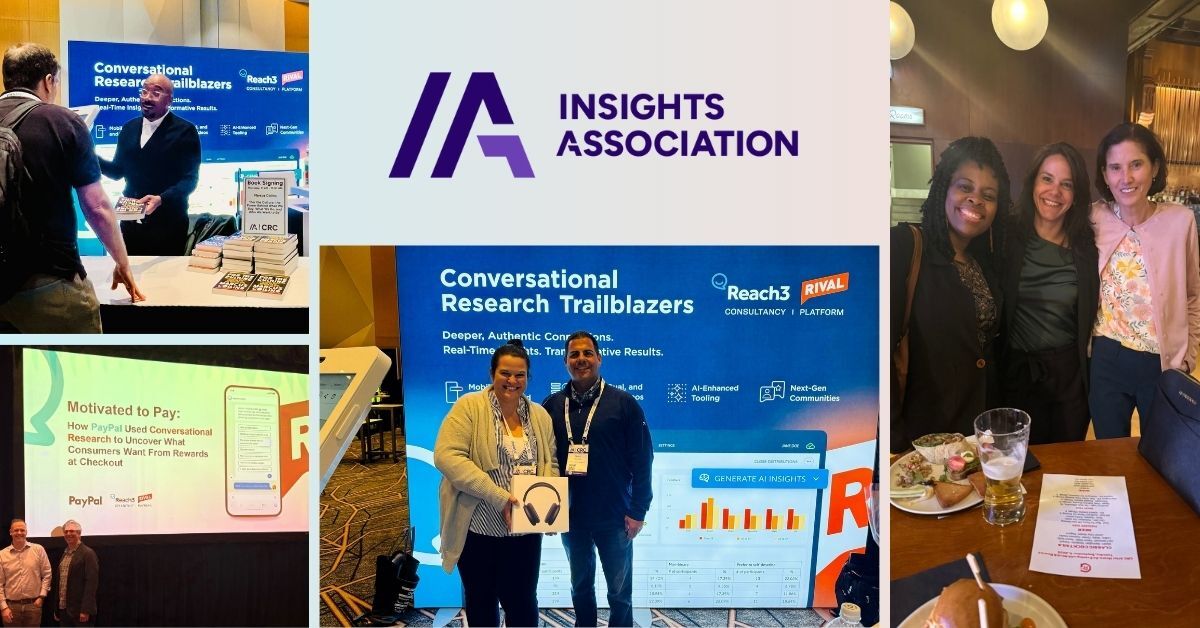
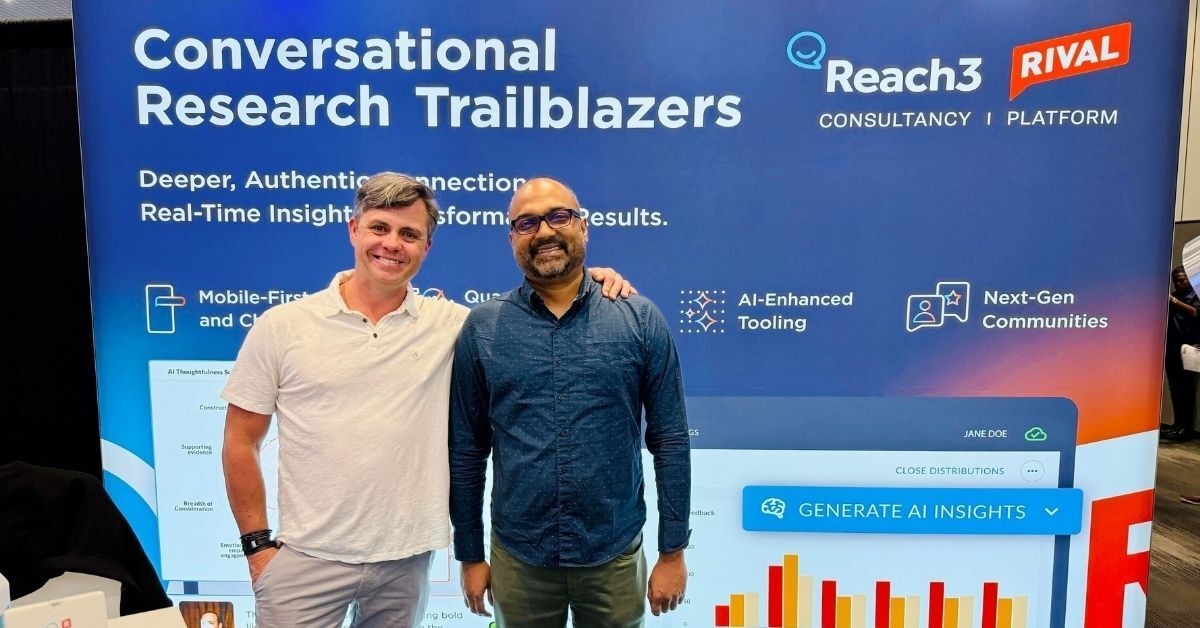
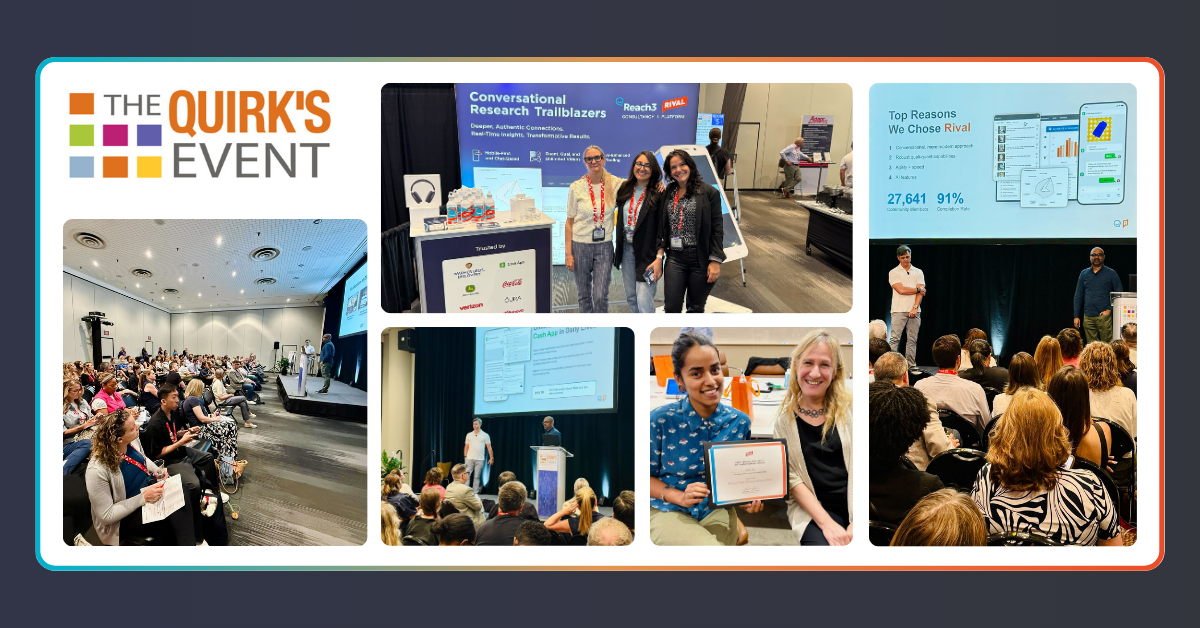
And honestly? It makes me want to gently bang my head on our booth.
Because this myth — that mobile-first, conversational approaches are lightweight, surface-level, or only suited for tactical feedback — is one of the most persistent misunderstandings in insights today. And it’s holding teams back from getting deeper, faster, more human insights.
Let’s set the record straight.
The myth: Conversational research = casual = not rigorous
The truth: Conversational = human-centered = more rigorous
Somewhere along the way, “conversational” became confused with “informal” or “unsophisticated.” As if using natural language and engaging formats somehow lowers the quality of the methodology.
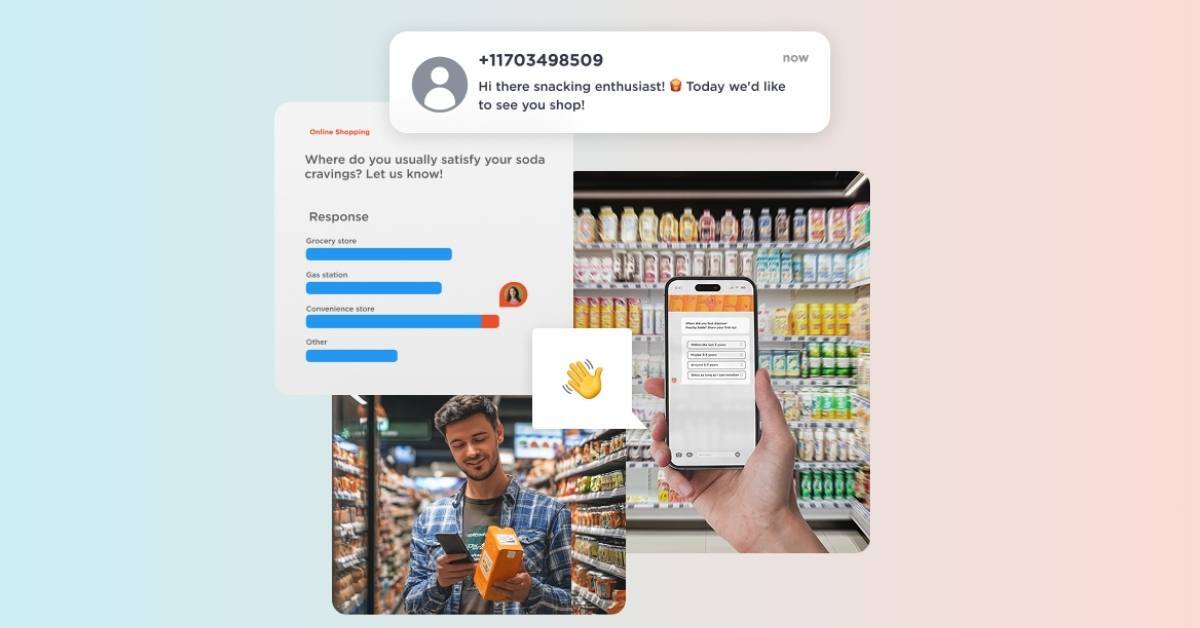
But here’s the reality: conversational research is not about being fun. It’s about being effective. It’s about using real dialogue to reduce cognitive burden on participants in a way that increases engagement and produces more meaningful insights.
And the Rival Technologies platform was purpose-built to support rigorous, enterprise-grade research — not just quick pulses or one-off intercepts (although we can facilitate those too).
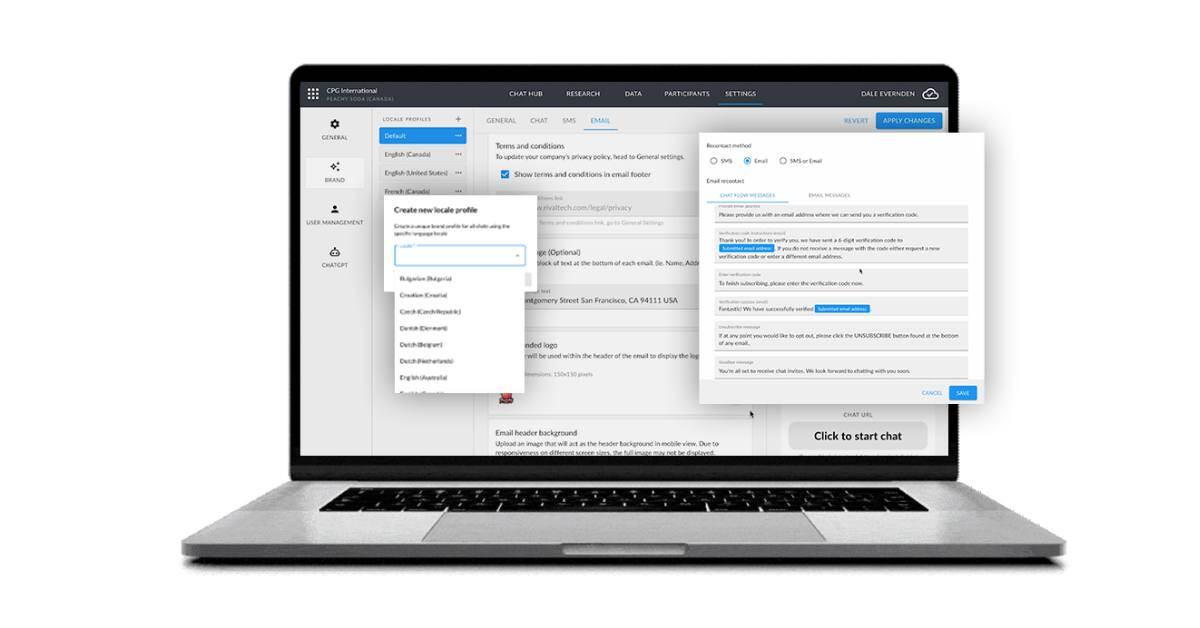
- Rival supports high-volume, global studies with tools that enable complex logic, piping, masking, branching, and multilingual translation
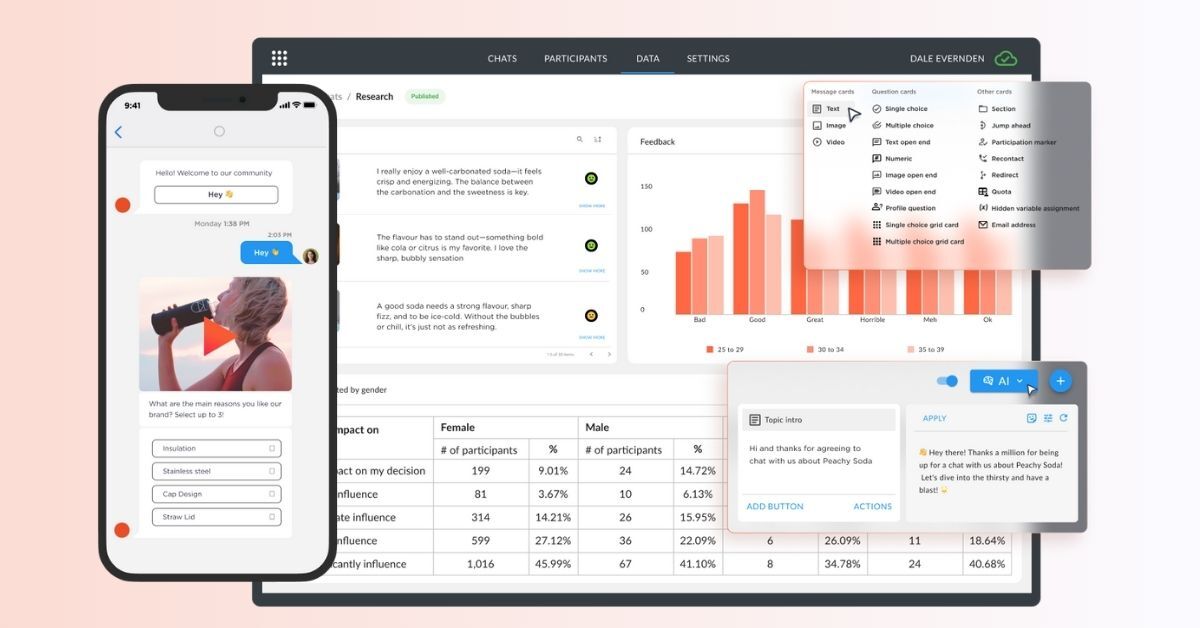
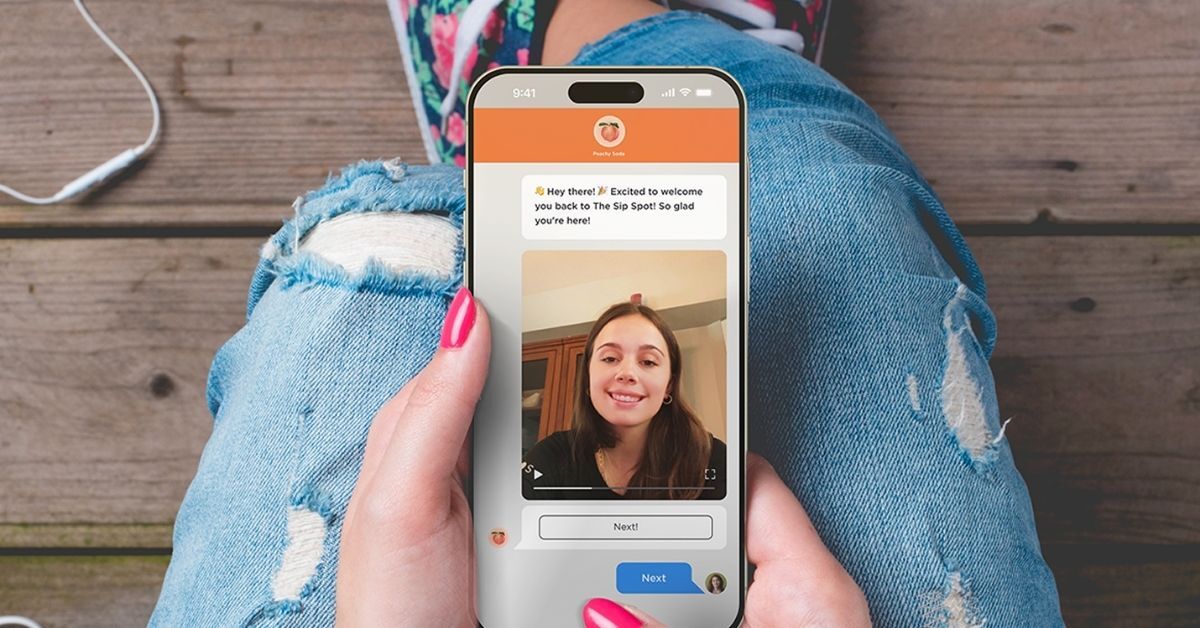
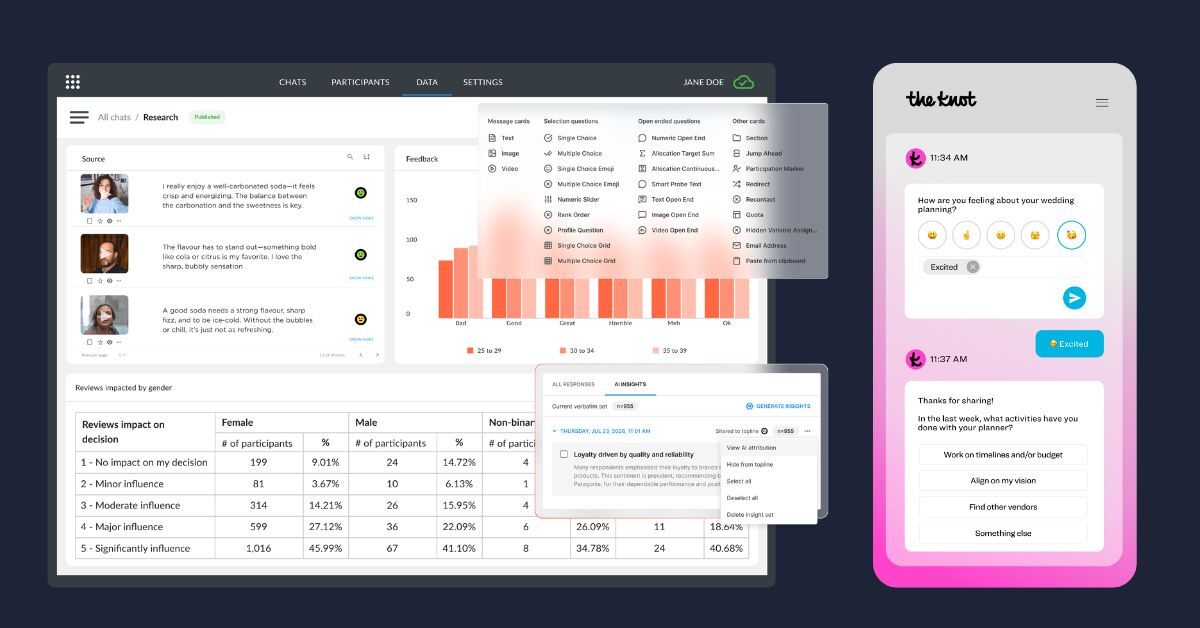
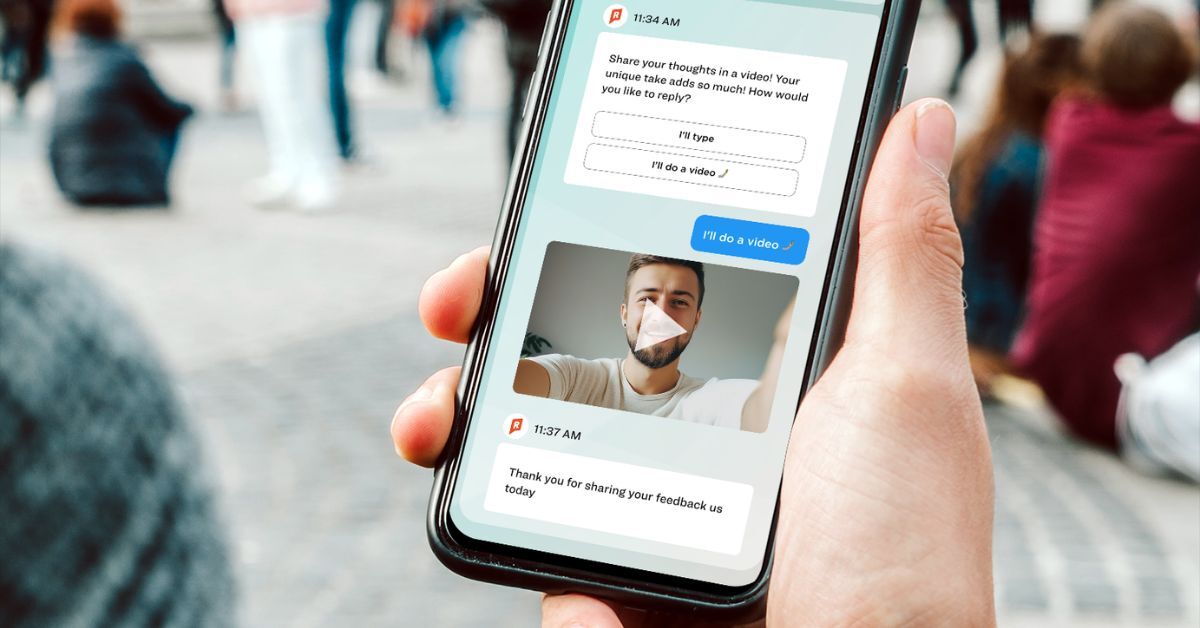
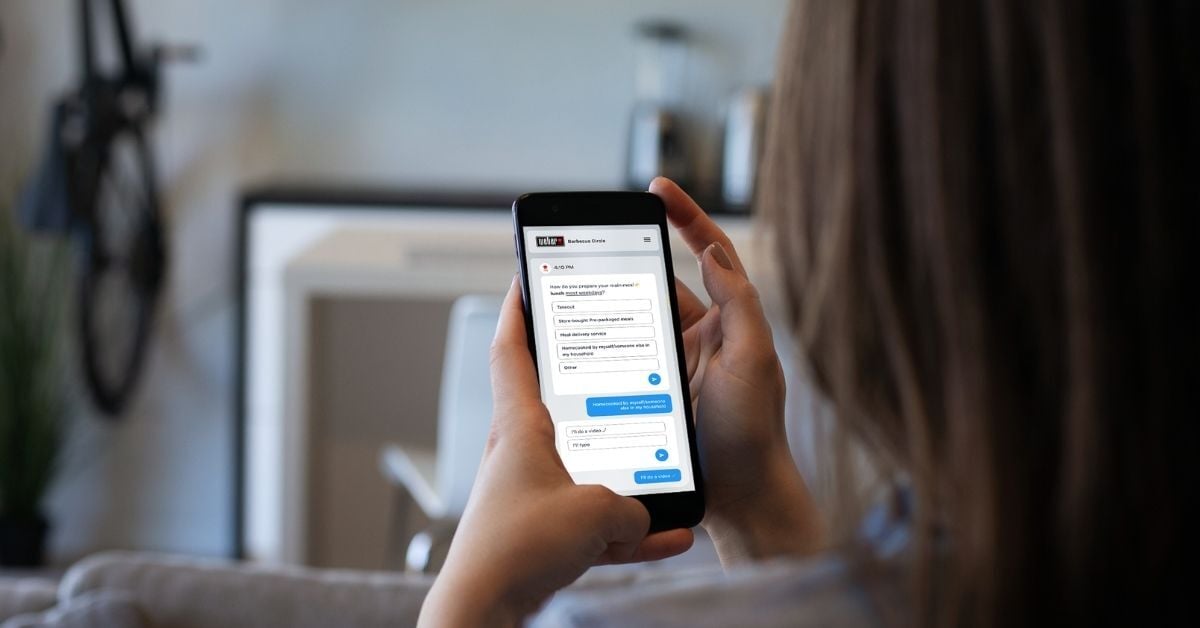
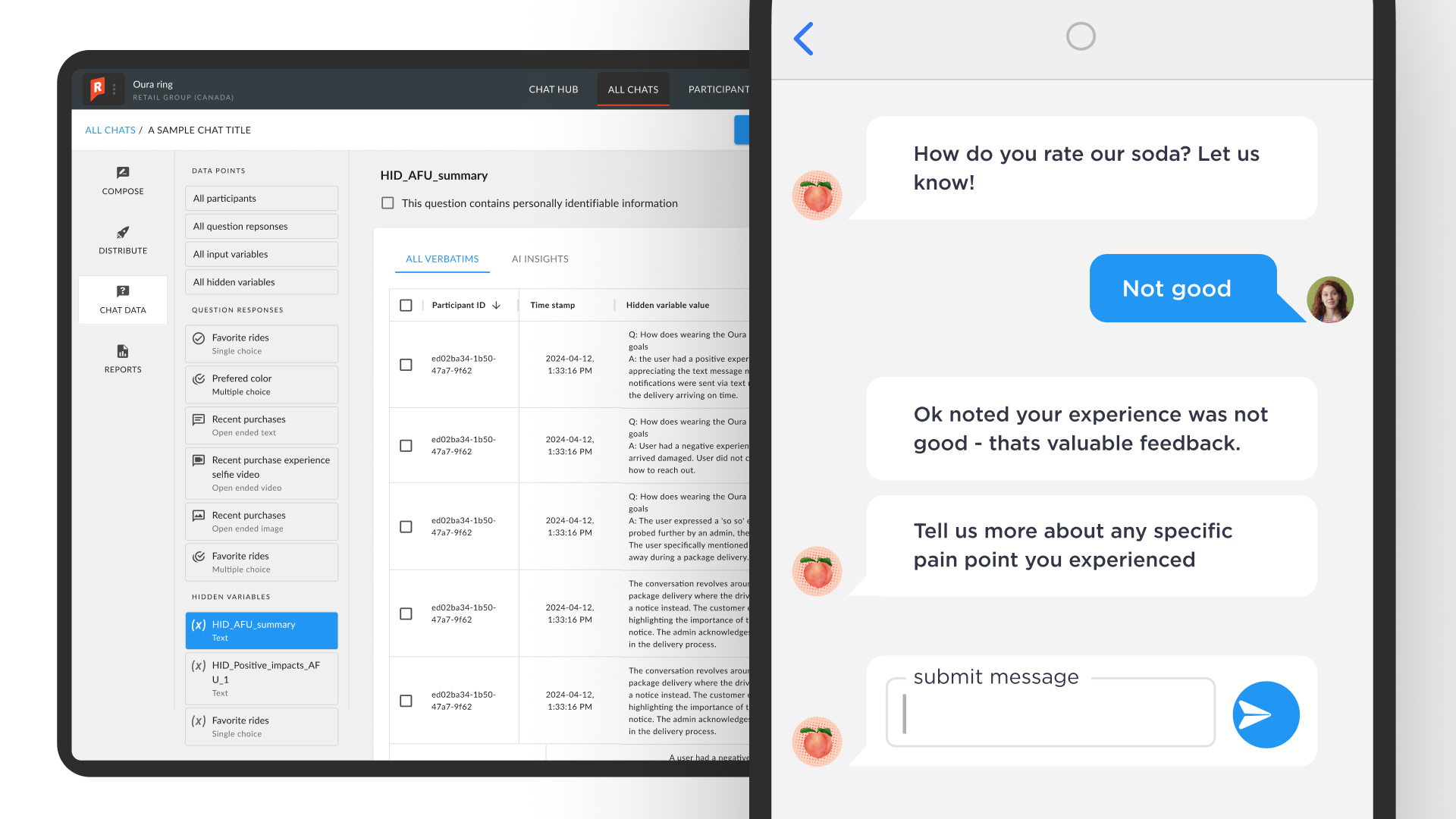
- Researchers can collect deep quant, qual, and unlimited video feedback in one seamless chat-like experience
- Participant journeys are personalized through behavior-based invitations, CRM-driven sampling, and dynamic profiling
- The highest standards in enterprise research are met through SOC2 Type 2, ISO 27001, HIPAA, and GDPR compliance
While it’s simple to use, Rival’s capabilities are sophisticated, scalable, and built for enterprise complexity.
Myth: Conversational research is only good for quick-hit feedback
Reality: Rival powers end-to-end, longitudinal, and multi-phase programs
Conversational approaches aren’t limited to quick “gut check” studies or brand sentiment pulses. Rival is designed specifically for iterative, ongoing insight generation — the type of research that used to require heavy community infrastructure and complicated tool stacks.
For example:
- You can run multi-stage exploratory → developmental → validation research using the same insight community and evolving profile data.
- Dynamic profiles allow teams to ask fewer questions over time, making space for deeper exploration.
- Teams can build full insight communities AND standalone conversational surveys — engaging participants continuously through targeted chats, follow-ups, and in-the-moment touchpoints.
And because chats are engaging, you get higher throughput:
- Over 65% recontact and re-engagement rates.
- 49% of participants complete surveys within 3 hours, enabling agile, in-the-moment research.
Conversational research is flexible. It can be used across it’s agile and longitudinal studies for insight-rich results.
Myth: Chat-based = “cute qual” or light quant, not robust data
Reality: You get quant, qual, AND unlimited video — with enterprise-grade analytics
One of the biggest misconceptions is that conversational research somehow sacrifices quant rigor.
In reality, Rival gives you:
- All the standard quant question types — including scales, grids, single/multi-select, ranking, numerical inputs, and more.
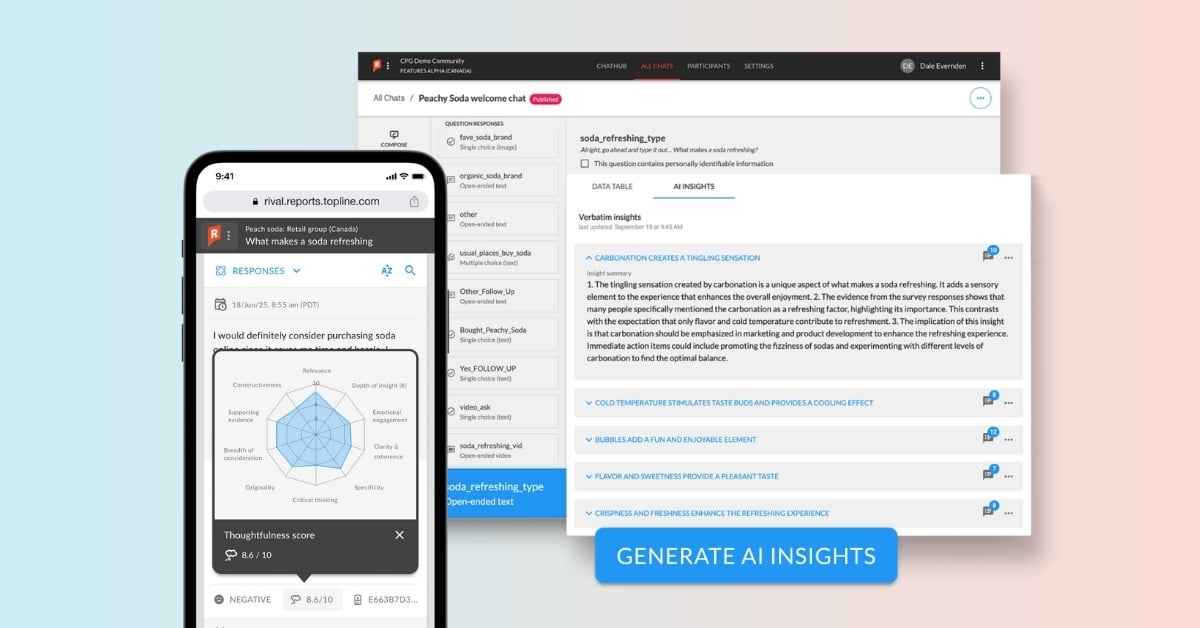
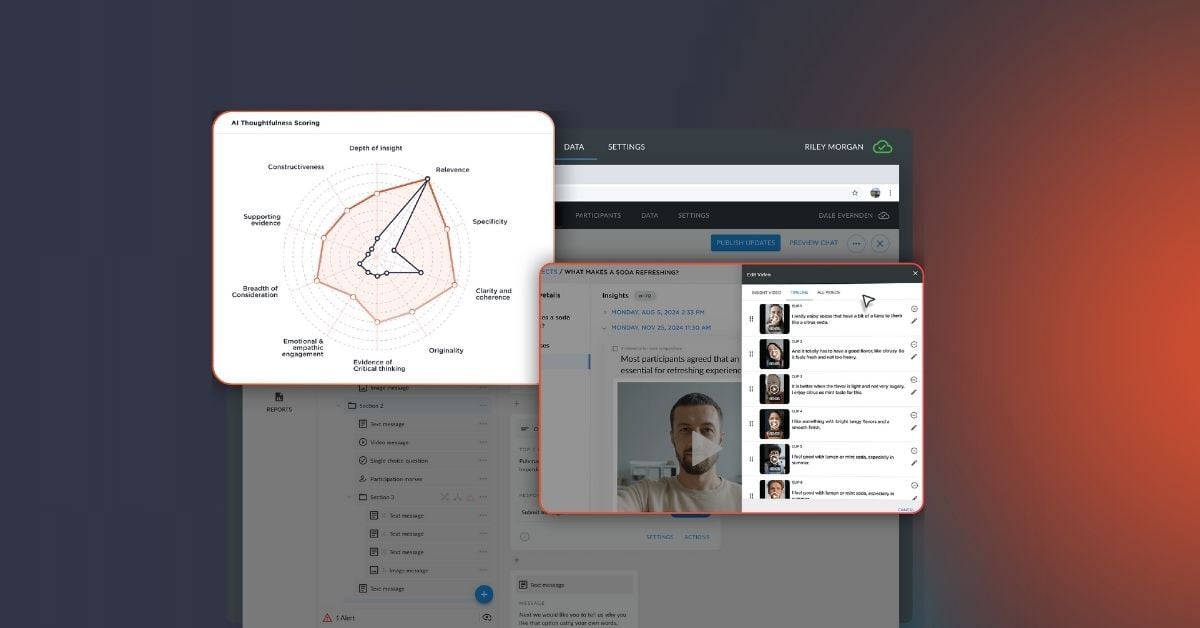
- Deep qual insights, collected as open text, video, and photo responses, analyzed by AI with exective-ready insights
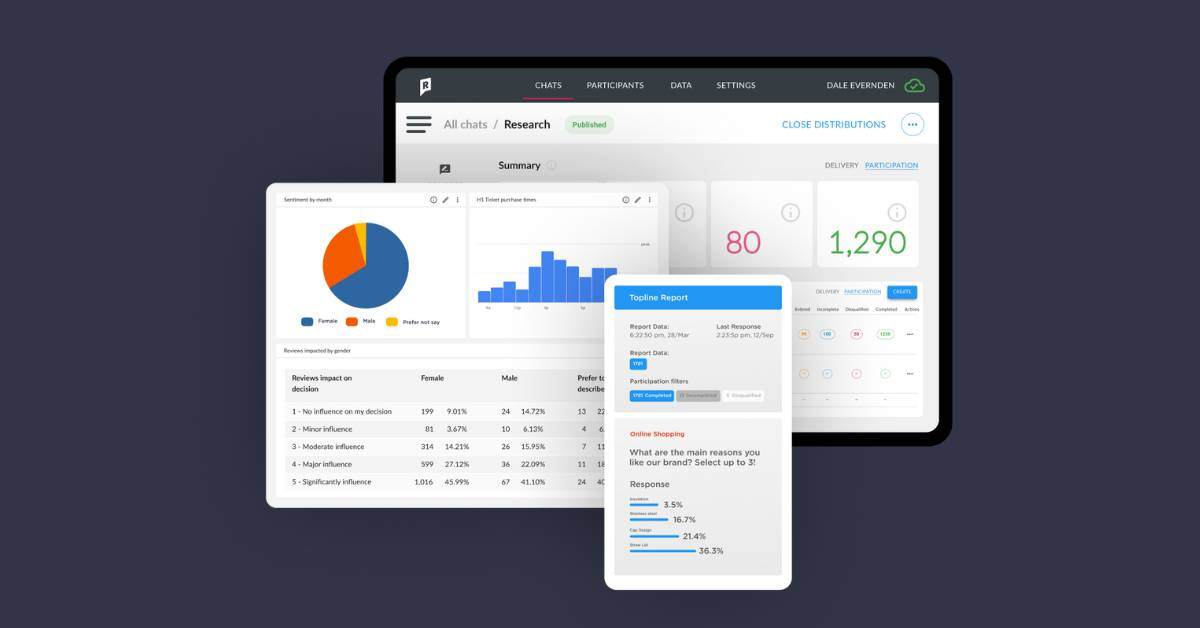
- Real-time sentiment analysis, AI summaries, theme detection, and visualization tools.
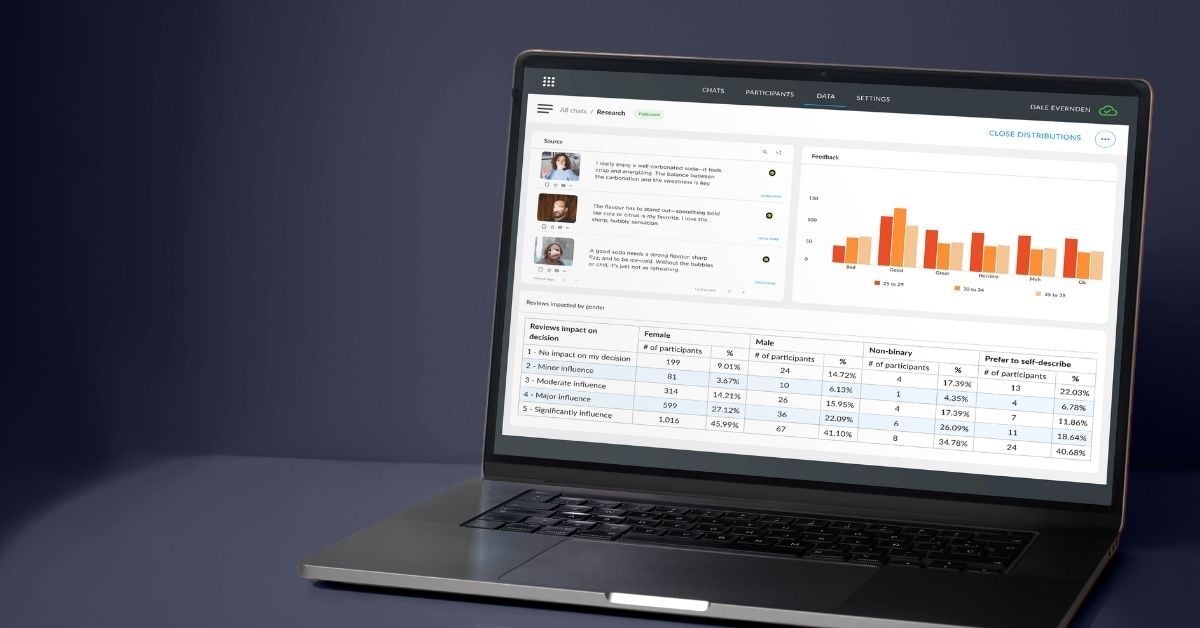
- Exports to SPSS, CSV, PPT, and dashboards that blend quant + qual for enterprise reporting.
Our most recent research-on-research shows that conversational delivers up to 8x deeper insights than traditional research.
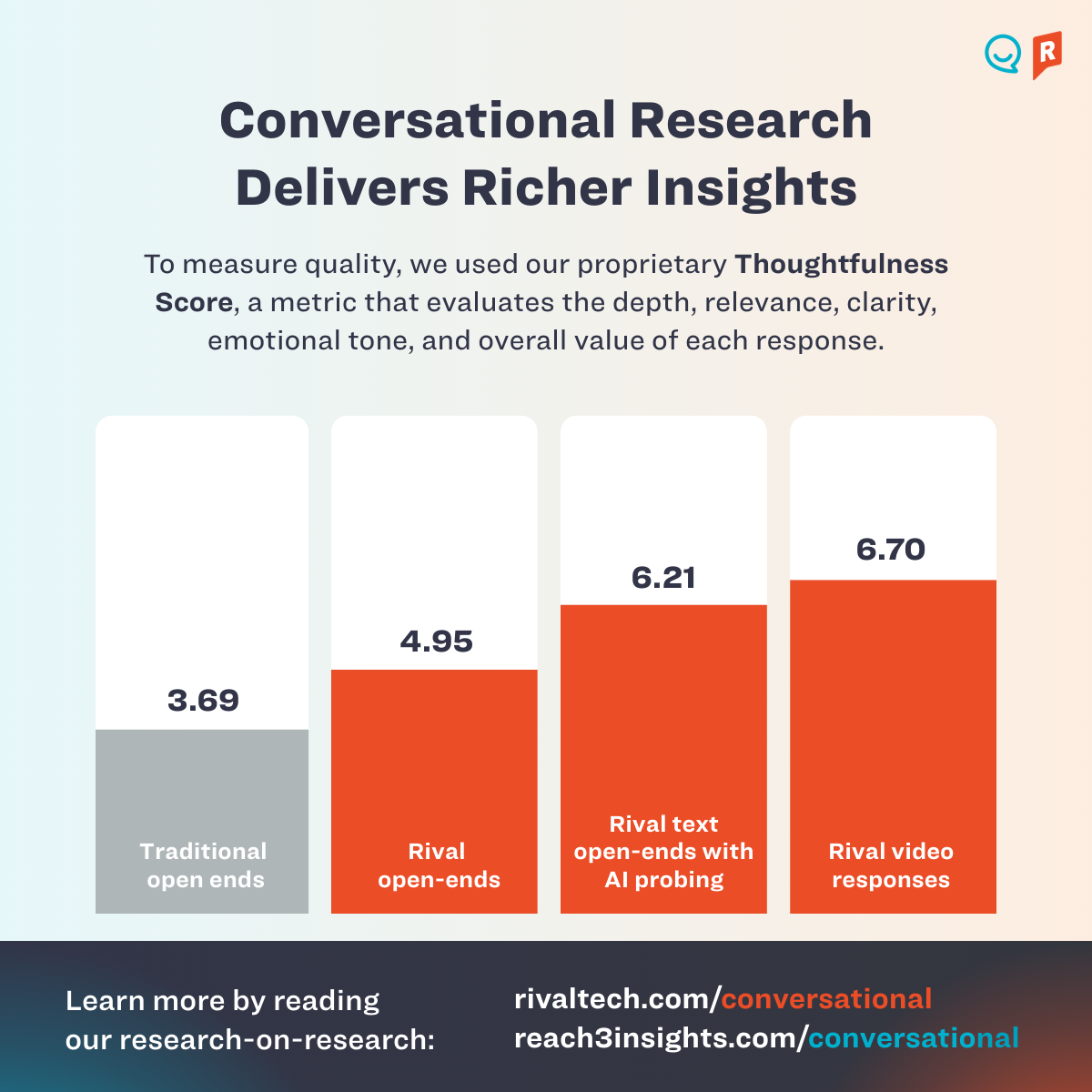
This means you don’t just get depth — you get depth at scale.
Myth: Conversational research platforms can’t handle advanced segmentation
Reality: Rival was built for personalization and precision
Many popular market research platforms treat every participant the same. The result: people get irrelevant surveys, which results in at best irrelevant or at worst fraudulent responses.
Rival does the opposite — it treats every participant like a unique individual.
- Dynamic profiles automatically update based on past behavior, CRM data, and previous answers.
- Targeted distributions let you segment by any data you’ve previously captured: psychographics, habits, purchase behavior, attitudes, or 1st-party data.
- Behavior-based triggers let you re-engage people in the moments that matter — a purchase, a support interaction, an app event.
This unlocks use cases far beyond simple surveys, like:
- pre/post campaign measurement
- product or concept iteration
- multi-touch journey research
- longitudinal brand tracking
- churn and loyalty diagnostics
- segmentation discovery and validation
Rival delivers sophisticated, enterprise-level research n a way people actually want to participate in.
Myth: Conversational research only works for consumer studies
Reality: Rival is equally powerful for surveying B2B, healthcare, financial services, and other highly regulated sectors
One reason teams assume conversational = consumer research only is because they associate it with “Gen Z” or pop culture use cases. While in fact, people of all ages (including Boomers) prefer conversational methods over traditional research.
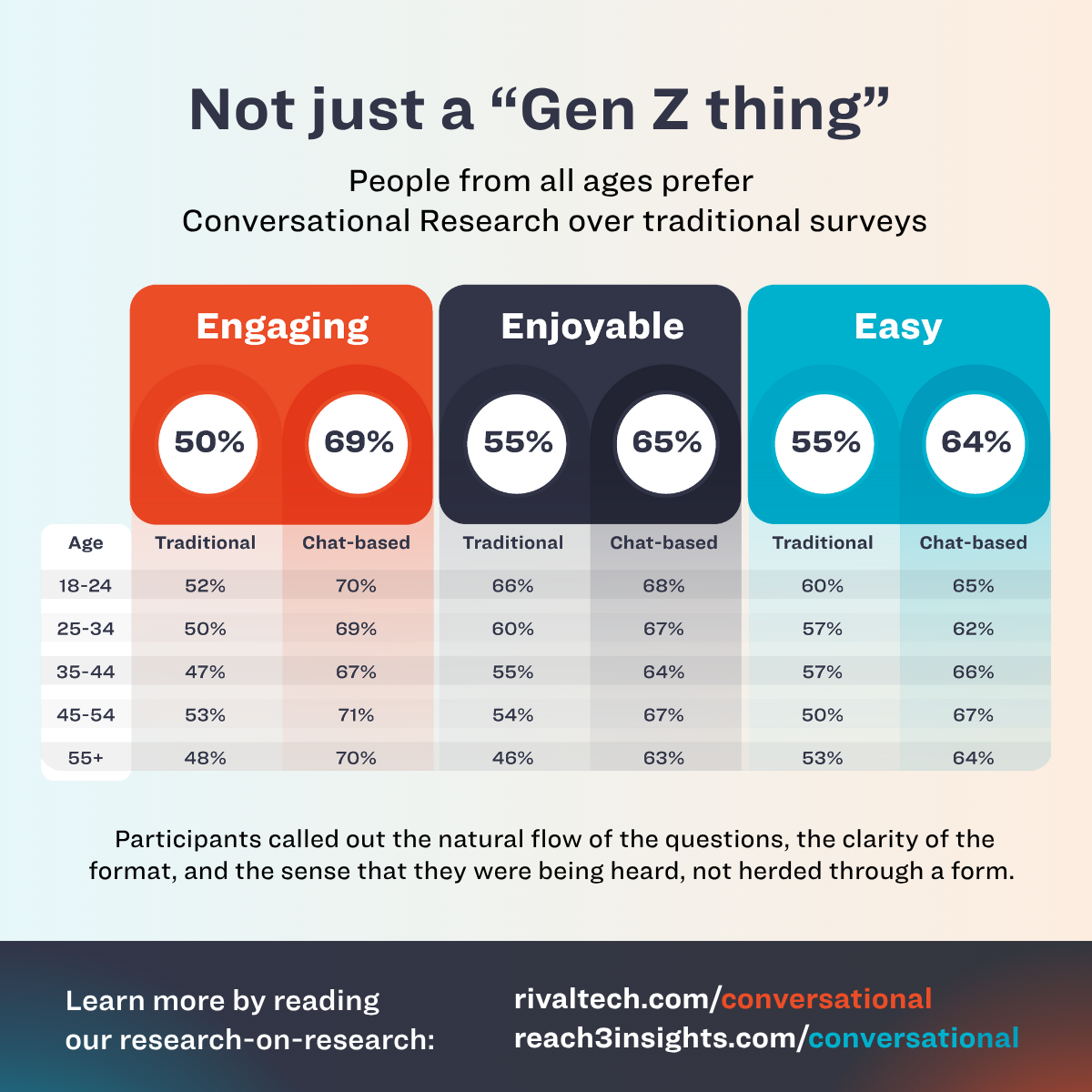
Conversational research can be used whenever human insights are needed. After all, in B2B research, you are still engaging with people. We’re seeing a growing number of B2B insight communities on the Rival platform.
Rival is used in categories where rigor, privacy, and security matter more than anywhere else:
- healthcare (HIPAA compliant)
- insurance
- financial services
- enterprise software
- transportation
- telecom
- CPG and retail
- media and entertainment
Why? Because conversational research solves one of the biggest challenges in these industries: participant fatigue.
When research feels like a natural chat — not a test — completion rates soar, and data quality follows.
Case studies: Insight teams that use conversational research
Many brands across various industries use conversational research for complex, high-stakes work:
Financial services:
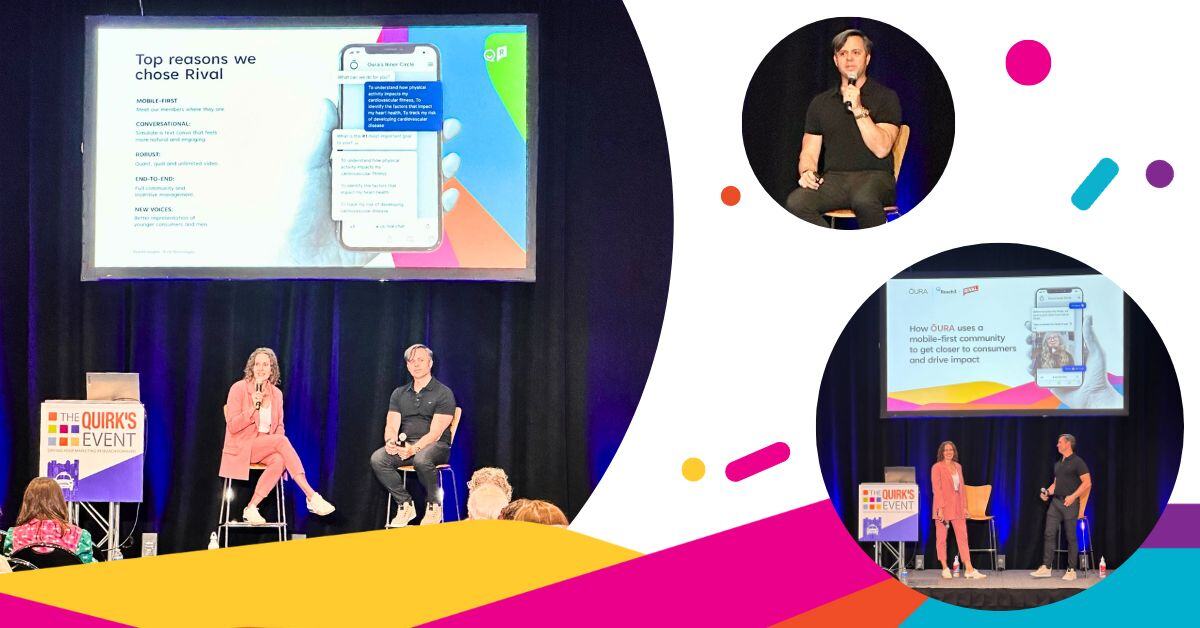
CashApp, a leading fintech company, runs multi-country insight communities to guide product innovation, messaging and more
Media:
Respected brands like Warner Bros. Discovery use conversational surveys and video feedback to inform creative development
CPG:
CPG teams run iterative concept testing at weekly cadences
Healthcare:
Working with our sister company Reach3 Insights, healthcare orgs use conversational surveys to capture in-the-moment feedback from healthcare professionals and care givers
And these aren’t “lightweight” studies — they’re the type of initiatives that previously required big budgets, long timelines, and teams of analysts.
Conversational research didn’t simplify the methodology — it simplified the experience. The rigor remains.
So why does this myth persist?
Honestly? Because the industry has equated “rigor” with “formal.”
With big grids.
With academic language.
With 20-minute surveys and desktop-only UX.
But rigor doesn’t come from complexity. It comes from clarity, engagement, and better, more thoughtful responses.
And that’s exactly what conversational research delivers.































.jpg)






















.jpg)










-1.jpg)




.jpg)

.jpg)