


Curiosity Isn’t Just Cute — It’s Your Biggest Competitive Advantage

If you’ve ever looked at your team’s calendars jammed full of meetings and thought, “Wow, when exactly are we supposed to think?”, you’re not alone. Most high-performing teams today are so busy executing that curiosity — AKA the real driver of innovation — barely gets airtime. It’s no wonder so many companies feel like they’re sprinting just to stay in place.
But curiosity isn’t just a nice-to-have value scribbled on a wall somewhere. It’s a system. A strategic muscle. And according to Andrew Reid, Founder and CEO of Rival Technologies, it might be the most overlooked performance driver inside modern organizations.
Read on as I recap Andrew’s recent Entrepreneur article, Adopt This Tiny Habit to Turn Your Team Into a Breakthrough Machine, and expand on what structured curiosity looks like in practice.
Why curiosity needs a promotion
In Andrew’s words,
The most valuable asset in any company isn’t a product, a dataset or even a brilliant strategy — it’s the willingness to stay curious.
And he’s not talking about the whimsical, “wouldn’t it be nice?” version of curiosity. He’s talking about the operational kind — the kind that lives inside roadmaps, rituals, and team behavior.
Back in 2018, Harvard Business Review called curiosity a catalyst for creativity and problem-solving. Fast-forward to 2025, and the data only reinforces it: curious teams innovate faster, adapt more easily, and avoid the “we’ve always done it this way” trap that kills competitive advantage.
But here’s the kicker: curiosity doesn’t magically surface between back-to-back Zoom calls. It needs structure.
Founders, this one’s for you: Curiosity must be designed
Most teams want to innovate, but they’re simply too busy delivering to explore. Andrew frames it perfectly:
You can’t learn anything new if your calendar is wall-to-wall delivery.
If curiosity is going to matter, founders must make it operational — not aspirational. That means:
- Building rituals where curiosity can live
- Giving people permission to experiment (and occasionally break things)
- Removing the fear of failing fast and learning faster
This is where practices like Google’s old 20% time policy still inspire us — not because every idea becomes a blockbuster, but because space exists for ideas in the first place.
Give curiosity a container (your ROI will thank you)
Andrew describes structured experimentation as something simple, flexible, and repeatable — not a budget-devouring moonshot.
Think:
A weekly “disruption hour.”
A “What We Tried” Slack channel.
A protected 10% time policy.
The companies that learn fast are the ones that treat curiosity like a system, not a slogan.
Teams that run short, curiosity-driven sprints are the teams that uncover early insights, surface inefficiencies, and solve problems before they balloon into… well, 💸 expensive 💸 problems.
And the research backs this up — a study published in the Global Journal of Business Management found that companies tracking curiosity-based KPIs saw measurable improvements in both innovation output and employee engagement.
AI: The New Curiosity Playground
Technology is moving so fast that, as Andrew puts it,
Something you spent $2 million on last year might be offered for free from OpenAI this weekend.
In this kind of environment, staying curious isn’t just smart — it’s survival.
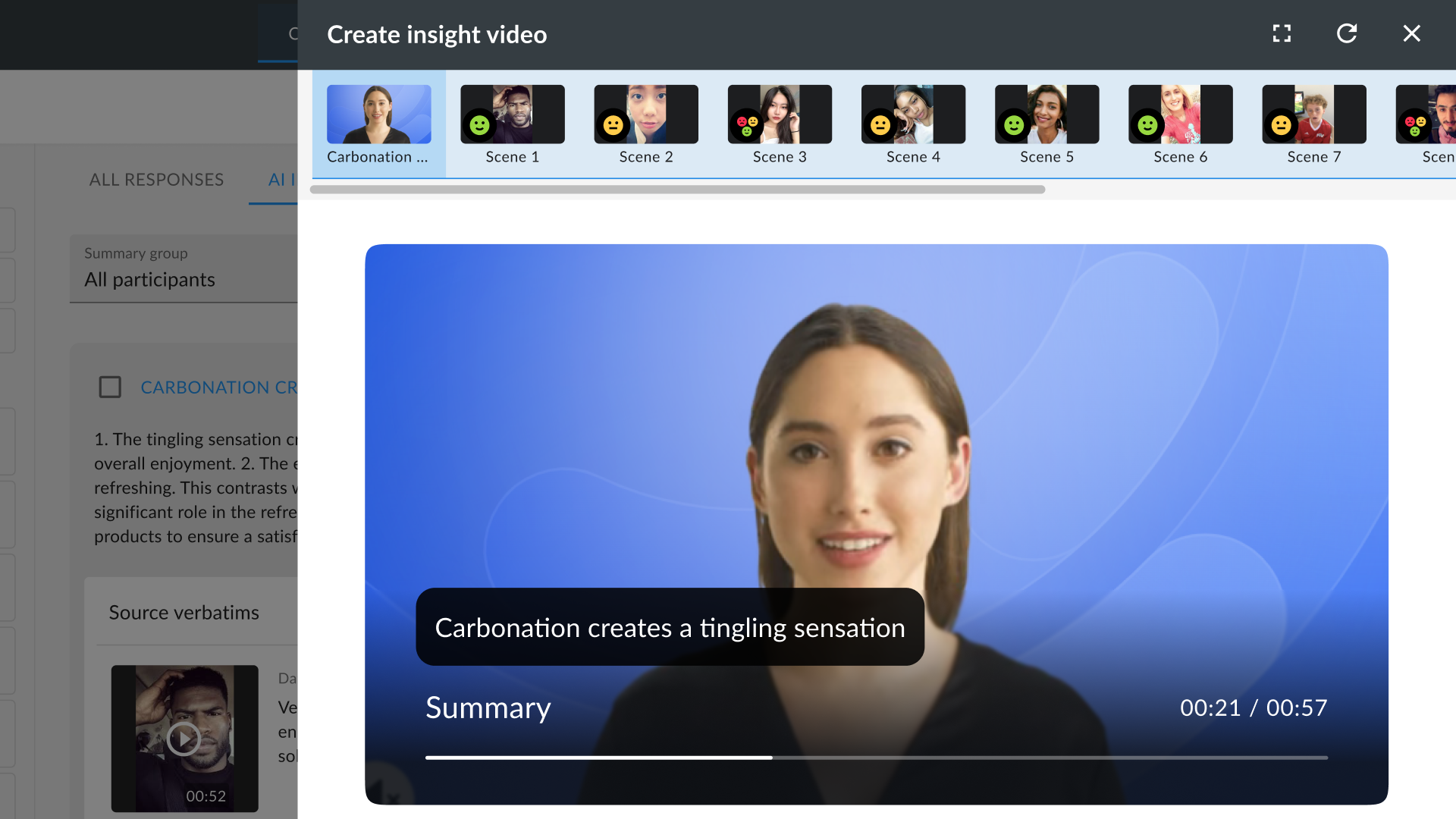
At Rival, our tech team hosts monthly AI Days: no pressure, no agenda, all curiosity. Sometimes they build something brilliant; sometimes they break things gloriously. Either way, the team accelerates learning.
This mirrors what we’re seeing industry-wide. The teams winning with AI aren’t necessarily the most technical — they’re the most willing to explore.
Curious where AI experimentation can actually move the needle for insights teams? Start here:
AI for Insights & the Unstructured Data Agent
and
Demystifying Agentic AI for Researchers.
The mindset that turns curiosity into ROI
Andrew is refreshingly honest: practicing curiosity takes extra work. You might carve out time you absolutely do not have. You might try experiments that go nowhere. You might break a few things you didn’t intend to break.
But that’s where the breakthroughs hide.
This mindset of staying curious, running little experiments, not gripping the wheel too tight is how you get to the big stuff.
Operational efficiencies.
New revenue streams.
Smarter workflows.
Better customer experiences.
Those outcomes rarely (if ever) come from doing things the same old way. They come from tinkering, testing, and letting curiosity nudge you toward something better.
5 moves to operationalize curiosity
Andrew’s article is a reminder that curiosity is not just a market research trend — it is an enduring value that’s even more important in the age of AI. Whether you’re a founder, a business leader or a researcher, here are a few ways you can operationalize curiosity today:
- Schedule exploration the same way you schedule delivery.
- Reward thoughtful failures — not just tidy wins.
- Document what you try, even the messy stuff.
- Run tiny experiments, not massive initiatives.
- Loop insights back into strategy and decision-making.
The compounding effect is real, and — as Andrew reminds us —
Six, nine months from now, that time you protected is going to pay off, big time.











.jpg)