



Your Market Research Panel Has a Trust and Data Problem. Here's the Fix.

Data quality and fraud are, for better or for worse, some of the hottest topics in market research in 2026. Insight leaders from companies like Mars Petcare are openly talking about the need to capture better data these days.
Bots, response farms, AI-generated open ends — your team has probably had the conversation, evaluated detection tools, maybe tightened your quality protocols. That part of the industry is on high alert.
But the more persistent threat is quieter. And it's coming from legitimate participants.
They're speeding through to hit the incentive. Learning which screener answers get them past the door. Writing shorter open ends, giving shallower ratings, showing up physically but checking out mentally. They're still completing your surveys. They've just stopped doing research.
In a recent piece for Greenbook, Back to the Roots: Why Panel Design Matters More than Ever, Jennifer Reid, Co-CEO and Chief Methodologist at Rival Group, argues that fraud and disengagement share a common root cause. When participant experience erodes, data quality follows — and the structural choices that enabled that erosion weren't hidden. The industry just decided the tradeoff was worth it.
Spoiler: it wasn't.
How sample became a commodity in research
For a couple of decades now, the sample business in the insights industry has optimized for scale and speed. Costs fell, distribution got easier, and participants got routed across platforms — screened repeatedly for the same basic details, bounced when they didn't qualify, delivered a different-looking experience with every survey.
Jennifer has built market research panels three times across three technological eras: at the original Angus Reid Group in the early 2000s (a project that became the Ipsos I-Say panel), and later at Vision Critical (now Maru Blue). She's seen the tradeoff unfold from close range. In the early builds, profiling was foundational. You invested once so you didn't have to ask the same questions again. Identity persisted. Inconsistencies were detectable because there was a history to check against.
Commoditized sample gave that up. Her assessment is clear: "As routing and commoditized sample took over, the industry gradually gave up some of that continuity in exchange for speed and lower costs. At the time, it felt like a reasonable trade, but now we can see where it created instability in the system."
Reasonable, until it wasn't.
What Disengagement Actually Does to Your Data
Here's the chain Jennifer traces. When your survey experience is inconsistent and repetitive, participants adapt. Some rush through. Others learn to game the screeners. Open-end quality degrades across the board.
The result is noise — and not the kind you can easily filter out.
"Open ends become shorter and less specific, answers lack depth, and the thoughtfulness that produces genuine insight disappears," Jennifer observes. "That shift introduces noise into the data and makes it much harder to separate everyday disengagement from deliberate fraud."
There's an audience problem layered on top of this. The participants most likely to disengage first are under 35 — the exact people your stakeholders most want to hear from. When the experience fails them, they drop off. Or they stay and phone it in.
Either way, your dataset takes the hit.
Teams running insight communities have seen the inverse of this play out: when participants engage in a consistent environment where their time feels respected, retention improves and responses get more substantive. The features that define a modern insight community — progressive profiling, persistent identity, smart sampling — exist because stable experiences produce stable data. That's not a coincidence.
How panel design reduces survey fraud
This is the part that tends to catch people off guard. Better panel design doesn't just improve your participant experience. It makes fraud easier to catch.
AI capabilities and behavioral monitoring tools work best when they have stable identity to work against. A single suspicious response is hard to evaluate on its own. That same response, measured against a participant's history of profiling data and prior survey behavior, is much more informative. Inconsistencies surface faster. Quality issues are easier to isolate.
Jennifer's framing is precise: "When profiles are validated over time, inconsistencies stand out faster and quality issues are easier to spot. Instead of judging a single response on its own, you are evaluating it against a participant's history."
Every interaction adds to a record instead of wiping the slate clean. That record becomes your signal.
This matters especially when the biggest threat to your data quality isn't bots — it's real participants who are disengaged. In a fragmented panel environment, fraud and disengagement blur together. Longitudinal identity is what pulls them apart.
What insight leaders should be asking sample providers
Jennifer closes with a practical framework for evaluating how your participant audiences are sourced and managed. These are worth sitting with.
- How often are your participants screened out after providing meaningful information — and is anyone actively monitoring that experience?
- Is your profile data stored and validated over time, or recollected from scratch with every study?
- What are you actually using to gauge panel health beyond cost per complete and response rate?
- Are your fraud detection tools operating within a longitudinal system, or only flagging issues at a single point in time?
If you can't answer some of these confidently, that's useful information. They apply whether you're managing your own panel, working through a supplier, or evaluating a new platform. The Rival Audiences panel was built around exactly these principles — continuity, persistent profiling, and fraud detection that compounds over time rather than resetting with every wave.
Panel design shouldn't be a barrier to innovation
Jennifer's argument isn't that you need better technology. It's that the industry traded away something foundational and needs to restore it.
"Returning to the roots of panel design does not require stepping away from innovation. It requires restoring balance between scale and stability."
Fraud prompted a wave of downstream fixes — bot checks, behavioral scoring, detection layers. All necessary. None of them upstream enough. When your foundational participant experience is fragmented and anonymous, fraud is harder to detect and disengagement is easier to miss. Piling detection tools on top of a broken foundation only goes so far.
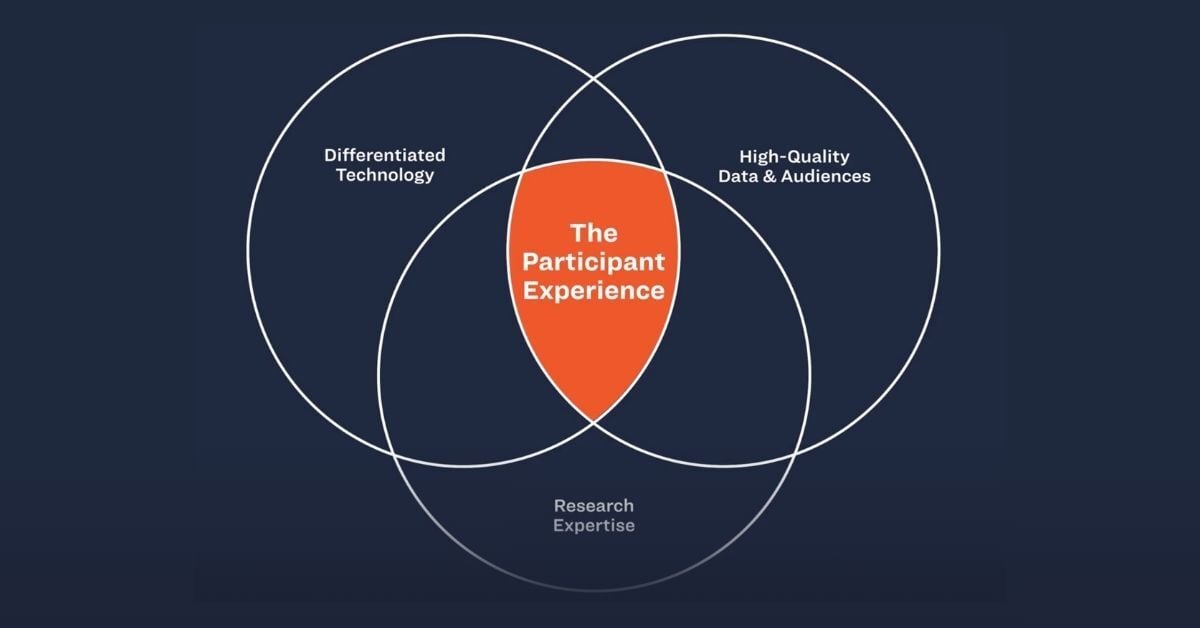
The researchers getting the most out of their data treat participant experience as a methodology decision. Not a UX question. Not a vendor's problem. Panel research done right means profiling once, respecting that information, and giving participants a reason to show up and actually try.
"In a fragmented and fraud-prone environment, how audiences are built and managed has real consequences," Jennifer concludes. "It shapes the quality of the data and the confidence leaders can place in it."
👉 Curious about Rival Audiences, our proprietary, certified North American panel? Check out this page for more info.



































.jpg)




























.jpg)













-1.jpg)





.jpg)

.jpg)