


Picking market research software should feel exciting. You're choosing the engine behind every insight your team delivers. For most buyers, though, it feels closer to assembling furniture without the instructions: hundreds of platforms, each promising faster insights, cleaner data, and participants who genuinely want to engage.
Here's what actually decides the outcome. Not the feature checklist. Not the logo everyone already recognizes. The real question is whether the platform fits the way your audience wants to engage, because that single factor shapes your response rates, your data quality, and how much strategic influence your team ends up earning.
This guide walks you through the whole decision: which features matter, how to evaluate data collection, what to ask vendors, and how to sidestep the mistakes that lead to buyer's remorse. Rival Technologies helps insights teams capture richer feedback through mobile-first, conversational research, and this guide reflects the criteria we see successful teams prioritize.
What Is Market Research Software?
Market research software is technology that supports the full research lifecycle, from designing surveys and collecting data to analyzing responses and reporting findings. Unlike a basic survey tool, a market research platform handles complex methodologies, advanced logic, multi-channel data collection, and enterprise-grade analytics in one place.
The best platforms shorten the distance between a research question and a strategic decision. They pull survey authoring, audience targeting, data collection, and reporting into a single environment. Fewer tools to babysit, faster time to insights.
As an article from CMSWire points out, customers are less inclined than ever to share their feedback today. Choosing the right platform is critical as it can help you engage your audiences in a more meaningful way — and get the candid feedback that you need to make the right decisions.
How is it different from a basic survey tool?
A basic survey tool lets you build a questionnaire and send it out. A top market research software goes considerably further: panel management, branching logic, quota management, weighting, and integrations with the rest of your stack.
The distinction matters because research quality depends on more than asking good questions. It depends on reaching the right people, capturing thoughtful responses, and analyzing the results with real methodological rigor.
Why Does Your Market Research Platform Choice Matter in 2026?
Insights teams are under more pressure than ever to move fast. Business cycles have compressed, and leaders want answers in days, not quarters. According to the Market Research Institute International (MRII), 58% of insights professionals believe their function will grow more important, but only if they can keep pace with how quickly decisions get made.
At the same time, quality feedback is genuinely harder to get. People are more skeptical of surveys than they were five years ago, and response rates keep sliding as audiences tire of impersonal, test-like questionnaires. Your platform choice directly affects whether you can reach your audience at all, and whether they give you something honest when you do.
There's a risk to getting it wrong. A 2025 Capterra study found that 57% of successful software buyers decide in three months or less, while 54% of regretful buyers take five months or longer. Rush your process and you get poor fit. Drag it out and you tend to settle for the familiar option instead of the better one.
The true cost isn't the subscription line on the invoice. It's the hours lost to manual workarounds, the decisions undermined by weak data, and the insights that show up a week after everyone stopped caring.
Which Features Actually Matter?
Not every platform is built the same way. Before you talk to a single vendor, get clear on the capabilities that support how you actually work.
Survey design and question types
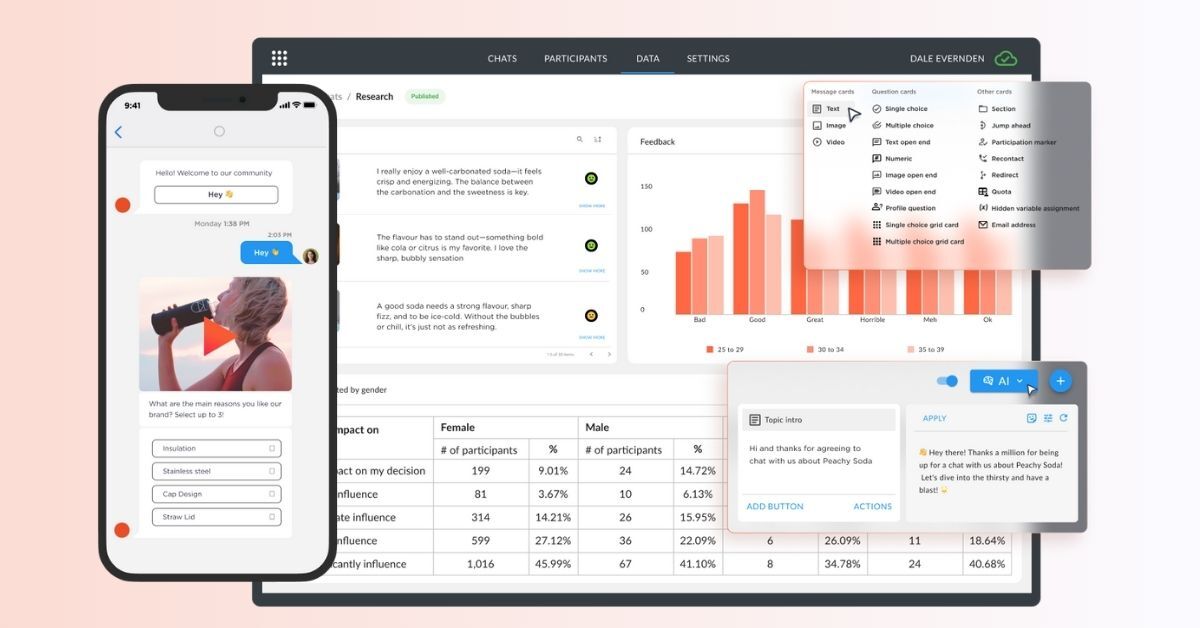
Look for both quantitative and qualitative formats. Plus advanced logic: skip patterns, piping, randomization, loops, and quotas. The ability to add video, images, and open-ended prompts expands what each study can teach you. AI-assisted authoring helps refine wording and catch problems before you field.
Data collection and distribution
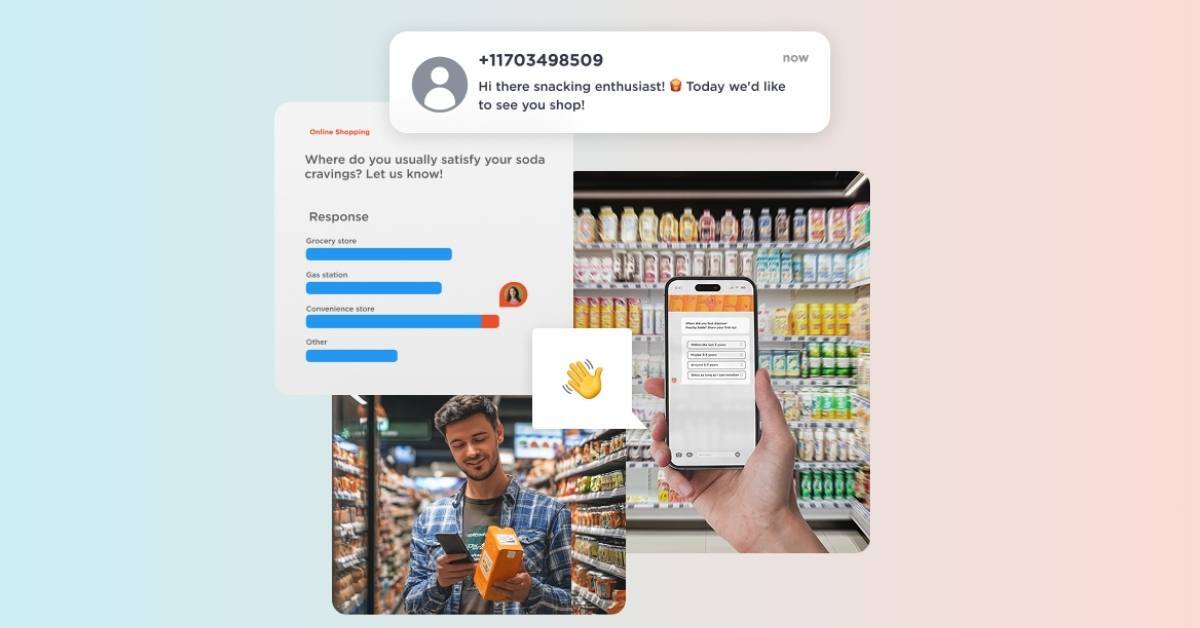
How you reach participants shapes who responds and how thoughtfully. The strongest platforms distribute across web, email, SMS, WhatsApp, and in-app messaging, with mobile-optimized experiences as the baseline rather than a bonus. Bonus points if you can reach people in the moment, when their memory is fresh, instead of days later.
Panel and community management
Some platforms include audience access, others expect you to bring your own. Understand exactly what's included and what quietly costs extra.
If you're building an insight community, look for profile enrichment, segmentation, longitudinal tracking, and health monitoring, so you can recontact specific segments without rebuilding from scratch every time.
Analysis and reporting
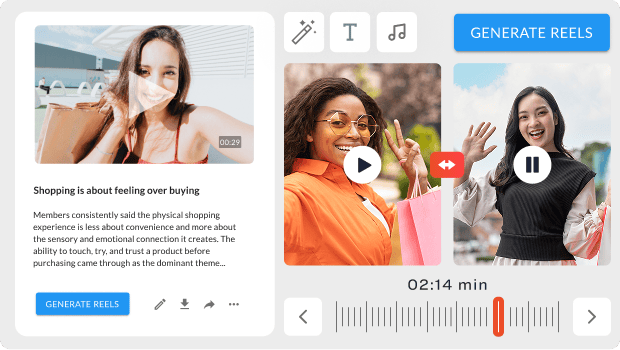
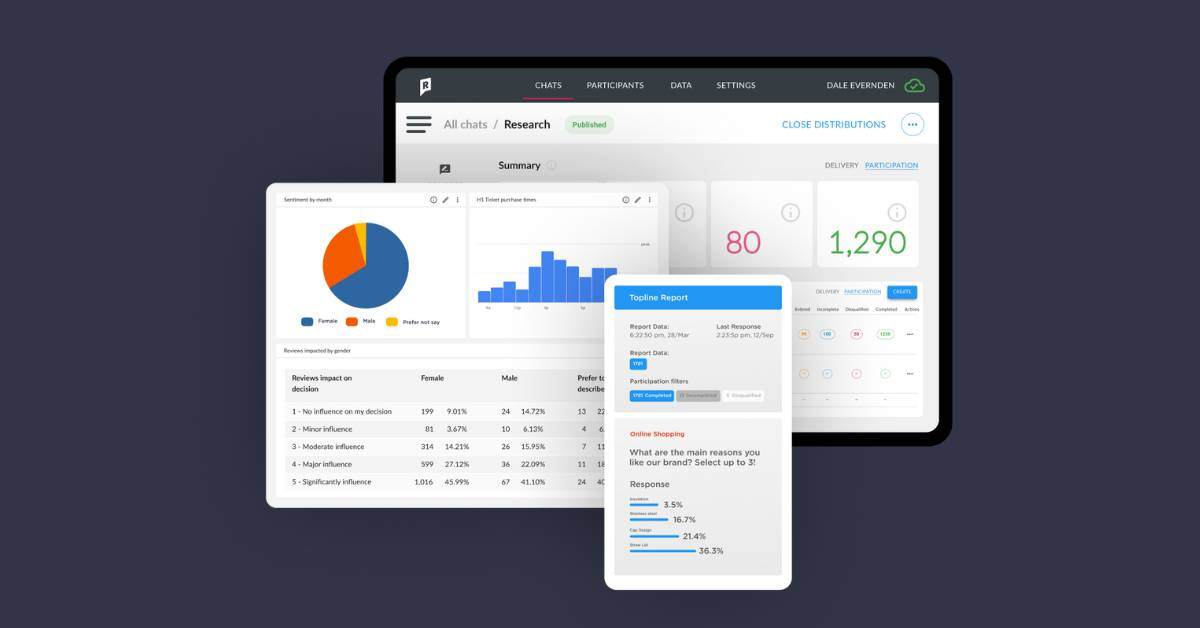
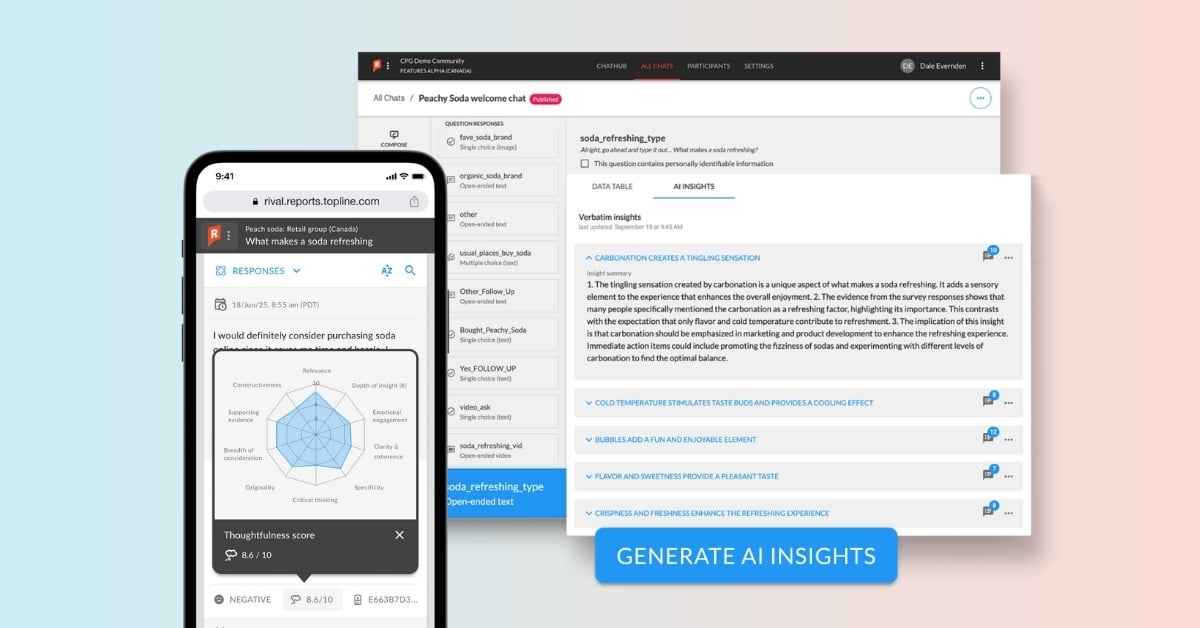
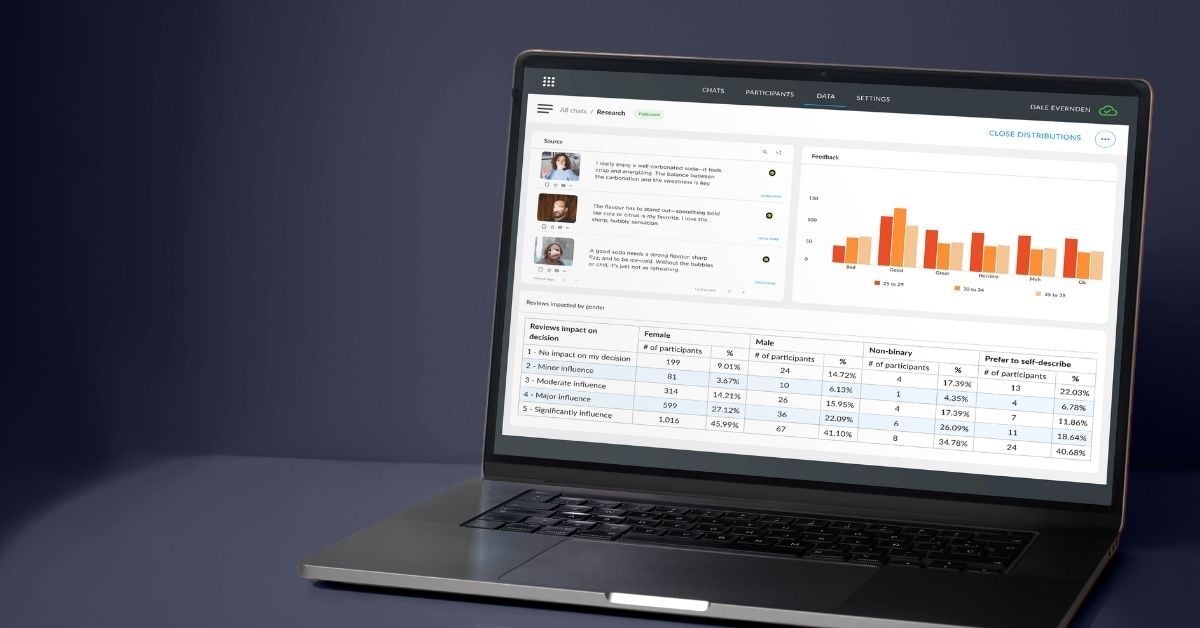
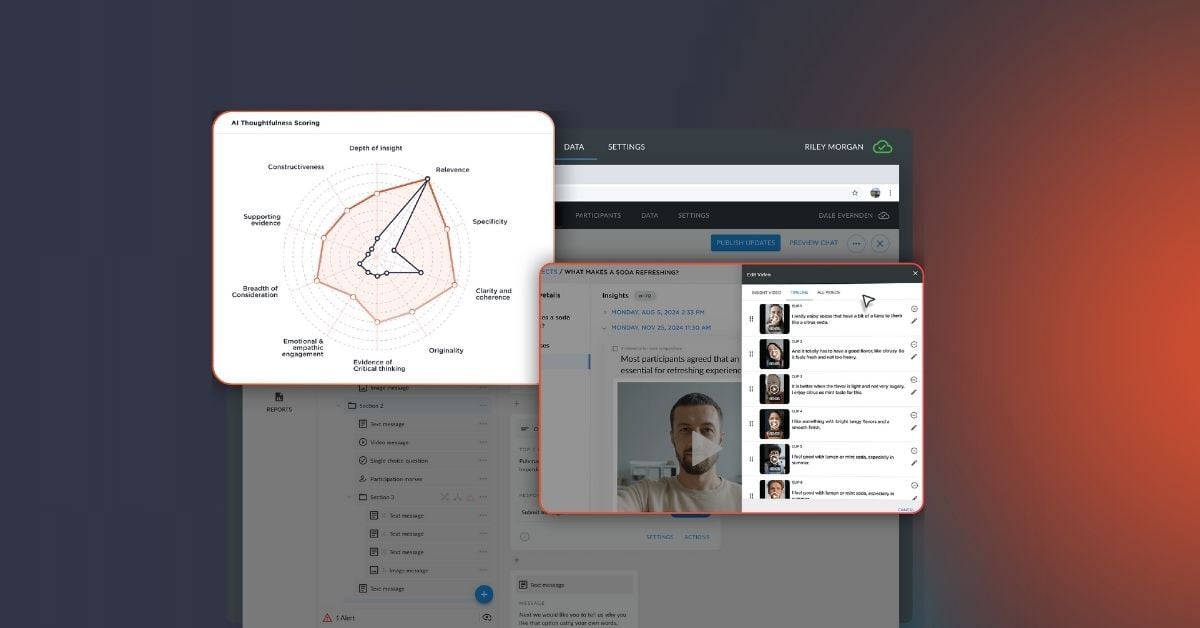
Raw data is not an insight. Look for toplines, crosstabs, significance testing, and sentiment analysis, plus real-time reporting so you monitor your studies live. AI tools that surfaces themes and creates video reels can help accelerate analysis and elevate your storytelling techniques.
Strong customer success
While top market research platforms offer DIY access, it's worth asking about customer success and support during the RFP process. Unfortunately, many insight teams are finding out the hard way that many vendors don't prioritize customer relationships. This is why some teams are looking for Qualtrics alternatives, for instance.
Rival's customer success team provides support for recruitment and incentive management, and delivers a quarterly business review (QBR). If you're not getting this level of partnership with your vendor, it's time to ask questions.
Audiences + full spectrum of services
To expand on the point above, many research teams are finding value in being able to access technology, services and panel / audiences under one roof. This "insights trifecta" approach simplifies your life — it means you don't have to deal with so many vendors just to get things done. On the services front, look for top market research companies that can offer a full spectrum — from DIY to assisted serve to full service.
Why does mobile-first design matter so much for market research software?
Most people live on their phones. Yet plenty of research platforms still deliver desktop-era experiences, then act surprised when participants abandon a grid-based survey halfway through. The mismatch produces frustrated participants, dropped completes, and samples skewed toward whoever had time to sit at a computer.
Mobile-first research meets people where they already are. It captures feedback in real contexts, on the commute, between meetings, standing in the store aisle, which cuts recall bias and produces more authentic responses.
Studies show that people are also more candid when they respond via mobile. A Wharton study found that consumers are more willing to share personal information on smartphones.
The impact on response and completion rates
Platforms designed around mobile engagement see it in the numbers. The Rival platform deliver 87% average completion rates, with 40% of participants completing within the first hour and a 65% recontact rate. Compare that to email-based surveys, where completion often sits below 20%.
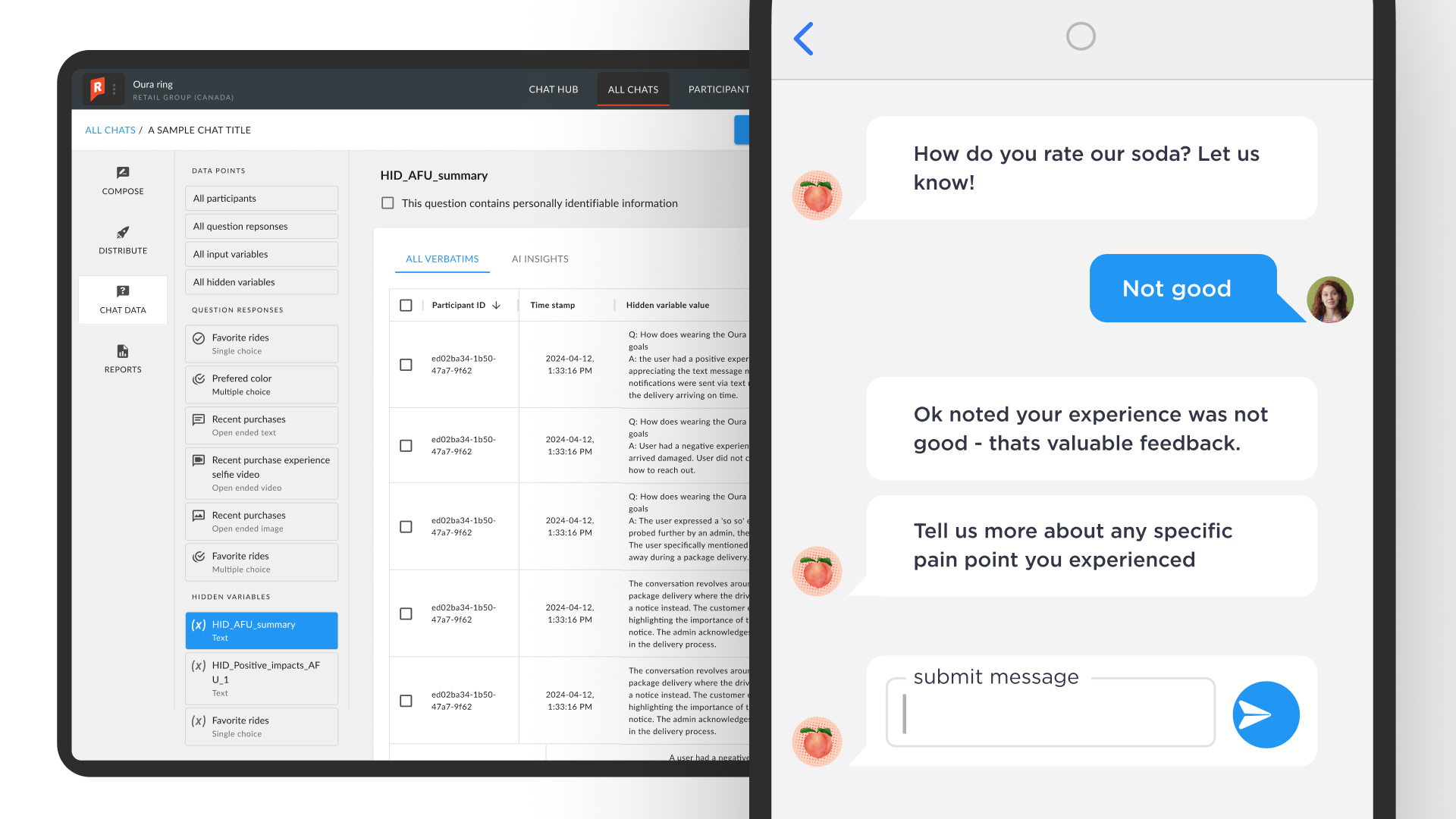
The reason is design. Chat-like interfaces feel more natural to participants. Short, conversational questions reduce survey fatigue. And SMS notifications get people in the moment — and captures responses faster.
Conversational research as the real differentiator
Conversational research takes mobile-first a step further. Instead of a wall of questions, it creates a dialogue: one question at a time, adapting to previous answers, closer to texting a friend than sitting an exam. The result is richer qualitative data without giving up quantitative rigor, because people open up when the experience feels personal.
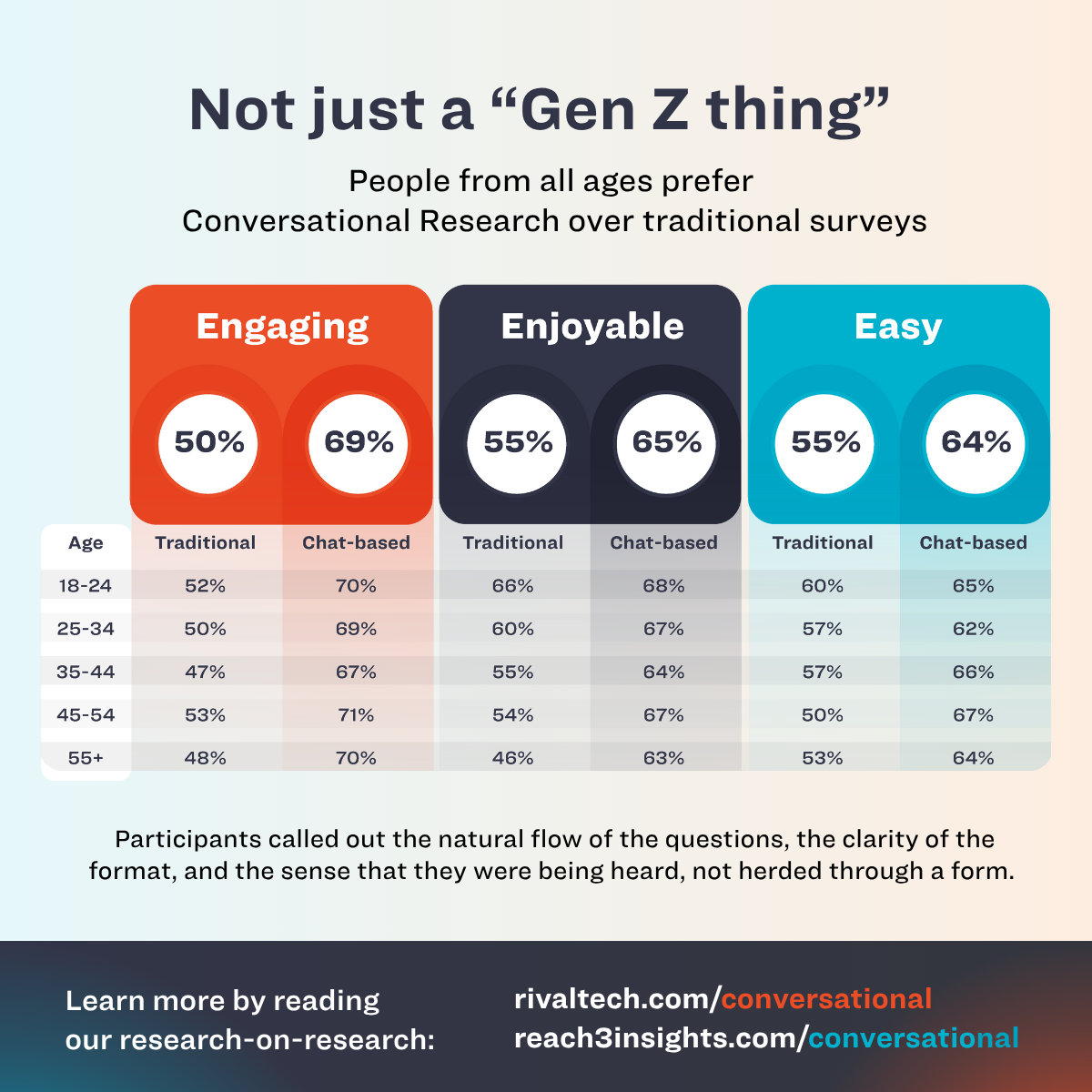
The preference shows across every age group— from Gen Z to Boomers. In head-to-head testing, chat-based research outscored traditional surveys on being engaging (69% vs 50%), enjoyable (65% vs 55%), and easy (64% vs 55%). Video open-ends captured roughly 8x more words than a traditional open-end.
When people enjoy the experience, they tell you more. Turns out that's not complicated.
Evaluating AI Research Capabilities
AI is everywhere in market research software right now. The value is not evenly distributed. Some platforms use it for surface-level tasks like generating a question. Others apply it across the lifecycle, from study design to analysis to synthesis.
The 2026 MRII State of the Market Research Industry report found that about half of professionals use AI regularly, yet only 1 in 10 say it's fully embedded in their standard workflows. That gap tells you something: a lot of vendors bolt AI onto old processes rather than rethinking the workflow around it.
AI features that earn their keep
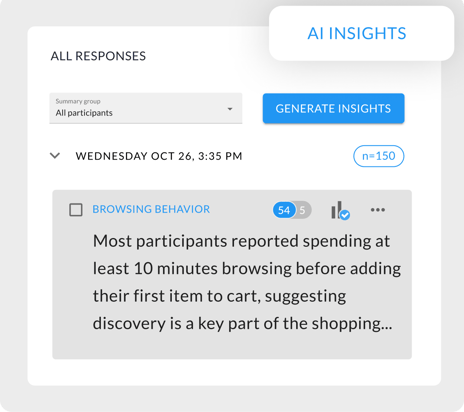 Point AI at your biggest time sinks. Authoring assistance that sharpens wording and flags bias. Theme extraction that finds patterns across thousands of open-ends. Sentiment analysis that captures emotional context, not just a plus-or-minus label.
Rival uses AI to accelerate analysis while keeping researchers in control. Our Smart AI Probe triggers intelligent follow-ups only when a response needs one, which lifted average word counts by 5x in testing, and 94% of participants found the AI-generated probes relevant. Our AI Summarizer distills text, video, and audio open-ends into ranked themes with confidence scores. Researchers still own the interpretation.
Why human-in-the-loop still wins
Fully automated research sounds tidy until you remember what AI does when left alone: it misses nuance, inherits bias from its training data, and occasionally invents a confident, well-written insight that no customer ever felt.
The reliable approach pairs AI speed with human judgment. AI handles the repetitive work, coding responses and clustering themes. Researchers add context, sanity-check the findings, and turn patterns into recommendations a stakeholder can act on. Efficiency without the credibility risk.
What Types of Market Research Platforms Exist?
The landscape sorts into a few categories. Knowing them helps you shortlist vendors that actually fit.
Survey and data collection platforms focus on building and distributing questionnaires, with varying logic and analysis depth. They range from simple self-serve tools to enterprise systems with serious methodology support.
Insight community platforms help you build and manage ongoing panels of engaged participants, with longitudinal research, profile enrichment, and segmentation. Ideal for brands that want continuous feedback rather than one-off studies. Rival Technologies specializes here, running conversational insight communities that stay engaged without asking anyone to download an app or log into a portal.
Experience management (XM) platforms bundle customer, employee, and market research into one enterprise system. Broad by design, though often shallower in any single methodology.
Consumer intelligence and social listening tools aggregate signals from social media, reviews, and support tickets. Strong for monitoring brand perception, better suited to listening than to structured research programs.
How to Evaluate Market Research Software Options
A structured process saves you from both analysis paralysis and the impulse buy. Five steps.
Define your requirements
Document how you run research today and how you want to run it tomorrow. Which methodologies come up most? Which audiences do you need? How fast do stakeholders expect answers? Split your list into must-haves and nice-to-haves, and be honest about which is which.
As part of this, think about the use cases you need a platform for. Do you need to conduct IHUTs to get product feedback? Is segmentation research something you do consistently? Do you do message testing regularly to help your colleagues in marketing? Being clear on research use cases can help shape your RFP requirements.
Assess your team
A powerful platform with a punishing learning curve will sit unused. A simple one may cap your ambition. Decide whether you need full-service support, assisted service, or pure self-serve, and match the tool to your team's current skills while leaving room to grow.
Build a shortlist
Three to five platforms, no more. Any longer and your focus dilutes and your timeline balloons. Ask peers, read independent reviews, check analyst reports, maybe check directories like Greenbook. Remember though that industry awards reflect general criteria, not your specific needs.
Request tailored demos
Generic demos show what the vendor wants you to see. Bring your real use cases and ask them to walk through exactly how the platform handles each one. Watch the workflow, not just the feature list. Ten clicks to do a two-click job adds up fast.
Ask for social proof
Customer references, case studies, G2 reviews, conference presentations with customers — these are all useful in your evaluation. Top market research companies will also be listed in Greenbook's GRIT reports and other similar lists.
What to Ask Market Research Software Vendors
The right questions surface the differences that matter.
On data collection, ask which channels the platform supports, how the mobile experience compares to desktop, whether you can capture video and photo responses, and how in-the-moment triggers work.
On data quality, ask what fraud detection is included, how low-effort responses get flagged, whether you can set custom quality checks, and how they protect sample representativeness.
On analysis and reporting, ask what's built in, how AI assists with open-end coding, whether you can export to external tools, and how quickly you can produce a stakeholder-ready report.
On support and success, ask what implementation looks like, who runs training, what's included versus billed extra in their pricing, and how they measure customer success. A great platform with weak support becomes a slow-motion regret.
What Mistakes Should You Avoid?
Chasing price over fit. The cheapest option rarely delivers the best value. Add up total cost of ownership: subscription, implementation, training, panel, incentives, and the hours your team burns working around limitations. A pricier platform that saves hours per project usually pays for itself.
Overweighting brand recognition. A familiar logo isn't a guarantee. Large legacy platforms offer breadth but can lack depth exactly where you need it. A specialized platform may deliver stronger results for your use case, even if it doesn't have a stadium named after it yet.
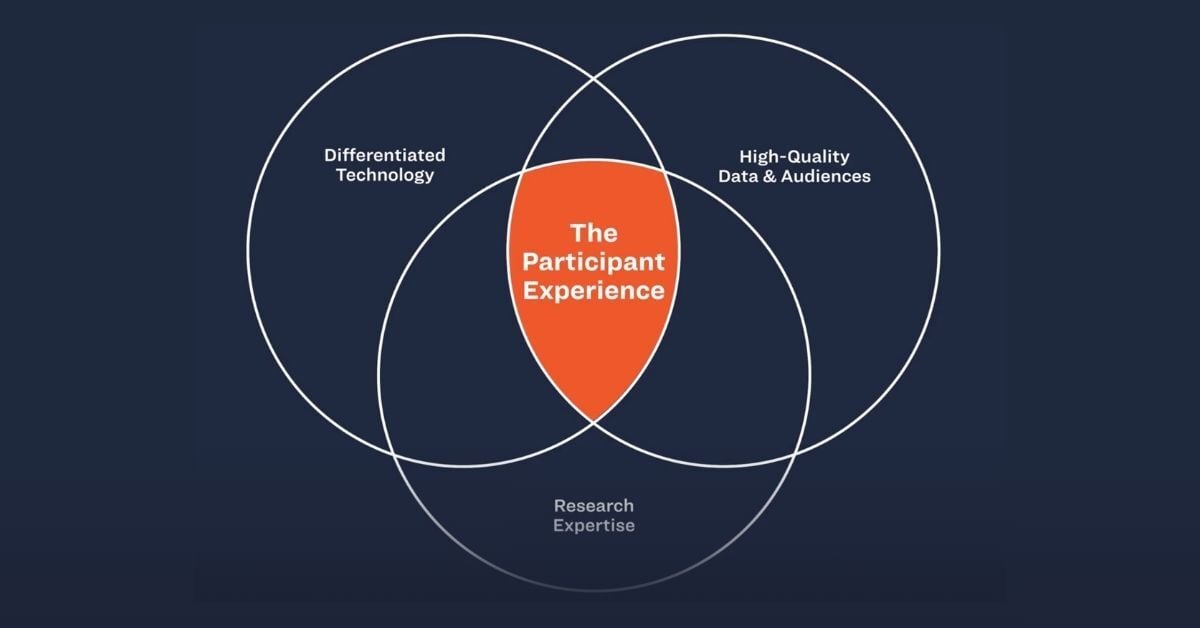
Ignoring the participant experience. Your choice affects everyone who takes your surveys. Tedious, confusing, marathon-length experiences tank your response rates and your data quality. Weight participant experience as heavily as researcher experience.
Forgetting to plan for scale. Picture where you'll be in two or three years, not just today. Will the platform handle more volume, more markets, more languages? Does it integrate with the tools you plan to adopt? Buying for current needs alone is how teams end up funding an expensive migration later.
How Do You Build the Business Case?
Budget approval comes down to demonstrating value.
Start by quantifying current costs and inefficiencies: what you spend on tools, panels, incentives, and manual work, plus the hours lost to tasks better software would automate and the projects stalled by platform limits. Hard numbers get attention. Vague efficiency claims do not.
Then connect insights to business outcomes. Frame the investment in impact, not activity. Faster insights mean faster product decisions. Better data means fewer expensive mistakes. Higher response rates mean samples your stakeholders actually trust.
If you're looking for a market research software to create a community, there are several ways to prove ROI — everything from research cost savings up to direct contribution to revenue.
Finally, address risk head-on. Leaders worry about implementation, adoption, and switching costs. Acknowledge it, then lay out your rollout plan, training approach, and success metrics. Showing you've thought through what could go wrong is often what gets the yes.
Where Is Market Research Software Heading?
A quick look ahead, so you choose a platform built for the next few years and not the last few.
AI keeps moving deeper into the lifecycle, beyond analysis into study design, fieldwork management, and activation. Expect AI agents that handle routine work end-to-end while researchers focus on interpretation. More recently, MCPs (like Rival's) help connect your market research platform to other AI applications. Vendors building research-grade AI, trained on real research data, will pull ahead of those bolting on generic models.
Participant experience becomes the competitive line in the sand. As survey fatigue deepens, the platforms that feel like a conversation will capture the higher-quality data. Conversational, mobile-native, respectful of people's time.
Research tech stacks consolidate. Teams are tired of stitching together separate tools for surveys, panels, analysis, and reporting. Unified platforms with strong integrations will keep gaining ground.
Real-time and agile research accelerates. Business decisions move faster than a quarterly research cycle allows. Platforms built for quick launches, live results, and instant follow-ups match how modern organizations actually decide.
The Bottom Line
The right market research software balances capability, usability, and fit with how your team runs research. No platform is best at everything, so prioritize the features that solve your biggest challenges and match your methodology.
Start with your requirements, not vendor marketing. Evaluate against your real use cases, not a generic checklist. Pilot before you commit. And keep in mind that the platform shapes more than your efficiency. It shapes the quality of insights you deliver, and the influence your team earns as a result.
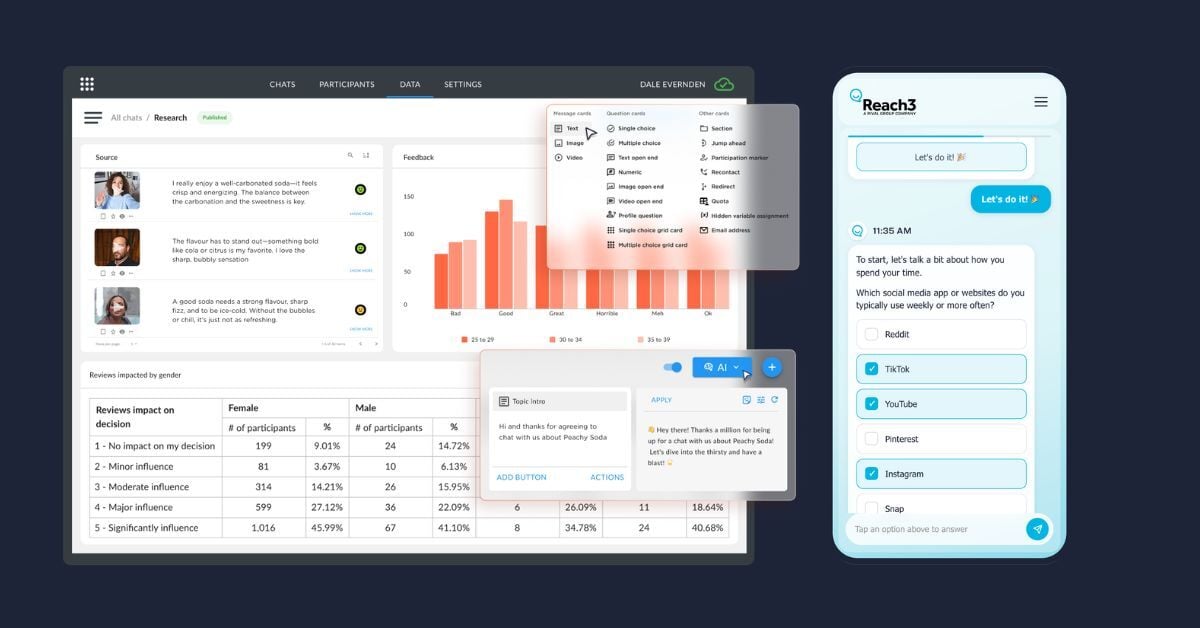
For insights teams that want a mobile-first, conversational approach, Rival Technologies is built around how people actually want to engage. AI-accelerated analysis, built-in insight community capabilities, unlimited video, and a participant-first philosophy that helps you capture deeper insights faster, from real people in real moments. That's research reimagined.


































.jpg)






















.jpg)











-1.jpg)




.jpg)

.jpg)