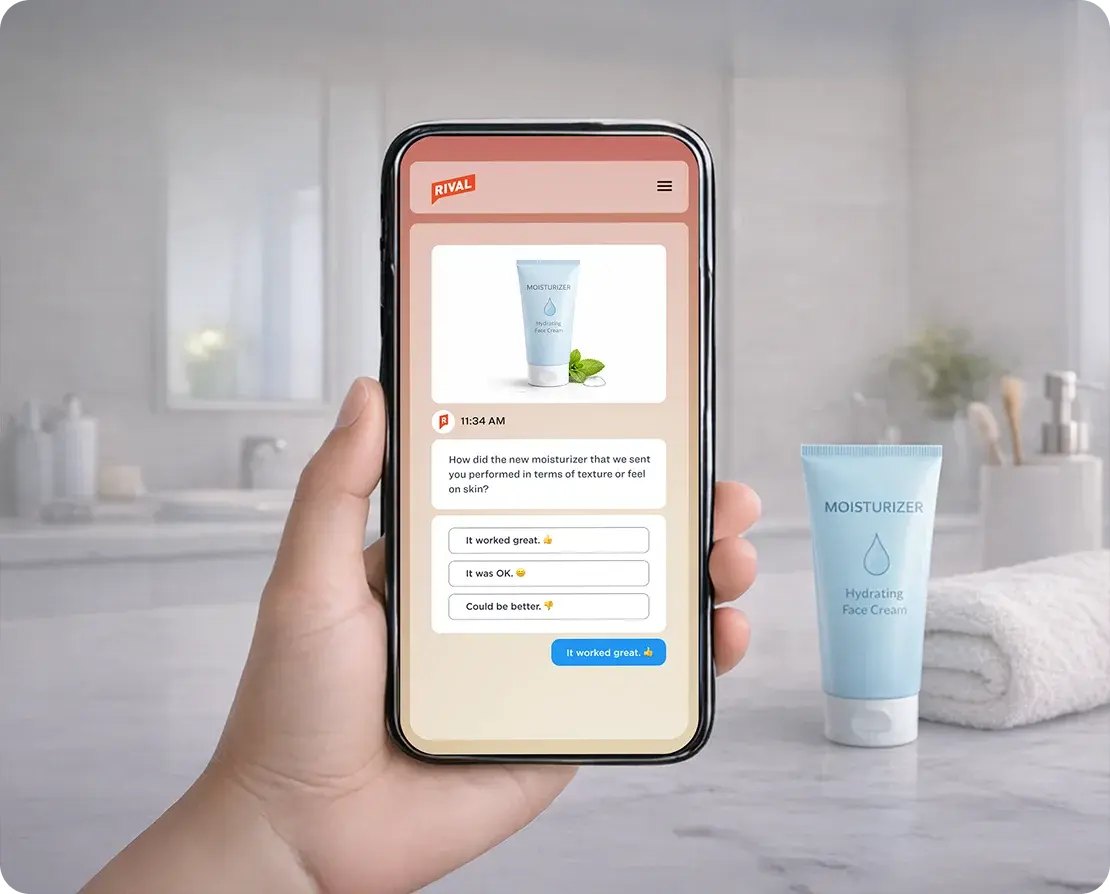
Restaurant customer sharing feedback on her phone, an example of in the moment insights
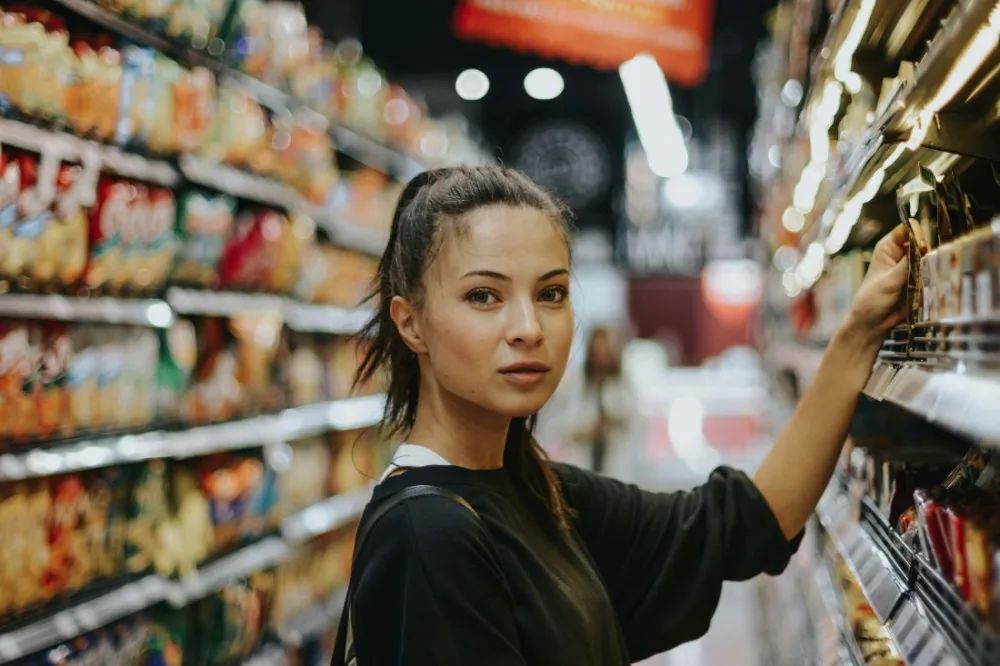
Shopper in a grocery aisle reaching for a product, captured through in the moment research
Friends taking a selfie at an outdoor event, the kind of live experience in the moment research measures
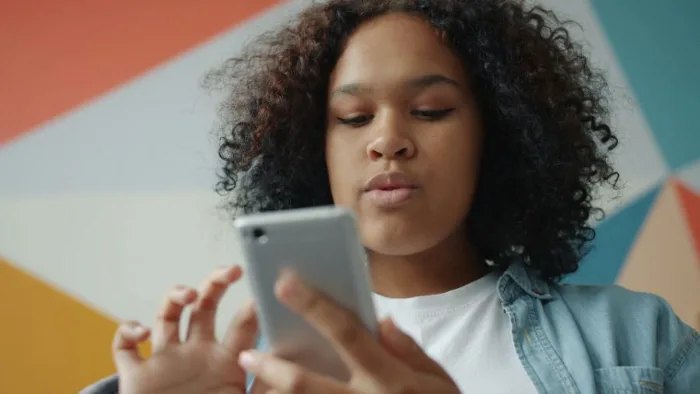
Young woman typing a reply to a mobile survey while the experience is still fresh
Ask now, not later

In-the-Moment Research

How to reduce recall bias, capture richer context, and turn customer experiences into insights while they are still unfolding.

01 · Why “later”

Why “later” changes the answer

If you want to know what someone noticed, felt or chose in a specific moment, waiting can change the story.

As time passes, details fade and people reconstruct the experience. That is recall bias: you may end up measuring the memory of the experience rather than the experience itself.

Behavioral researchers use approaches such as ecological momentary assessment and experience sampling for the same reason: asking closer to the experience can reduce memory distortion and capture thoughts, feelings and behavior in context.

“Memory rewrites emotion.”
Jennifer Reid
Co-CEO, Rival Group
Jennifer Reid, co-CEO of Rival Group, on why memory rewrites emotion and why in the moment research captures it sooner

For insights teams, the takeaway is simple: ask now for what you could lose by waiting. Ask later for what you want people to reflect on.

Often, the strongest design does both: capture the experience while it is fresh, then reconnect later to see what people remember, how perceptions changed and whether behavior followed.

02 · What it is

What exactly is in-the-moment research?

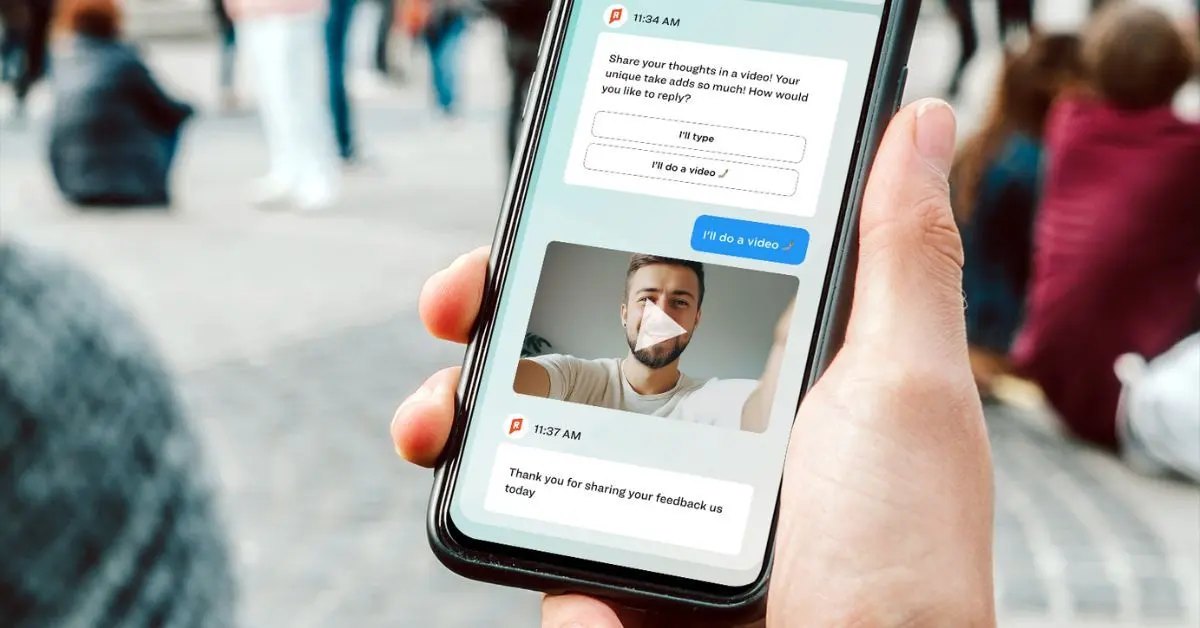
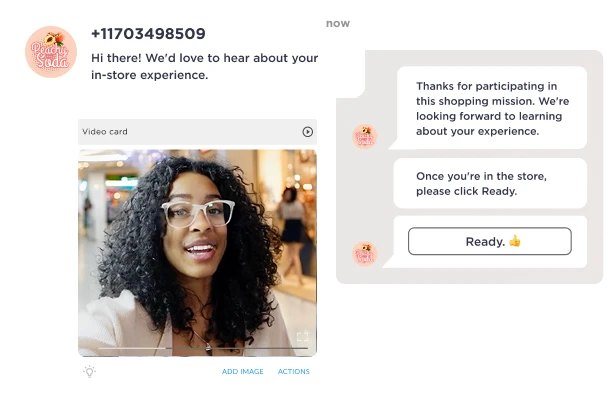
In the moment research on SMS delivers real-time insights: a text invitation, a participant selfie video and chat replies about an in-store shopping mission

In-the-moment research is less a specific method than a timing strategy: you capture feedback while an experience is happening, or soon enough afterward that people are still close to the details. Your participant might be in an aisle, at a game, tasting a product, using an app or leaving a service interaction.

For insight teams, this doesn't mean you have to survey people constantly. The job is to identify the moment where context matters most, then make it easy for people to respond within that window.

Two common approaches for in-the-moment insights

Approach 1

Mission-based research

Recruit people in advance and give them a task: visit a store, try a product, watch a broadcast or complete an activity. Then reach them at pre-planned moments during the experience.

Approach 2

Intercept-based research

Invite people who are already having the experience, often through a QR code, link or prompt at the location or touchpoint.

Both approaches can mix quantitative measures with open-ended feedback, photos, video and follow-up probing. The research travels with the participant instead of waiting for them to get back to a desktop - or asking memory to fill in the gaps later.

What makes in-the-moment research work?

Select a point to read more.

Meet people on the device they already have with them. SMS, WhatsApp, QR codes, intercepts and mobile notifications can reach them where the experience is happening.

Keep questions short and natural so you are not pulling someone completely out of the experience.

Let people show you what they see and feel through photos, video and open-ended feedback - not just a score.

Follow up on what someone actually says. AI-assisted probing can help you uncover the “why” without turning every activity into a long interview.

If you need to know what lasts, reconnect later and compare the immediate reaction with memory, behavior or longer-term brand impact.

What this looks like in practice

Mobile-first, conversational design keeps people responding while the experience is still fresh. In research with more than 2,000 people in the U.S. and Canada, conversational studies on the Rival platform generated:

87%
completion rates
65%+
recontact rates
8x
longer video responses than traditional text open ends

Source: Rival Technologies, Reach3 Insights & Angus Reid

Read the research
03 · Where it works

Where in-the-moment research works especially well

If your question depends on a specific experience, ask yourself: what might be lost if we wait? The more context, sequence or emotion matters, the stronger the case for getting closer to the moment.

01 / 07
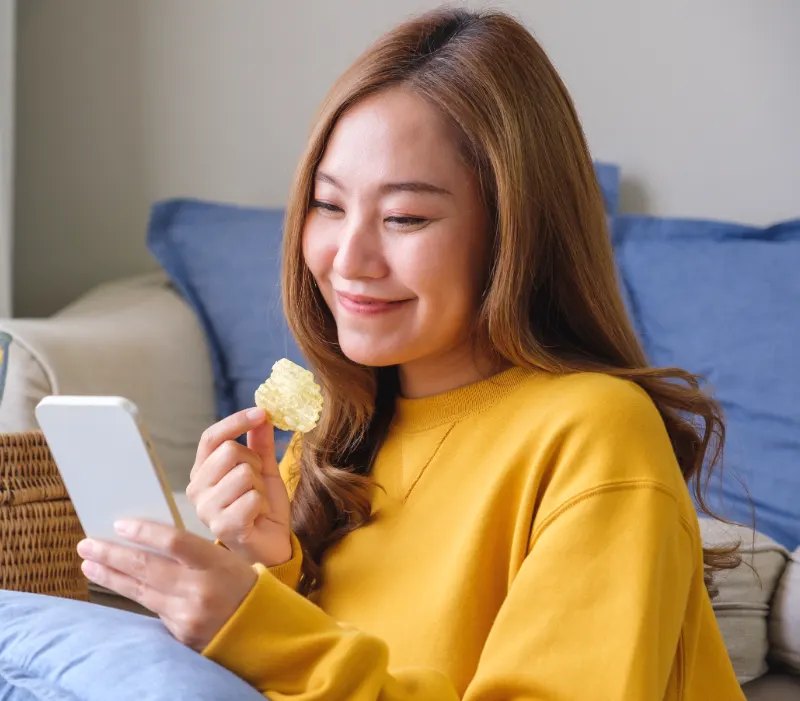
Woman tasting a potato chip while answering on her phone, sensory in the moment research
01

Product & sensory

Capture first reactions to taste, texture, packaging, setup or use before those details blend into an overall impression.

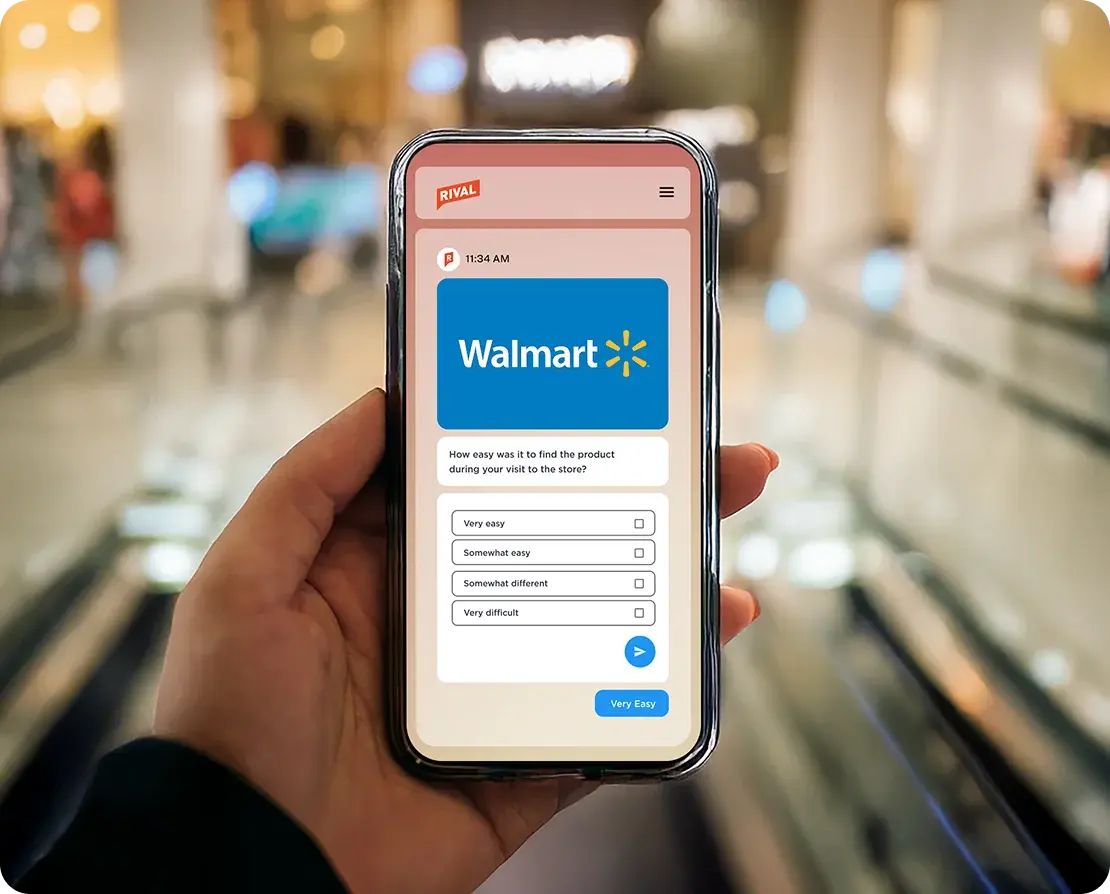
Shopper in a mall answering a Rival chat survey about finding a product, shopper in the moment research
02

Shopper & retail

Follow people through a shopping mission to learn what they notice, compare, ignore and choose along the path to purchase.

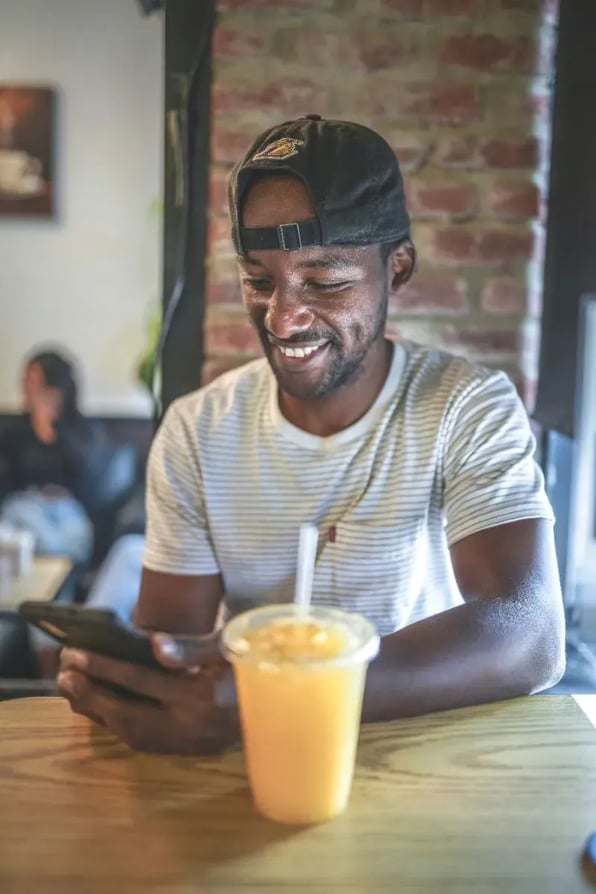
Cafe customer replying to a survey on his phone mid-visit, customer experience in the moment insights
03

Customer experience

Ask about a restaurant, branch, store or service interaction while the environment, staff interaction and friction points are still fresh.

Viewers laughing during a watch-along while rating an ad on a phone, advertising in the moment research
04

Advertising & media

Run watch-alongs around commercials, entertainment or live broadcasts to see how reactions evolve with the content.

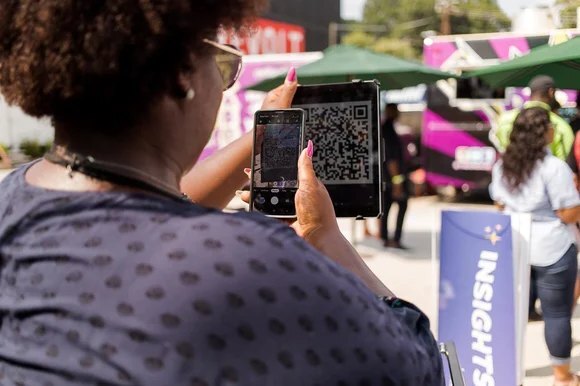
Attendee at a brand activation scanning a QR code to share feedback, experiential in the moment research
05

Experiential & sponsorships

Measure engagement, emotion, brand impact and shareability during an activation, then reconnect to see what lasted.

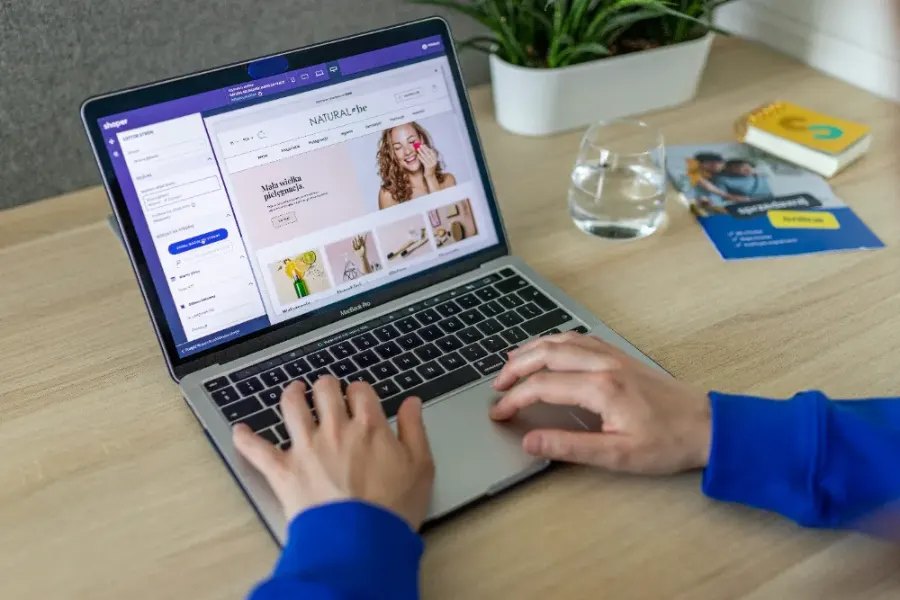
Person browsing an online skincare store on a laptop, digital journey real-time insights
07

Digital journeys

Trigger feedback after a sign-up, purchase, feature use or service issue to connect what happened with why it happened.

04 · Case studies

More in-the-moment research in action

You do not need a stadium or a major brand activation to use this approach. These shorter examples show how timing can improve sensory research, mobile ethnography and ongoing customer feedback.

Case study

A snack brand captures the first-bite reaction

A well-known snack brand wanted a truer read on the emotional response to a new product before launch. Instead of asking people to reconstruct the tasting later, 200 participants completed an in-store mission and shared feedback close to first bite.

The study surfaced sensory language and context the team could use to identify new consumption occasions, packaging cues and flavor priorities.

200
in-store participants
80%
completed a follow-up chat
40%
submitted a selfie video
First bite
feedback captured close to use
Pro tip

For sensory research, separate reaction from reflection. Capture taste, texture and emotion now; use recontact later for a more considered evaluation.

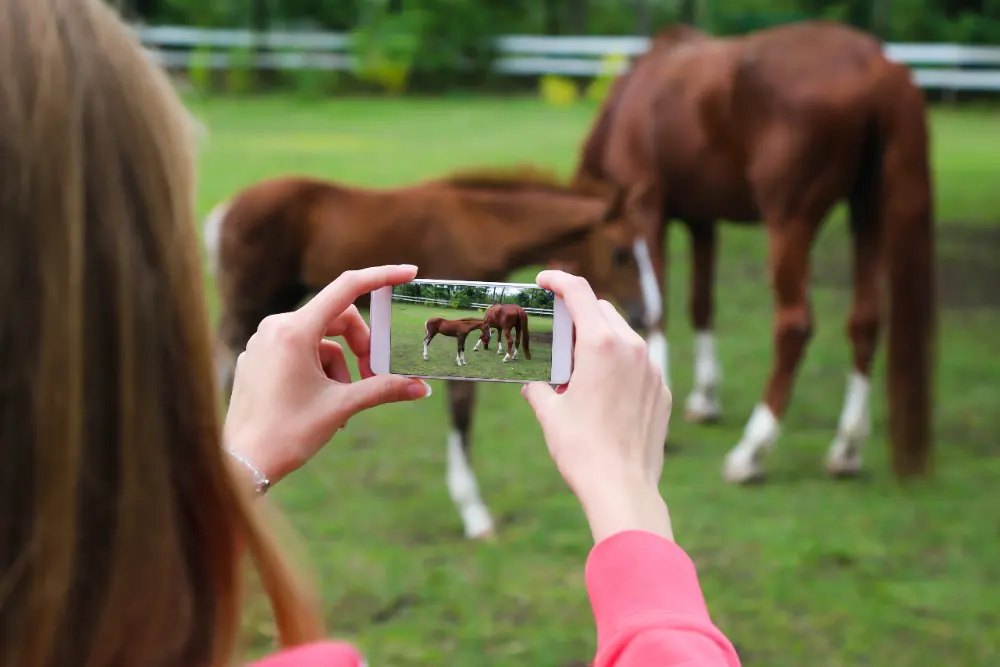
Horse owner filming two horses in a pasture on her phone for mobile video in the moment research
Case study

Mobile video brings researchers into stables and pastures

A major animal feed and supplement company needed input from horse owners - a passionate audience in places that are expensive and difficult to visit at scale. Mobile video ethnography let owners document feeding routines from stables and pastures as they happened.

The result was an authentic view of the routine and the environment, with rich stories the team could analyze across a much larger sample.

10X
more inputs than in-person research
Real time
view into stables and pastures
Mobile video
captured the routine in context
Rich stories
from a passionate audience
Pro tip

When the setting matters, ask people to show you - not just tell you. Mobile video can turn a hard-to-reach location into part of the data.

Case study

Red Lobster turns the table into a feedback touchpoint

Traditional guest-feedback surveys were operationally heavy, slow and difficult to scale. Red Lobster placed QR codes on tables and invited guests to share visit drivers, satisfaction and reactions to promotional menu items while the visit was still fresh.

The program reduced manual survey logistics and created a scalable foundation for ongoing in-restaurant feedback.

10,444+
completed surveys
64%
completion rate
6,946
guests opted for recontact
67%
recontact opt-in rate
Pro tip

A QR code is only useful if it appears at the right moment. Put the invitation where people can respond naturally, and keep the activity short enough that it does not compete with the experience.

05 · Case study

What our FIFA World Cup study revealed about recall

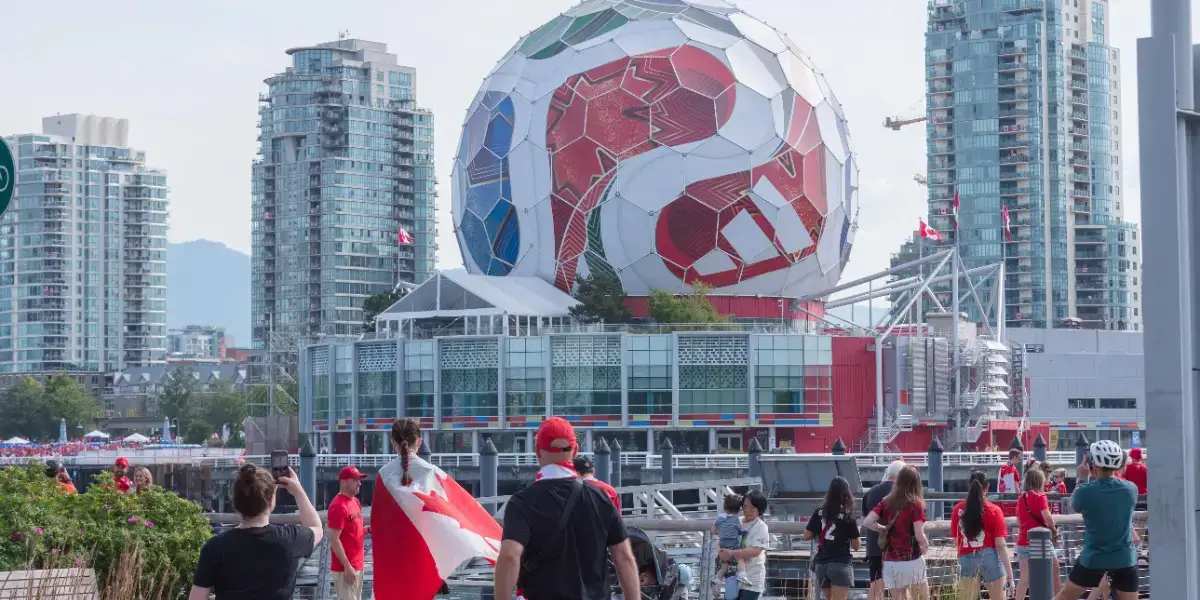
Canada fans on the Vancouver waterfront during the FIFA World Cup, site of an in the moment research study on recall and real-time insights

During Canada’s opening FIFA World Cup match in 2026, Angus Reid, a Rival Group company, ran a simple test: ask some fans during the game, and ask others essentially the same questions three days later.

Researchers recruited people from the Angus Reid Forum who planned to watch the game and established baseline impressions of brands advertising during the match. One group received a short survey by SMS while watching; the other answered three days later.

Same game, different emotional story. During the match, fans reported fun, frustration, stress and disappointment as Canada spent much of the game trailing. Three days later, those memories had softened.

Interactive
Share of fans reporting each emotion
Fun
24% → 33% 24%
Frustration
24% → 7% 24%
Stress
23% → 14% 23%
Disappointment
17% → 7% 17%

The participants were not necessarily being inconsistent. They were answering two different questions: “How do I feel right now?” and “How do I remember feeling?” If emotion is part of your business question, that distinction matters.

The advertising results made the point even clearer

Two commercials stood out: Coca-Cola and Lay’s. Both were remembered after the broadcast, but the in-the-moment reactions showed why they landed differently. Coca-Cola mirrored the tension viewers were already feeling; Lay’s offered entertainment and relief. One connected directly with the emotional state of the moment.

A Tale of Two Brands:

Why one bolstered its brand and another didn't

Coca-Cola
Lay's
Overall Change in Brand Impression
+8
0
Post Game Ad Awareness
+1
-4
Favourite Ad Of The Game
15%
7%

What we learned: in their own words

Coca-Cola ad

The Coca-Cola ad is my favorite because it evokes nostalgia from seeing it during the World Cup. This feeling of nostalgia influences my connection to the brand, as I'm drinking a Coca-Cola right now. I also like the way they customized bottles and cans.
I liked the imagery and the soccer theme in the ad. It made me feel that Coca-Cola supports soccer and appreciates the game, which makes me have goodwill towards Coca-Cola.
The ad was my favorite because it matches how I feel watching sports. When the game was on the line, a fan felt stressed and grabbed a Coke, which I do often. Seeing that moment made me want to grab a Coke myself.

Lay's ad

The ad was my favorite because it was the only one I remembered, and it featured Messi. Seeing Messi in the Lay's ad didn't change my feelings about the brand or the ad itself. I think I have seen other ads from Lay's with footballers.
The Lay's ad was my favorite because it was the only one I remembered. It stood out to me because it was fun.
The Lay's ad was my favorite because it was funny. It seemed more enjoyable with some athletes and a known comedian. It didn't change the way I thought about the brand, but it was a nice relief during weird times in the world.
06 · Case study

Coca-Cola measures what happens before, during and after

If you are measuring a live brand experience, the right question changes over time. Before the activation, you care about expectations. During it, you care about emotion and engagement. Afterward, you care about what stuck.

Reach3 Insights’ Brand Experience Predictor (BXP) is designed around that before-during-after reality. It can establish a baseline, capture reactions while the experience is happening, and reconnect later to measure residual impact.

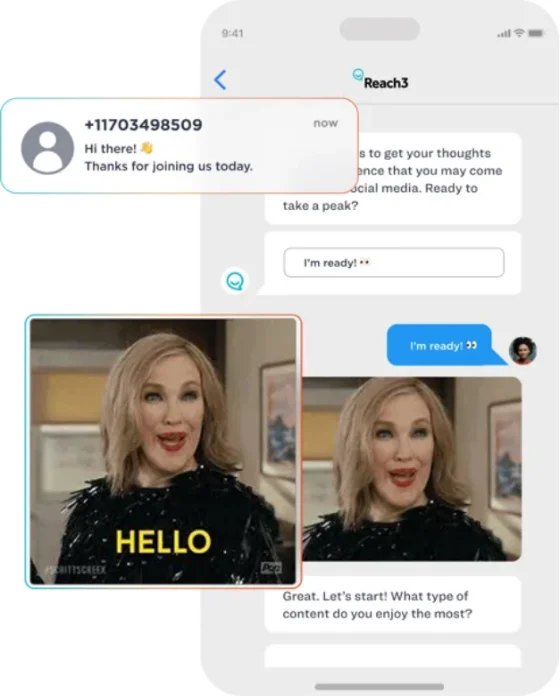
Brand Experience Predictor chat survey on a phone capturing real-time insights: a welcome text, a ready-to-start prompt and a GIF reply from a participant

Measuring what matters for experiential brand activations

Intent
to Share
Word of Mouth and Social
Intent to Engage or Purchase
Overall Brand Impact
BXPScore

Normative comparison with 300+ experiences in our database

Coca-Cola has used BXP around experiences including its Holiday Caravan, Coke Studio at Lollapalooza and activations connected to the Olympic Games. Participants could react in the moment, then be recontacted to understand what they remembered and whether brand perceptions or purchase behavior had changed.

“The Brand Experience Predictor is the only solution I’ve seen that is purpose built to accurately measure and understand the return on the significant investments we’ve made in this space.”
Greg Pharo
Coca-Cola

A simple framework: before, during, after

Select a stage to see the questions it answers.

1. Before

Establish the baseline.

  • What do people expect?
  • What is their current relationship with the brand?
  • What are they likely to notice or do?
2. During

Capture the experience.

  • What is engaging them?
  • What are they feeling?
  • What is confusing, memorable or shareable?
3. After

Measure residual impact.

  • What stayed with them?
  • Did brand perceptions move?
  • Did intent or behavior change?
07 · Case study

A global coffee retailer captures the store experience while customers are still in it

When a major global coffee retailer was renovating stores to create more of a café-style experience, the team wanted to understand the changes while customers were still inside the environment.

Customers scanned QR codes in stores and shared what they were seeing, hearing and noticing around them - including what caught their attention and what they liked or disliked.

The study began in two major markets and expanded to four. Real-time dashboards gave the team visibility across locations and helped show how the renovations were affecting the store experience and brand perceptions.

08 · Playbook

A practical playbook for better in-the-moment research

You do not need to capture everything in the moment. You need to capture the things the moment does best. That often means rethinking habits built for long, email-distributed surveys.

If you know when the experience will happen, recruit ahead. That gives you permission to contact participants at the right time and lets you send a quick reminder before the activity.If you know when the experience will happen, recruit ahead. That gives you permission to contact participants at the right time and lets you send a quick reminder before the activity.

Pro tip

Be explicit about what participants should expect: when you will contact them, roughly how long each activity will take, and whether you plan to reconnect later.

Assume your participant is standing, moving, watching or doing something else. Keep questions, answer choices, media and activity length designed for the phone from the start.Assume your participant is standing, moving, watching or doing something else. Keep questions, answer choices, media and activity length designed for the phone from the start.

Rival connection

Conversational surveys delivered through mobile-first channels can make participation feel more like messaging and less like opening a traditional questionnaire.

Ask only what you need now. If a question could be answered just as well tomorrow, save it for tomorrow. A shorter live interaction is easier to complete and leaves room for recontact.Ask only what you need now. If a question could be answered just as well tomorrow, save it for tomorrow. A shorter live interaction is easier to complete and leaves room for recontact.

Rule of thumb

If a question could be answered just as well tomorrow, consider saving it for tomorrow.

Time your questions around what people are doing, not your internal fieldwork calendar. An intermission may beat the moment after a goal. A commercial break may beat the middle of the show. A post-transaction prompt may beat an email two days later.Time your questions around what people are doing, not your internal fieldwork calendar. An intermission may beat the moment after a goal. A commercial break may beat the middle of the show. A post-transaction prompt may beat an email two days later.

Leave room for the unexpected. A service failure, surprise winner, viral moment or unplanned reaction may suddenly become the most important thing to understand. Choose a Leave room for the unexpected. A service failure, surprise winner, viral moment or unplanned reaction may suddenly become the most important thing to understand. Choose a market research platformmarket research platform and partner that can adapt in the moment. and partner that can adapt in the moment.

When you need the “why,” do not default to a long battery of open ends. When you need the “why,” do not default to a long battery of open ends. AI-assisted probingAI-assisted probing, such as Smart Probe on , such as Smart Probe on the Rival platformthe Rival platform, can ask a relevant follow-up based on what someone already said and help uncover the reason behind a reaction., can ask a relevant follow-up based on what someone already said and help uncover the reason behind a reaction.

Real-time only matters if someone can use it. Dashboards and rapid toplines can help teams spot issues, share performance with stakeholders and improve future executions - sometimes while the current experience is still live.Real-time only matters if someone can use it. Dashboards and rapid toplines can help teams spot issues, share performance with stakeholders and improve future executions - sometimes while the current experience is still live.

Proof point

At a Super Bowl fan zone activation, CAA collected feedback from 325 attendees over two days. Results were available while the activation was still underway, giving the team performance metrics and specific learnings to use in future executions.

09 · Action-triggered insights

The next step: let the moment trigger the research

Sometimes the moment is not on your calendar. A customer makes a purchase. Someone abandons a process. A service issue is resolved. A new member joins a community. Those are all moments worth understanding.

That is where action-triggered insights extend in-the-moment research. Instead of relying on a researcher to watch the clock and manually launch a survey, an event in a CRM, marketing automation system or research platform can trigger the conversation automatically.

Think of it this way

A virtual researcher is watching for a meaningful action and asking, at the right moment:

You just did X. Can we ask why?

On the Rival platform, APIs can connect research workflows with other customer systems. A trigger might be a purchase, negative feedback, product interest, a community join or another defined event. In physical environments, QR codes can let the customer trigger the conversation themselves.

Why this matters

  • Less manual orchestration. Teams can program the timing instead of repeatedly scheduling distributions by hand.
  • More relevant conversations. Customer data can determine who receives a question and why.
  • Better context. Research data can be connected with transactional or CRM data rather than living as a separate snapshot.
  • Faster follow-up. Workflows can react to behaviors and responses while there is still an opportunity to learn or act.
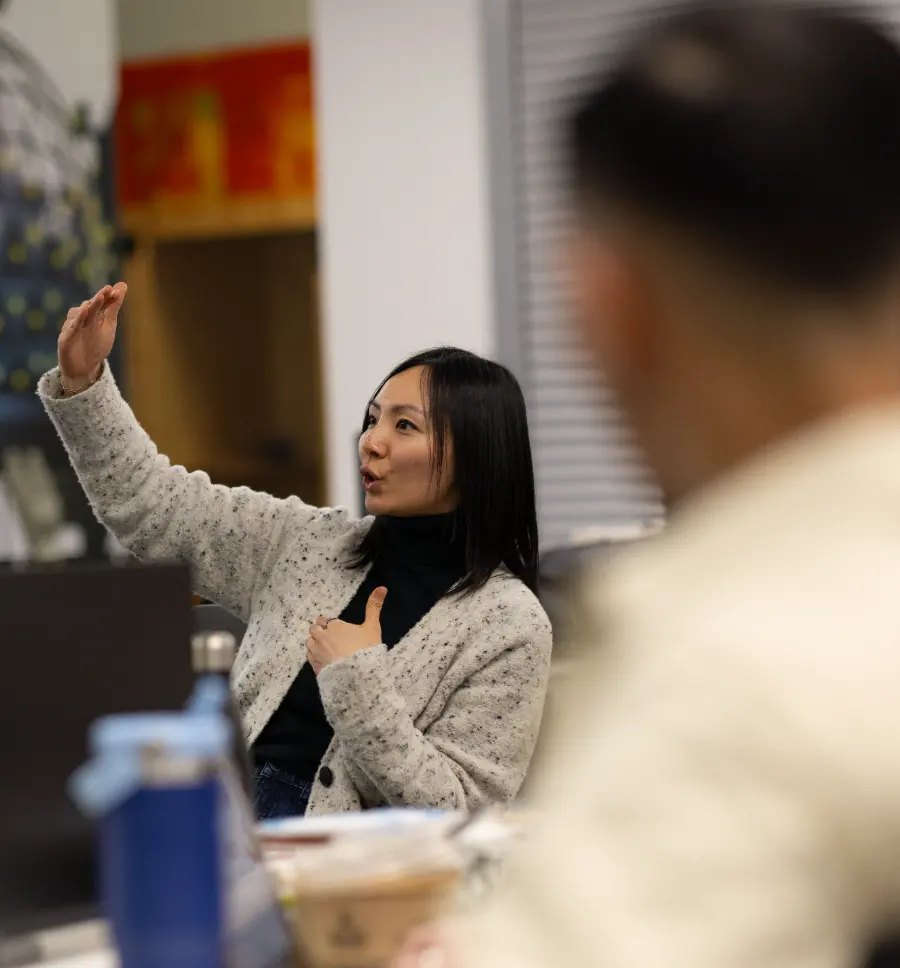
Rival researcher briefing colleagues, representing how to choose among top in the moment research companies
10 · Choosing a partner

How to choose a partner for in-the-moment research

In-the-moment research can look simple from the outside: reach someone quickly and ask a few questions. In practice, the partner you choose can determine whether the research actually feels timely, easy for participants and useful for your team. If you are evaluating options, use this checklist.

A simple partner checklist

0 of 7 checked

No single project needs every box checked. But the more time-sensitive, contextual or complex your study is, the more these capabilities matter. Rival Group brings these pieces together across Rival Technologies, Reach3 Insights and Angus Reid, so you can match the technology, research support and sample to the job.

11 · Key takeaways

What to remember about in-the-moment research

  1. 1

    Treat timing as part of the methodology.

    When you ask can influence what you learn, especially when emotion, context or sequence matters.

  2. 2

    Use the moment for what it does best.

    Capture details that are likely to fade; save reflective questions for later.

  3. 3

    Design for the phone and the setting.

    Keep activities concise, conversational and realistic for what people are doing.

  4. 4

    Capture context, not just scores.

    Open ends, photos, video and AI-assisted probing can explain what is behind a rating.

  5. 5

    Compare now with later when the business question requires both.

    Recontact lets you see what changed and what lasted.

  6. 6

    Design for action.

    Dashboards, integrations and event-based triggers can shorten the distance between an experience, an insight and a decision.

Final thought

The goal is not to eliminate memory from research. It is to stop asking memory to do a job that the moment can do better.

Get closer to the moments that matter

In-the-moment research can help you understand experiences while they are still unfolding, add context to the “why,” and reconnect later to see what truly lasted.

Best market research firms for in the moment research and mission studies.
Platform

Research people actually complete

Conversational, mobile-first, quant + qual, & unlimited video

Audiences

Real people, video-verified, proprietary panel

Expert consulting

Strategic research partnerships

Service spectrum
DIY
You run with our platform
Assisted service
Rival supports your team
Full service
Consultant managed end to end

Have an upcoming customer experience, live event, shopper, product or brand activation study? Request a demo or talk to the Rival Group team about the right in-the-moment approach.

Request a demo

Get in-the-moment insights fast

See how leading brands use Rival to get real-time quant, qual and video feedback

FAQs about in-the-moment market research

What is in-the-moment research?

In-the-moment research is a timing strategy rather than a single method. You collect feedback while an experience is happening, or soon enough afterward that people are still close to the details. Participants might be in a store aisle, at a game, tasting a product, using an app or leaving a service interaction.

What is recall bias, and why does it matter?

Recall bias happens when people reconstruct an experience from memory, so you end up measuring the memory rather than the experience. Details fade and emotions soften over time. In our FIFA study, fans surveyed during the match reported more frustration and stress than fans asked three days later, even though they watched the same game.

When should I ask in the moment, and when should I ask later?

Ask now for what you could lose by waiting, such as first reactions, emotion and context. Ask later when you want people to reflect, including what they remember, whether perceptions changed and whether behavior followed. Many strong designs do both.
What is the difference between mission-based and intercept-based research?

Mission-based research recruits participants in advance and gives them a task, such as visiting a store, trying a product or watching a broadcast, then reaches them at planned moments. Intercept-based research invites people who are already having the experience, often through a QR code, link or prompt at the location or touchpoint.

What kinds of research work best in the moment?

It works well for product and sensory testing, shopper research, customer experience, advertising and media watch-alongs, experiential and sponsorship measurement, in-home usage and digital journeys. The more context, sequence or emotion matters to your question, the stronger the case for getting closer to the moment.

Will a short mobile survey get enough depth for in-the-moment research?

It can, if you design for it.

Conversational formats keep questions short and natural, and photo, video and AI-assisted probing can capture the “why” without a long interview. In research with more than 2,000 people in the U.S. and Canada, conversational studies on the Rival platform generated 87% completion rates, 65%+ recontact rates and video responses up to 8x longer than traditional text open ends.

Can I recontact participants after the experience?

Yes, and it is worth planning for at the design stage. Recontact (through platforms like Rival Technologies) lets you compare the immediate reaction with what people remember later, whether brand perceptions shifted and whether intent or behavior changed. 

How do I choose a partner for in-the-moment research?

Look for mobile-first design, a conversational experience, the ability to capture photo, video and open-ended context, easy recontact, fast reporting and integration with customer systems. Also check whether you can choose between a technology platform, full-service support and quality sample depending on the project.

Rival Group brings these together across Rival Technologies, Reach3 Insights and Angus Reid.