



Let's be real. The pace of the food and beverage industry right now feels a little like trying to make avocado toast while someone keeps moving the avocados. Consumer tastes shift overnight, retail shelves are brutally competitive, and your marketing budget has to work harder than ever.
The numbers back this up. A Reach3 study found that 81% of Americans are open to trying new grocery brands. As reported by Supermarket News, 44% of Americans report longer grocery shopping trips, "suggesting that shoppers are spending more time comparing products and evaluating options in store aisles." Attention is up for grabs — and brands that can act on shopper insights faster are the ones capturing it.
Traditional research approaches are too slow and too costly to keep pace. Enter the insight community — a tool that lets food and beverage CPG brands make smarter, faster decisions without starting from scratch every time.
What is a CPG insight community, exactly?
An insight community is a recruited, ongoing group of real consumers who agree to share their thoughts, habits, and opinions in a private, secure environment.
Think of it less like a focus group (expensive, one-time, catered platters of sad sandwiches) and more like a standing panel of engaged shoppers you can tap whenever a real business question needs answering.
For research teams at CPG companies, this is especially valuable because most brands don't have direct access to consumers. Unless you're a direct-to-consumer brand, you may not have a robust marketing database to draw from. As Insight Platforms puts it: "An insight community can help you plug some of this gap for a sample of people and give you an ongoing dialogue with your consumers."
The real power is compounding learning. Instead of re-recruiting from scratch every time, you build richer profiles over time. You already know your member is a primary shopper who hates cilantro and spends 45 minutes a week comparing protein bar labels — so your next activity skips the basics and gets straight to what matters. It's no surprise that communities remain one of the most widely used methods among client-side researchers, according to Greenbook's 2025 GRIT Insights Practice Report.
Why insight communities work especially well for food & beverage
CPG brands live and die by three things: what people want to consume, why they choose one product over another, and how they actually behave in stores — versus what they say they'll do, which are reliably two very different things.
Insight communities let you explore all three, longitudinally, without re-recruiting every quarter. For a category where a packaging tweak, a new claim, or a price change can swing velocity dramatically, that ongoing connection is a genuine competitive advantage.
Strategic use cases: What research to run in your community
Product innovation & concept testing
Got five new product territories to pressure-test before the next innovation gate? Run a conversational concept screen with your community, follow up with qualitative probing on the top performers, and recontact members who reacted strongest for deeper co-creation.
Kellanova did exactly this with Cheez-It. Working with Reach3 Insights, they built a short-term pop-up community for territory testing — using a conversational approach to capture quant, qual, and video feedback from a mostly Gen Z audience, then leveraging Rival's recontact capabilities to go deeper with engaged members. The result: faster iteration driven by real consumer signal.
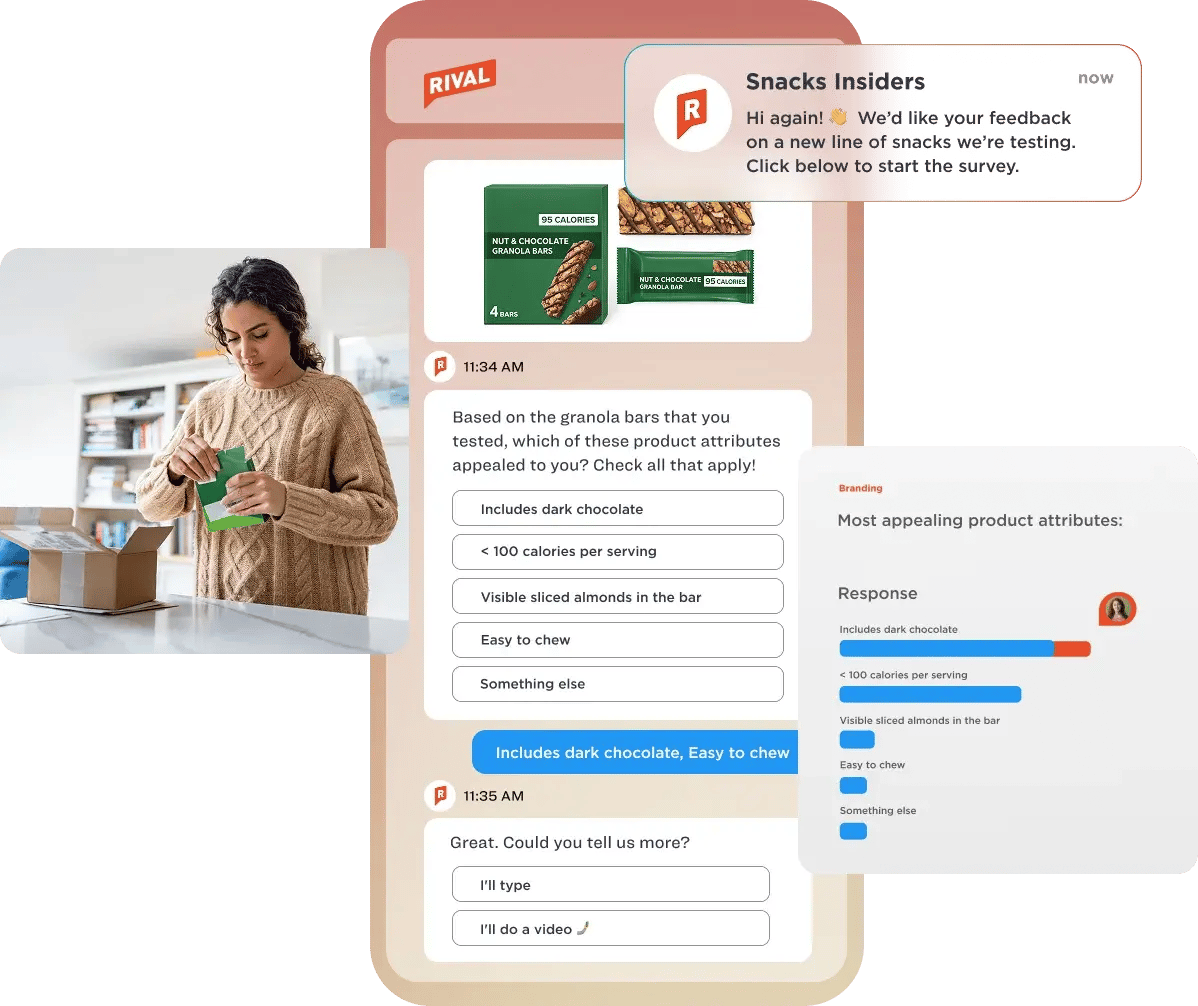
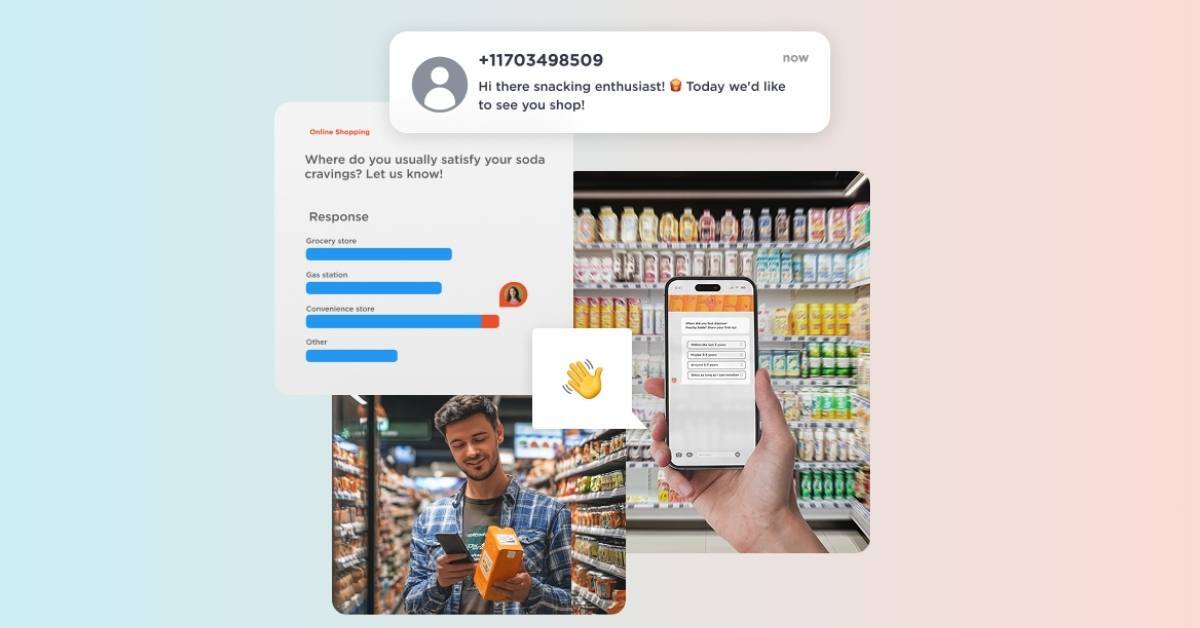
In-home use tests (IHUTs) are another strong use case. One major snacking brand uses its Rival community to send new products to shoppers alongside a QR code linking to a conversational survey. Over time, members develop a nuanced understanding of what useful feedback looks like — and they're surprisingly candid about what they don't like. Worried about bias in a branded community? Research leaders at this brand report that members don't hold back.
Packaging and claims optimization
Before locking in a new label design, run it through your community. Fast packaging pulses can validate which visual hierarchy lands, which claims feel credible, and what falls flat — then validate in context through in-store missions or pantry audits, so you're capturing reactions in the real world rather than against a white background.
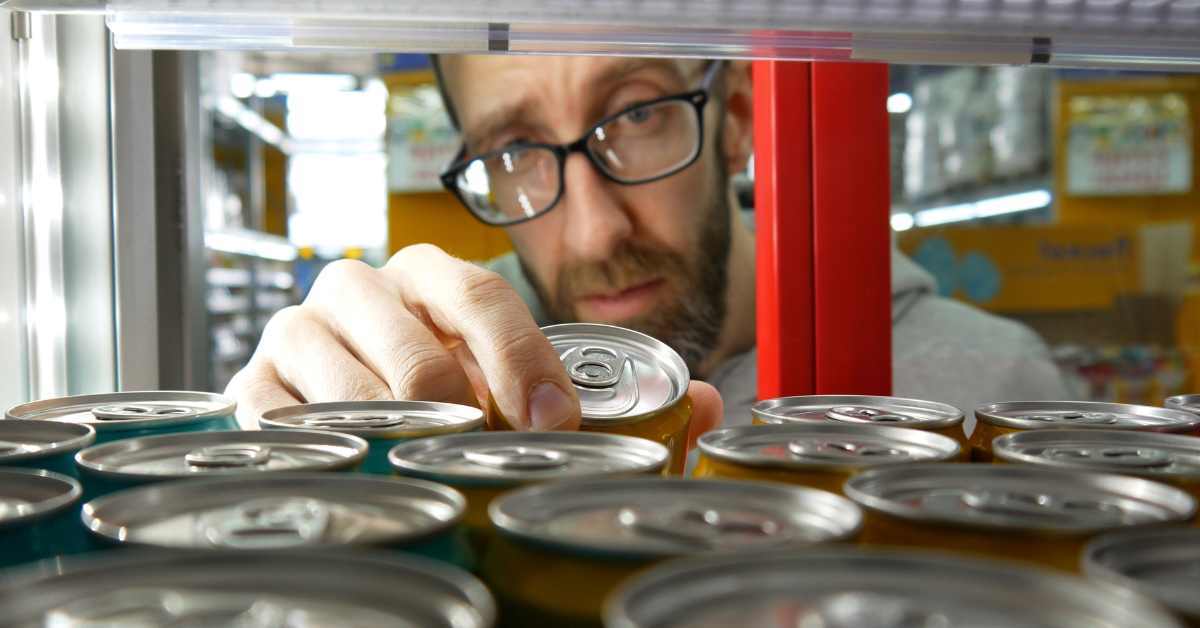
McCormick uses community research specifically for in-store product assessment, evaluating packaging and shelf placement. Diageo used their Spirits Insiders community to guide packaging and messaging for "Spirits-In-A-Can" — a product that needs to justify its existence in about three seconds on a shelf.
Pricing and value perception
Price testing in communities is underrated. Run quantitative price hypotheses, then layer in qualitative follow-ups to understand why a price feels fair or not. You'll surface the emotions driving price perception — the kind of nuance that doesn't show up in a conjoint table.
Shopper behavior and Path to Purchase
Online grocery, click & collect, curbside pickup — shopper behavior has genuinely fragmented, and old models don't map onto new habits. This is where community research gets particularly interesting for CPG.
Kellogg's engaged click & collect shoppers across major retailers including Target, Albertsons, and Kroger, combining video feedback and emotional elicitation with quant to uncover real conversion barriers. You don't know what's blocking the add-to-cart moment until you actually watch someone navigate it — and a standard survey won't show you that.
Advertising & Creative Testing
Before a campaign goes live, your insight community can tell you whether it's actually working. Run creative concepts, storyboards, or finished ads through your community to gauge emotional resonance, message clarity, and brand fit — then use qualitative follow-up to understand why something lands or falls flat.
This is especially valuable in food and beverage, where appetite appeal, occasion relevance, and authenticity cues can make or break a spot. Unlike traditional copy testing, community-based ad testing lets you iterate quickly across different audience segments — say, testing the same creative with primary shoppers versus secondary shoppers, or across distinct consumption occasions — without spinning up a new research program each time.
And because your members have established profiles, you can connect ad reactions back to real purchase behavior and category attitudes, adding a layer of context that a one-off survey simply can't provide.
Some considerations before you build a CPG community
Who will use the insights?
R&D, brand, shopper marketing, e-commerce, trade — get everyone aligned before you build anything. An insight community without internal stakeholder buy-in is just an expensive email list.
Build a research roadmap that mirrors your product cycles: innovation gates, seasonal resets, promotional windows. Research should be answering questions before decisions get made, not after.
Knowing who needs research is the first step to showing the ROI of your insight community. If you know the decisions that your community can help inform or influence, then it’s easier to measure the impact.
Branded vs. blind
Branded communities — where members know who's sponsoring — tend to drive stronger engagement and richer feedback because members feel genuinely invested. Blind communities can reduce sponsor bias for competitive or awareness work, but come with higher churn. The right call depends on what you're studying and how sensitive the competitive context is.
Skip the portal. Skip the app.
When market research online communities (MROCs) first emerged, a branded portal was a core part of the model. In 2026, that's a burden nobody wants — not the research team that has to design and maintain it, and not the community members who have to remember yet another password.
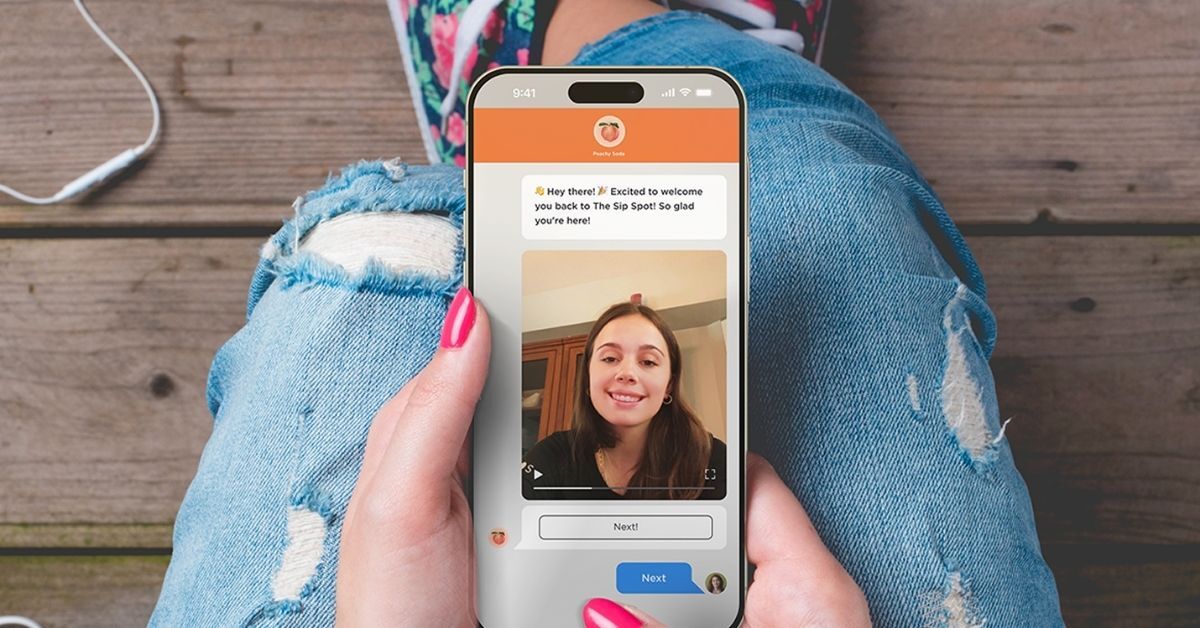
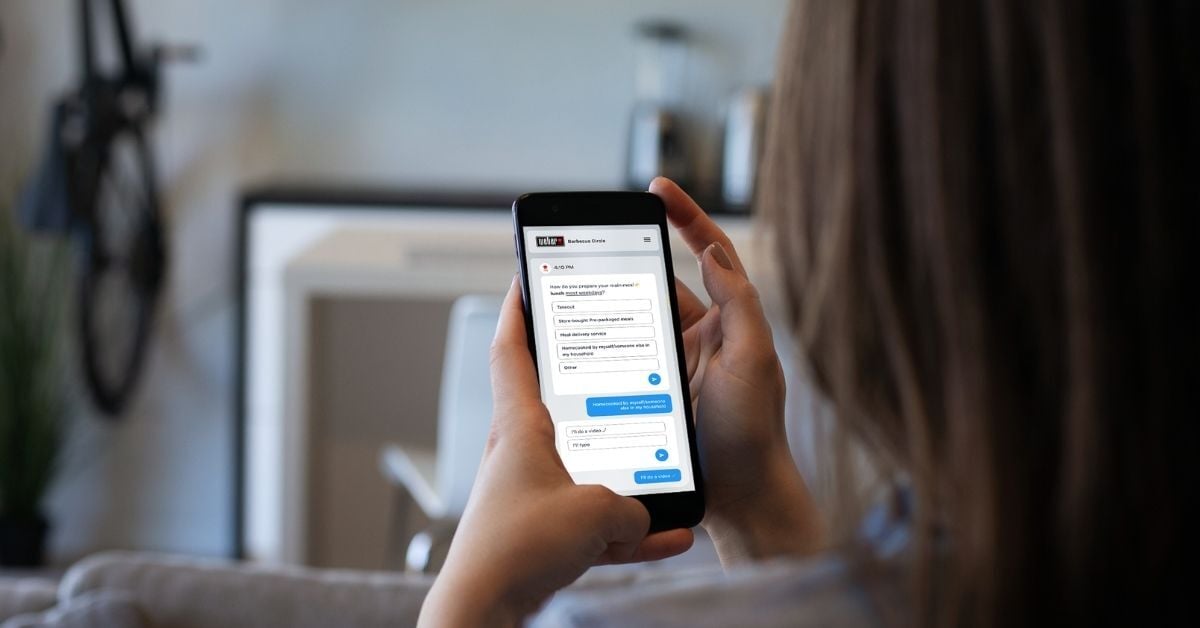
The same goes for dedicated mobile apps. Requiring members to download something just to participate is friction that kills engagement before it starts. Modern communities meet people where they already are.
Recruiting your CPG insight community
If you're wondering how to build a community without an existing database of shoppers, the answer is to diversify your sources from the start.
Go multichannel. Relying on a single panel creates a professional-respondent problem — you may end up hearing from the same people who take surveys as a side hustle, not the actual shoppers you care about. We recommend a multi-channel approach. In addition to a sample provider, try to recruit people from email lists, QR-code intercepts at retail, social sampling, and API or webhook integrations for genuinely diverse membership.
Segment around real food decision logic. Demographic segmentation only gets you so far. Segment around need-states, channels, household context, and consumption occasions. "Primary grocery buyer doing weeknight meal planning on a tight budget" is a more actionable segment than "Female, 28–42, HHI $65K+" — and it gets you back to understanding how people actually behave, not just who they are on paper.
Top research companies for CPG insight communities
When evaluating top insight community companies, look at both technology and service depth together.
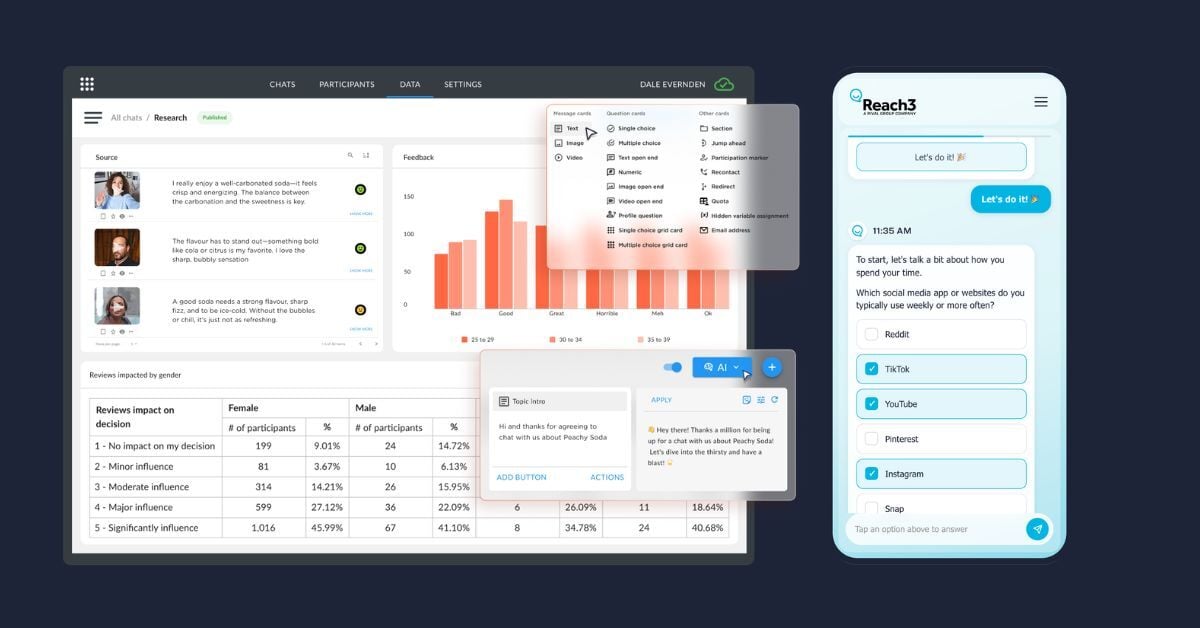
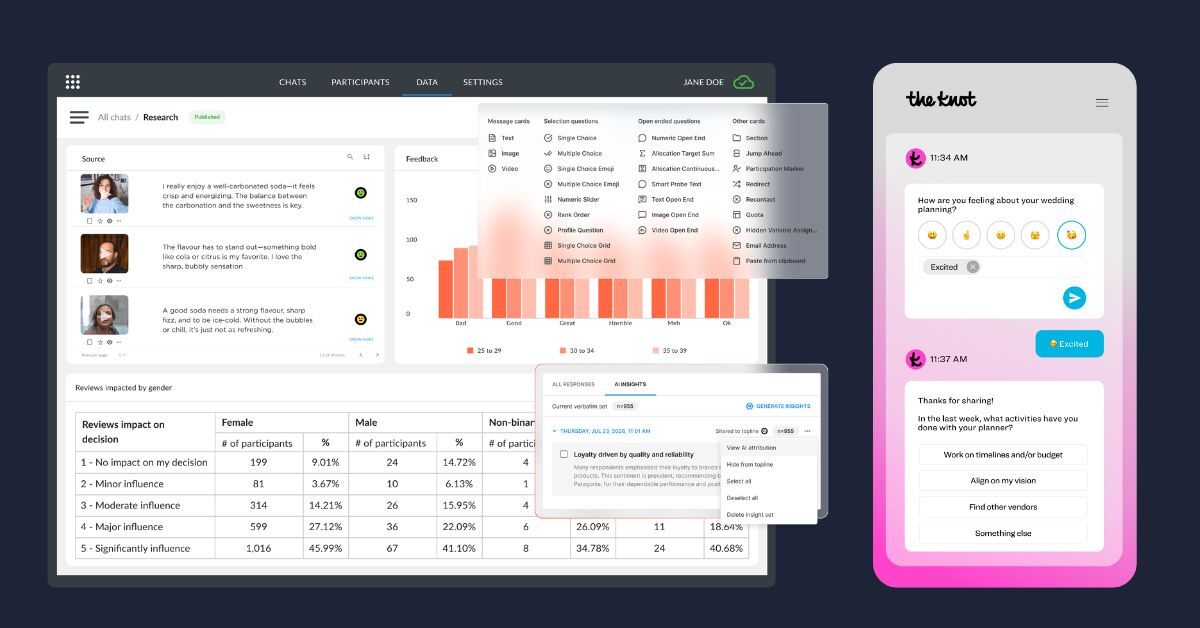
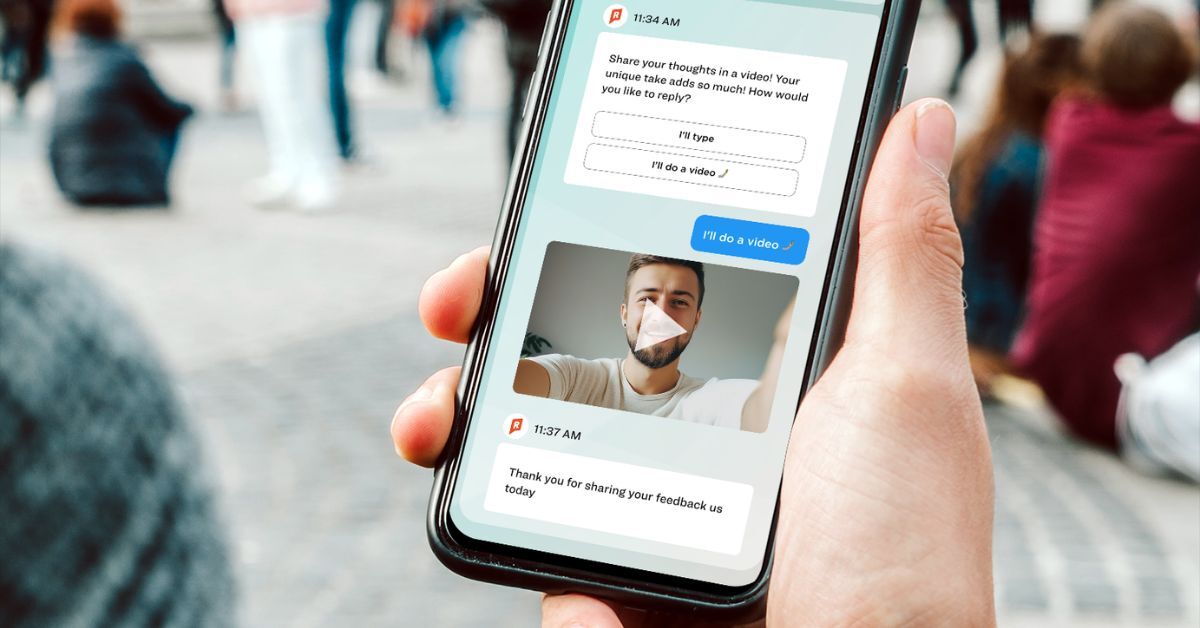
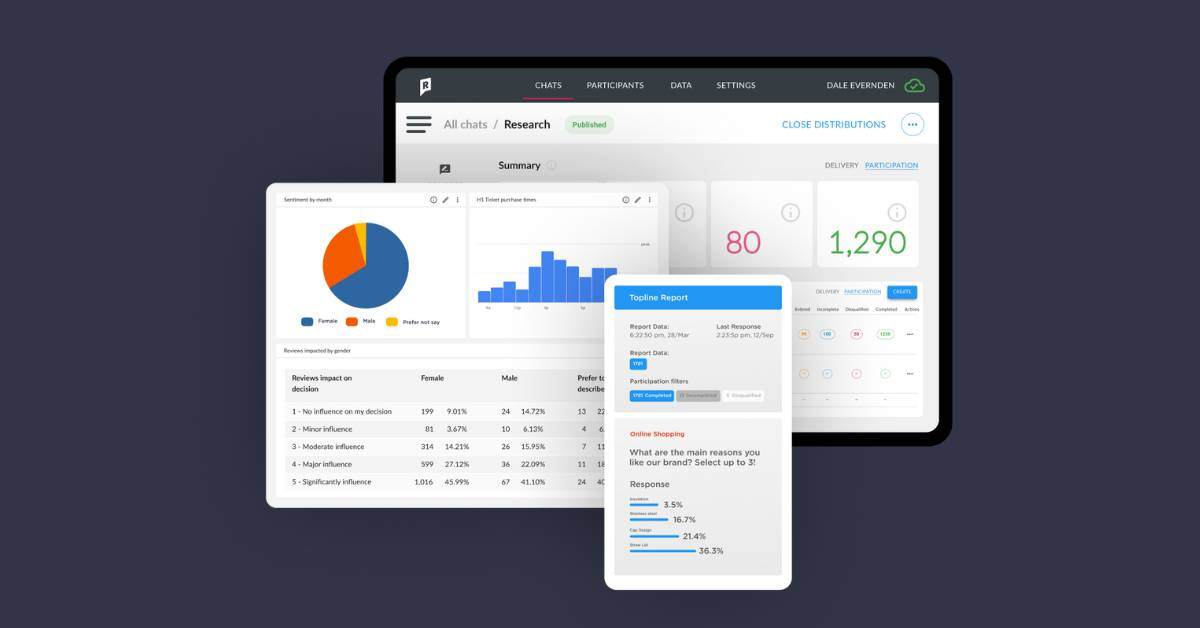
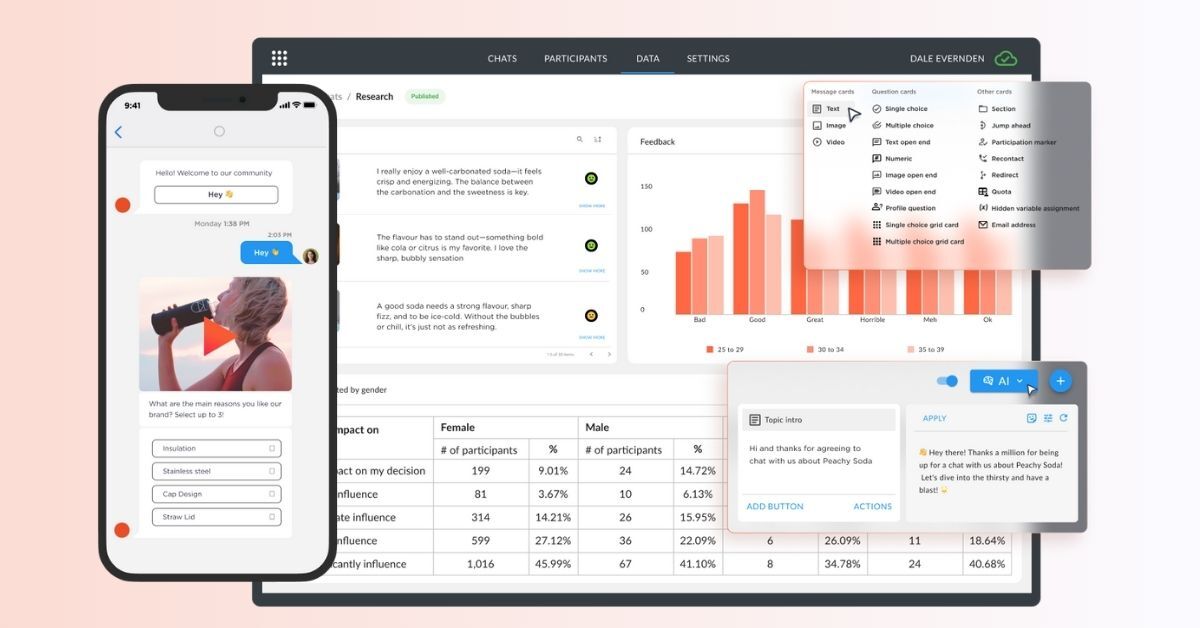
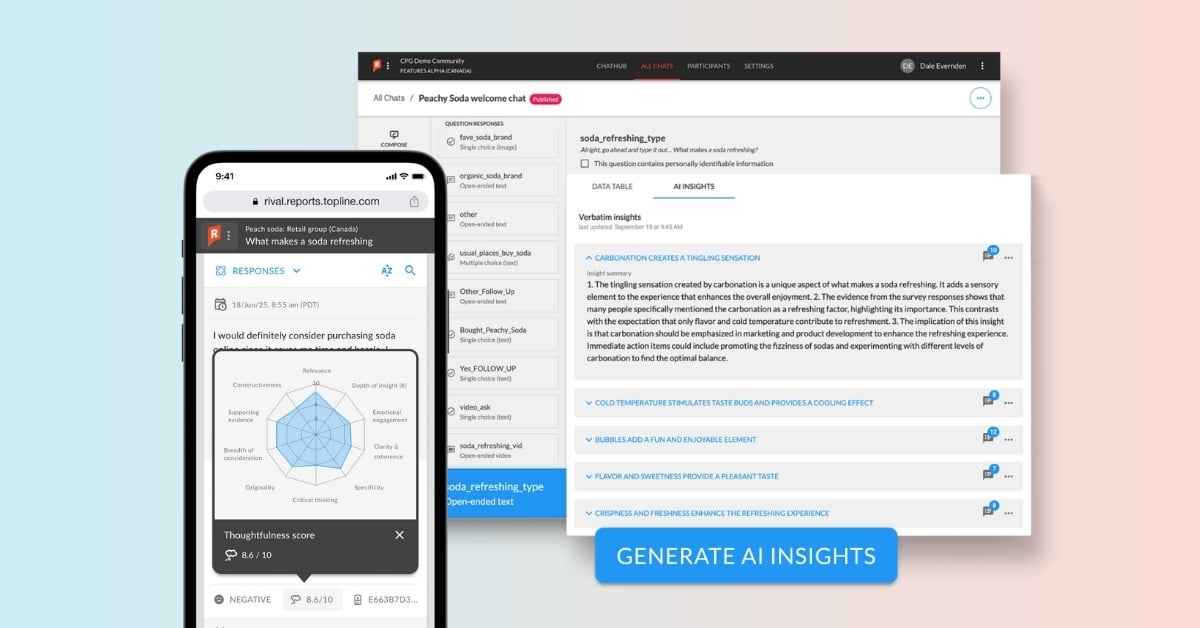
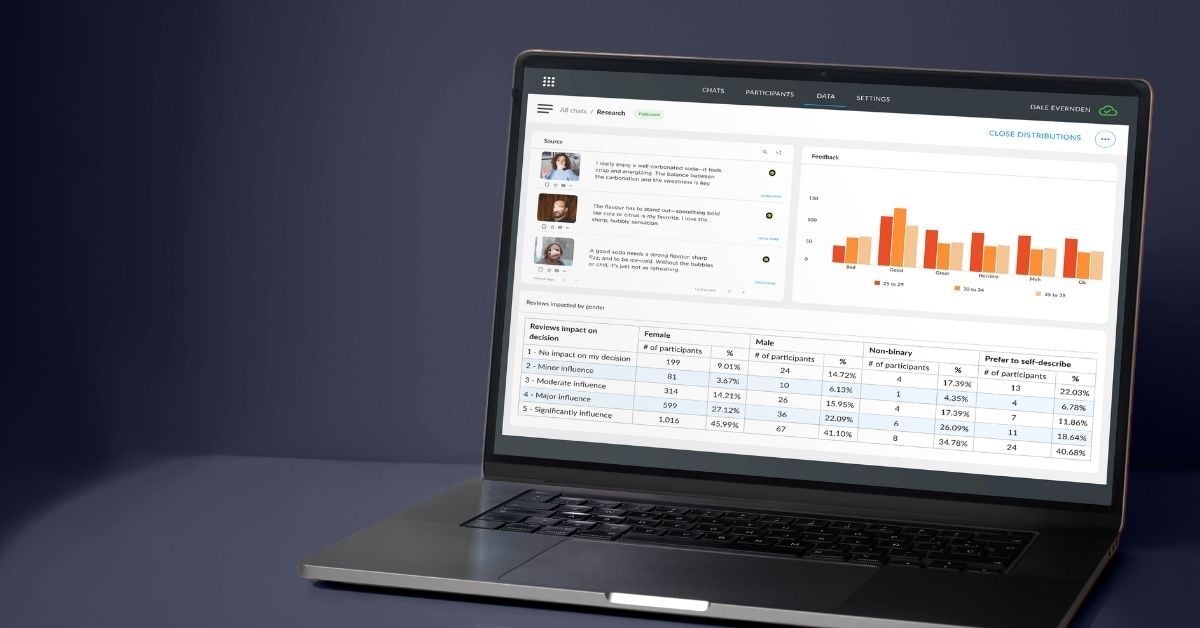
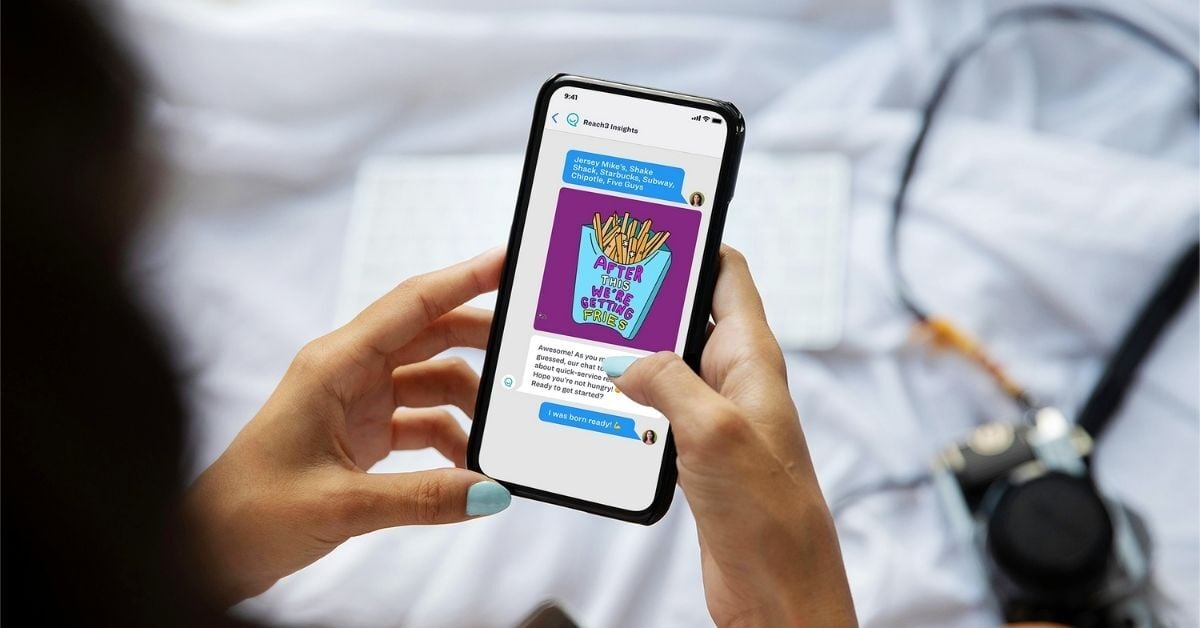
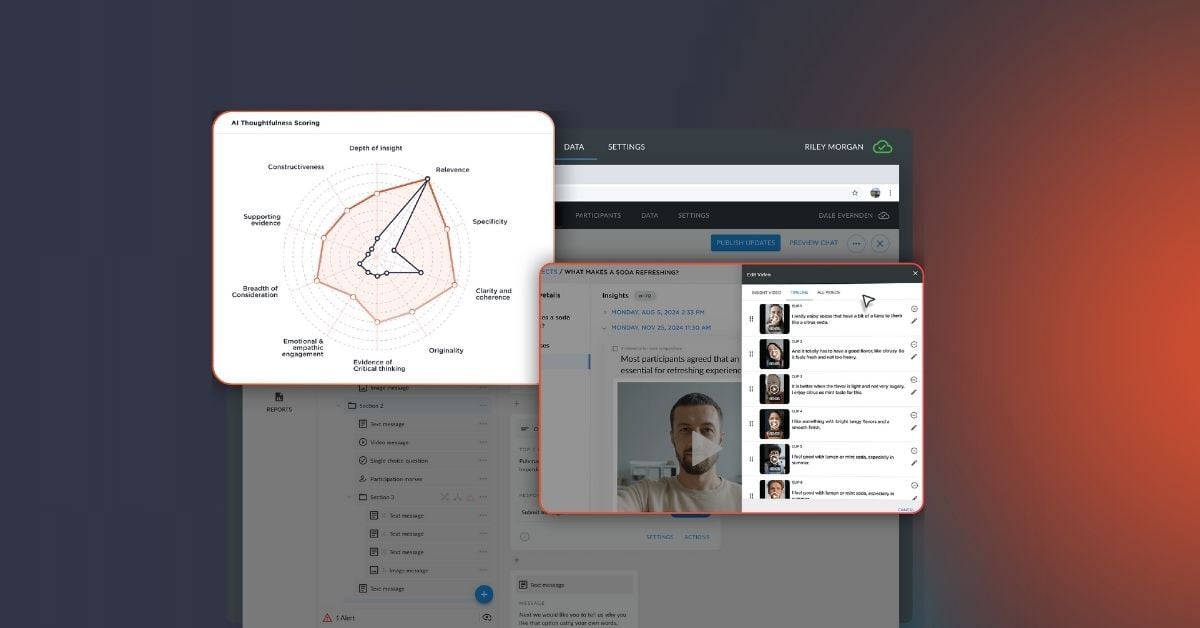
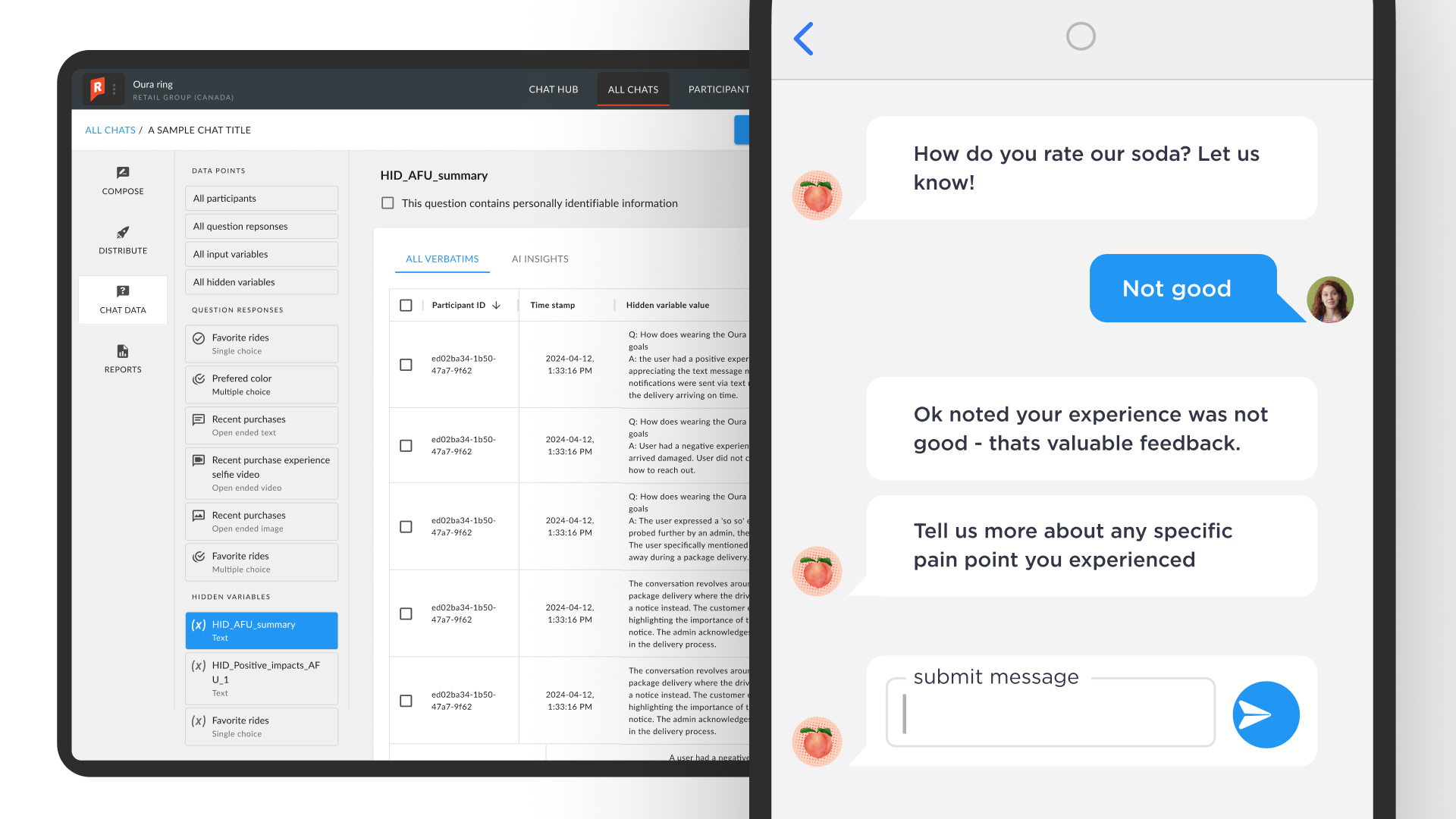
Rival Technologies is a strong choice for CPG researchers who want a robust platform without sacrificing engagement. Rival pioneered a conversational approach to insights — engaging community members in a way that mirrors how people actually communicate today. A research-on-research shows that conversational techniques deliver up to 8x deeper insights and elevate the thoughtfulness of responses — while improving engagement across all age groups. (Yes, even Boomers!)
Beyond community management, Rival offers a growing suite of AI tools to accelerate workflows and support storytelling techniques, and their customer success team works closely enough with clients that many brands describe them as an extension of their own research team.
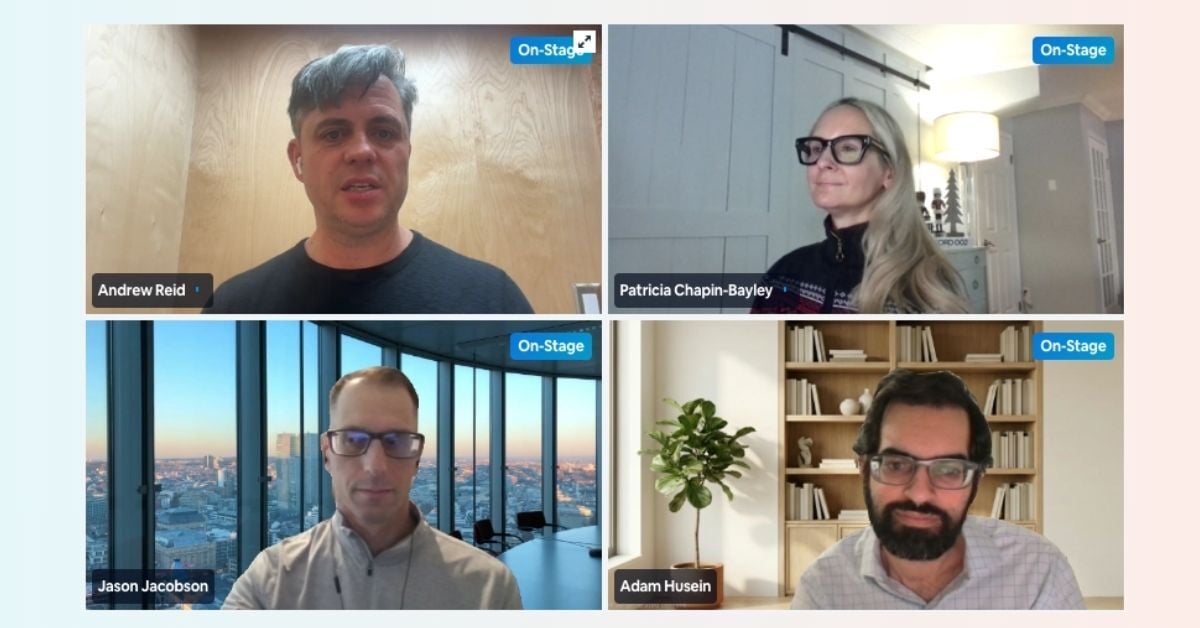
For brands that need end-to-end community management, Rival's sister companies Reach3 Insights and Angus Reid are worth exploring. Other established market research suppliers with CPG clients include KLC Communications, Alida, and Fuel Cycle.
The Bottom Line
Consumer insight communities aren't a nice-to-have anymore — they're core infrastructure for CPG brands that need to move at the speed the market demands. The brands doing this well are running smarter, shorter activities with real consumers, building knowledge over time, and connecting insights directly to decisions.
If your current research model feels like it's still loading, it might be time to upgrade.





























.jpg)



















.jpg)










-1.jpg)



.jpg)

.jpg)