


In a recent webinar with Greenbook, Lenny Murphy and our Co-CEO and Chief Methodologist Jennifer Reid explored how bringing technology, research expertise and high-quality audiences together into a single system can help research teams better balance speed, scale, quality and trust in the age of AI.
For years, the insights industry has operated with a pretty fixed set of assumptions: moving faster could put pressure on quality, scaling programs often added complexity and keeping costs under control sometimes meant sacrificing flexibility, depth or the overall respondent experience somewhere along the way.
But as Lenny and Jennifer discussed throughout the webinar, that mindset is starting to shift, especially as AI changes how insights are collected, analyzed and used across organizations.
A recording of this conversation is now available here. Want to read the highlights? Read on for our key takeaways!
Traditional research models are under pressure
The conversation started with a look at the challenges many research teams are still navigating today. According to the latest GRIT Business & Innovation Report and Esomar Global Prices Study, compressed timelines, increasing demands for efficiency and ongoing concerns around sample quality are still very real issues across the industry.
“Sample continues to be an issue across the board,” Lenny said. “There are significant challenges with quality, availability, and supply, and addressing needs is only getting more complex.”
At the same time, insights teams are being asked to support more parts of the organization than ever before. Research is no longer sitting neatly inside one centralized department.
“The role and function (and its position inside the brand) is changing,” Lenny explained. “Insights is increasing in importance, but it's diffusing across the organization.”
That creates a different kind of pressure. Teams are expected to move faster, support more stakeholders and deliver insights that are easier to access and apply in real business decisions.
What the “insights trifecta” means in practice
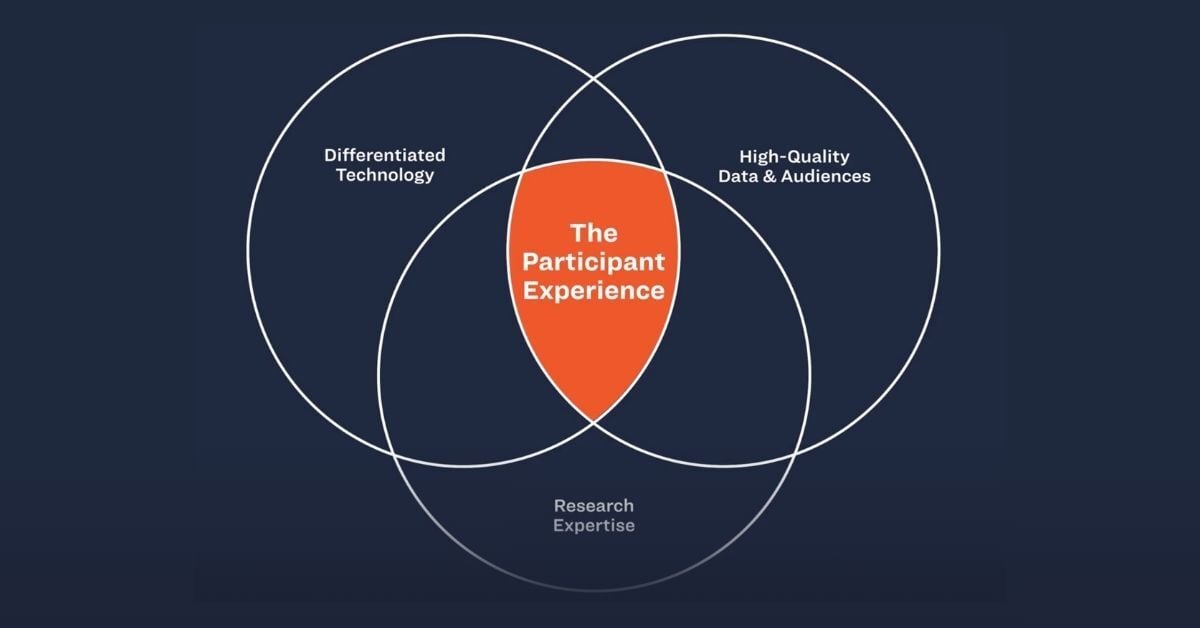
The core idea behind the webinar was what we at Rival describe as the “insights trifecta”: connecting innovative technology, consulting expertise and audiences into a more integrated research system after years of those pieces operating separately across different vendors.
“As an industry, we allowed these three pieces to get separated over the years,” Jennifer said. “Our philosophy has been that if you bring these three things back together under one roof, it really does allow for special things to happen.”
Jennifer also pointed to six expectations clients increasingly want at the same time: fast, cost effective, scalable, high quality, trustworthy and thoughtful. Traditionally, research teams often felt forced to prioritize some over others, but the idea behind the trifecta is that a more connected system makes it easier to balance those demands without the same level of compromise.
In a lot of ways, that structure mirrors how we’ve grown as a company. Rival Technologies started with conversational research technology. Reach3 Insights expanded the consulting side. Angus Reid established itself as a respected market research firm in Canada while also bringing decades of expertise in panels and audience development.
As AI becomes more embedded into research workflows, that kind of integration is becoming even more important.
Why participant experience matters more than ever
Anyone who has heard Jennifer speak before will recognize a theme she consistently comes back to: the respondent experience matters, both from an engagement standpoint and from a data quality perspective. While much of the industry’s attention is currently focused on AI-related challenges like bots, survey farms, fraud prevention and synthetic responses, Jennifer argued that none of it matters if real people no longer want to participate in research or if the experience itself starts to break down.
“Never compromise on the participant experience,” Jennifer said. “Your data and insights are only as good as the source material.”
She also pointed out that research is competing for attention in a completely different environment now than it was even a few years ago.
“On your phone, you're competing with everything else the respondent could be doing,” Jennifer said. “Playing a game, chatting with their mom, checking stocks, reading email.”
That thinking has shaped the conversational, mobile-first approach we’ve built into the Rival platform. The goal is to create experiences that feel more natural and engaging instead of forcing people through long, traditional surveys that feel disconnected from how they already communicate.
How AI is changing research workflows
The webinar also covered how AI is already changing day-to-day research operations, from translation and qualitative synthesis to AI probing and workflow automation.
Jennifer talked about how AI is helping researchers spend less time getting buried in manual processing and more time thinking about the story behind the data.
“Where it used to be laborious to get through a lot of qual insight, we can now cut through it quickly and spend more time applying our knowledge and expertise to the story,” she said.
Lenny noted that conversational qualitative research is already becoming much more common across the insights industry, referencing a recent conversation with a major sample provider where close to 40% of traffic flowing through their systems is now conversational qualitative work instead of traditional surveys.
At the same time, both speakers were clear that AI doesn’t remove the need for human judgment. “The efficiency gains are undeniable,” Lenny said. “But hallucinations still happen. Humans still need to guide.”
What integrated research systems can unlock
Jennifer also shared several client examples and case studies showing how the trifecta model works in practice.
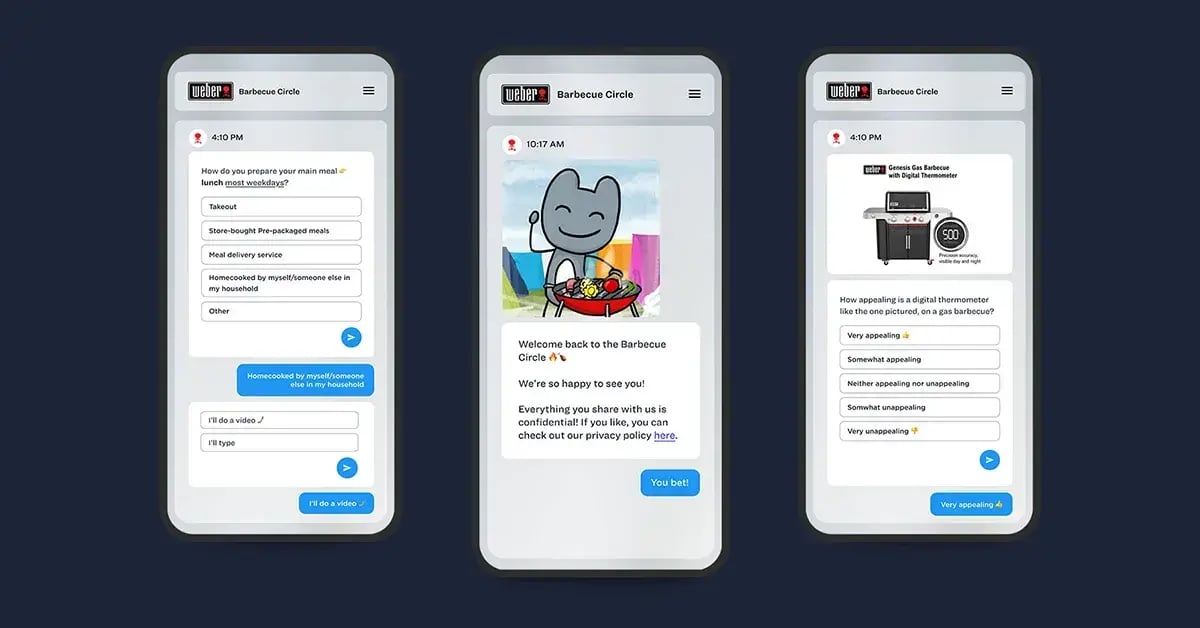
One example focused on Weber-Blackstone, where a small internal insights team used Rival’s mobile-first communities alongside consulting support from Reach3 Insights to scale research programs across four countries while also improving engagement with younger audiences.
Another example highlighted work with Warner Bros. Discovery around AI Listening and visual semiotics, in addition to their insight community. Jennifer described how close collaboration between consultants, engineers and clients made it possible to prototype and test new ideas very quickly.
“We can pair a smart client with a smart consultant and smart software engineers and actually prototype cutting-edge things on the fly,” she said.
Other examples included financial services clients building always-on research programs and Canadian Gen Z audience initiatives supported through our proprietary panel infrastructure.
Across all of them, the common thread was integration: reducing friction between technology, expertise and high-quality audiences so teams can move faster while still maintaining quality and strategic oversight.
Why the “insights trifecta” is resonating right now
What came through clearly during the webinar is that the “insights trifecta” is not really about bundling services together for convenience. It’s a response to how fragmented the research process has become over time, with technology, sample and consulting often operating separately even though each piece directly affects the others.
As AI tools push research teams to move faster and support more parts of the organization, those gaps become harder to manage because data quality problems can quickly influence AI outputs, poor respondent experiences make recruitment and long-term engagement more difficult and disconnected systems often create operational friction instead of helping teams work more efficiently.
Bringing those pieces back together creates a more connected and accountable way to approach modern research, particularly at a time when organizations are trying to balance speed, quality, scale and trust all at once.
For more details on the insights trifecta, please watch a recording of this special event featuring Jennifer and Lenny.
👉 Curious about leveraging tech, expert consulting and panel? Book a demo with our team to learn more.