


If you work in insights and aren’t using AI at this point, congrats on your impressive ability to avoid the internet.
Everyone else? We’re somewhere between “this is kind of amazing” and “why does my AI suddenly sound like it’s never met me before?”
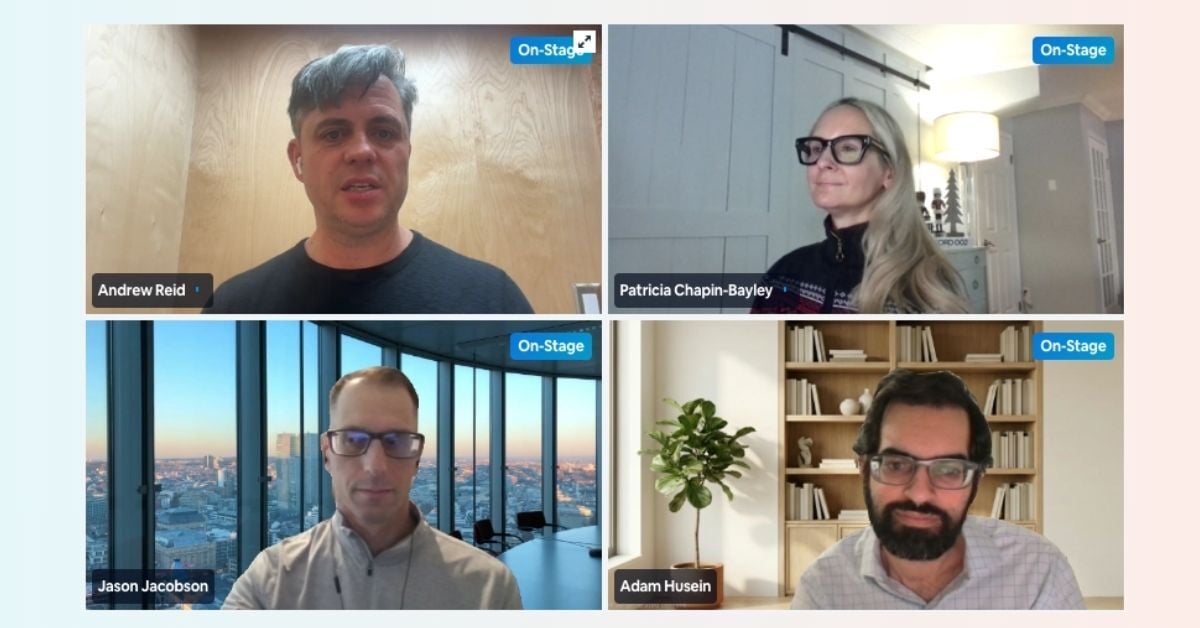
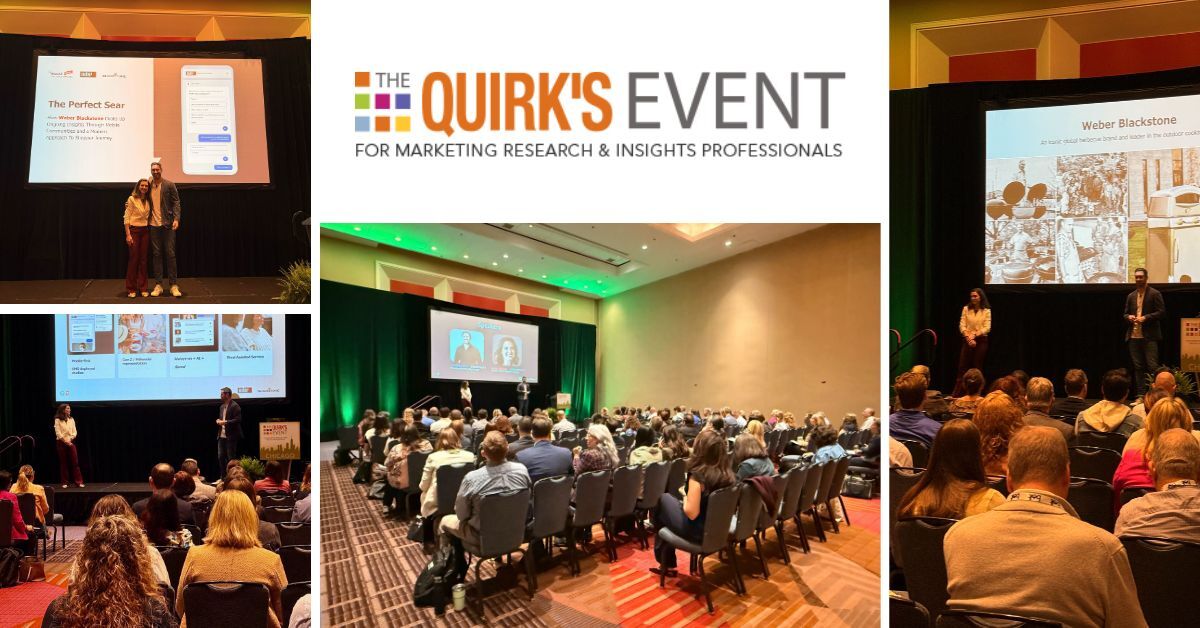
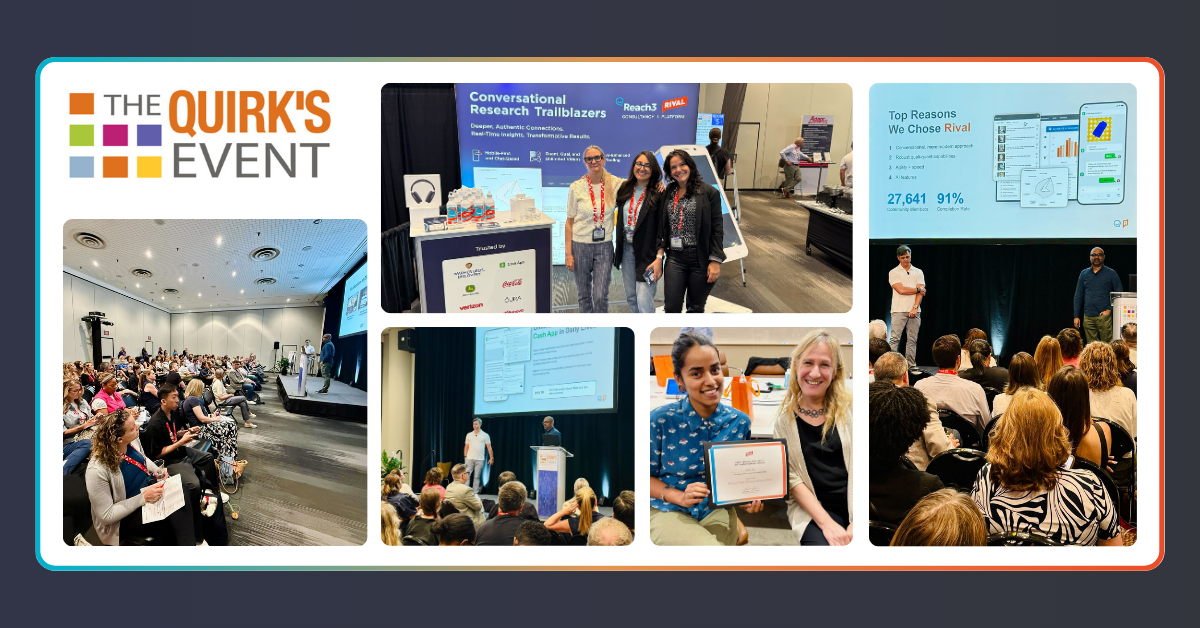
That tension is exactly why we hosted a recent session at Quirk’s called Making AI Stick: A Practical Path to Maturity, ROI, and Scalable Insight Impact. Not another hype-fest. Not another prompt dump. A real conversation with insight leaders who are deep thinkers — and who have real experience turning AI into business value.
If you missed the session, the recording is available here. Below are a few highlights that stood out to me.
AI is in insights. Now what?
Let’s start with the obvious (but still important) context: AI is here, and it’s already changing research and insights.
Stats on AI adoption in research and insights
Andrew Reid, CEO and Founder at Rival Technologies, shared a few data points that help ground the conversation:
- 62% of teams say “most” or “some” of their team is already using AI, according to MRII
- 46% of researchers expect their AI budgets to increase this year, according to our Market Research Trends 2026 survey
- 20% of Cyber Week sales in 2025 were influenced by AI, according to Salesforce
AI isn’t just changing the research space — it’s reshaping the entire buyer journey. We’re seeing this firsthand in ongoing research programs like Trade Winds, which track evolving consumer sentiment and attitudes in real time.
“The buyer journey is no longer linear — or even cyclical,” Patricia Chapin-Bayley, SVP at our sister company Reach3 Insights, said. “It’s conversational.”
Consumers are increasingly engaging with AI agents that recommend products, plan vacations, and filter choices — often without brands knowing how or why they’re being surfaced.
“We’re operating in a black box,” Patricia explained. “You don’t know how often AI is recommending your brand, what it’s saying, or to whom.”
This huge shift in the consumer landscape underscores the importance of getting closer to consumers capturing ongoing feedback through tools like insight communities. It's also why methodologies like segmentation are a huge market research trend for 2026 — companies need to constantly update what they know about their customers.
When it comes to AI tools for research the experimentation phase is over. The “should we try this?” question has been answered.
The better question now is: Why does AI still feel fragile inside so many organizations?
Understand why AI sometimes fails
To kick off the panel, Andrew shared some slides from Innovation Insiders, Rival's AI upskilling program for brand-side researchers.
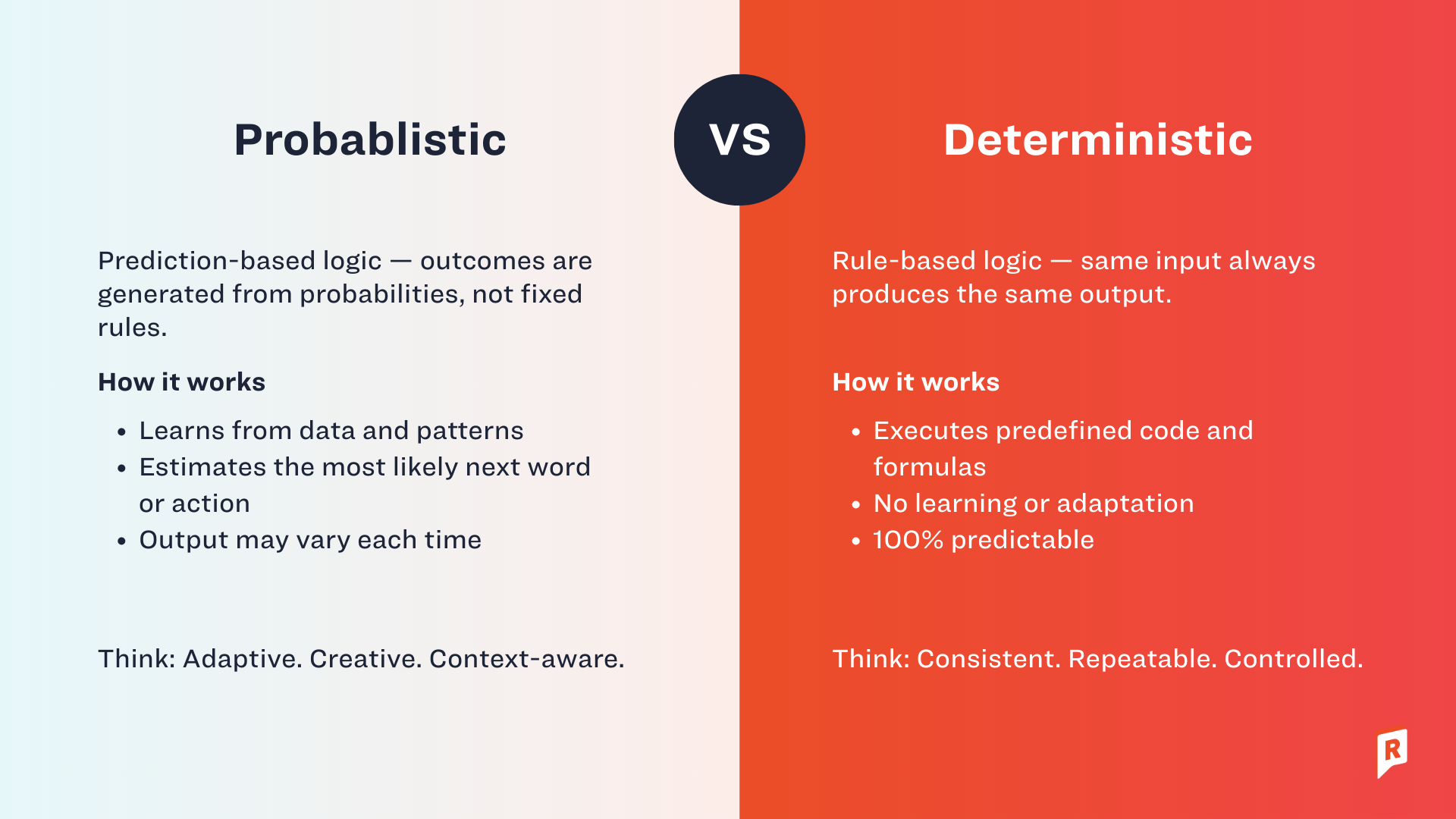
One of the most useful parts of his presentation was the reminder that large language models are pattern learners, not truth machines.
They’re:
- mostly probabilistic, not deterministic
- adaptive and creative, not consistent and controlled
- very good at sounding confident, even when they’re wrong
This matters because a lot of AI frustration comes from expecting LLMs to behave like traditional software. They won’t.
Once you internalize that, two things get easier:
- You stop treating AI output as the answer
- You start treating it as a starting point
That mindset shift alone reduces a surprising amount of disappointment, improves align expectations, and makes measuring ROI a bit easier.
The real unlock: AI gives insight teams their thinking time back
Watching other Quirk’s AI & Innovation presentations before ours, I noticed how many vendors felt the need to reassure insight teams that AI won’t replace researchers.
That's fine. But we also have to recognize that a lot of things that researchers do have changed because of AI adoption.
“The number one skillset of an insight professional is their ability to think,” Jason Jacobson, Senior Director of Consumer Insights at Sekisui House, pointed out. “That’s our value proposition — what’s between our two ears...What AI has enabled us to do is use that thinking time more effectively to be more creative”
Jason’s point stuck with me because it reframes the whole “AI is taking our jobs” narrative. What AI is actually doing — when used well — is stripping away the most linear, repetitive parts of research work. By reducing time spent on mundane tasks, Jason has elevated his storytelling.
"AI has enabled me to think about how I package my insights and my deliverables to who the stakeholder is and deliver multiple packages, which helps us have more influence and impact," he elaborated.
To who the stakeholder is and their persona and deliver multiple packages, which helps us have more influence and impact.
For Patricia, AI has also become a useful way to surface blind spots.
“AI is a pressure test for my thinking," she shared. "It shows me blind spots. It helps with iteration. It’s a thought partner.”
Adam Hussein, SVP of Data Analytics and Insights at Supercell, took that idea even further. He said that the real power of AI is its ability to surface perspectives he wouldn’t naturally consider — especially when prompted intentionally.
“The sum total of my experiences is maybe 0.00001% of the world’s experiences,” he said. “AI has seen far more than I ever will....If I prompt it the right way, I get perspectives that are completely orthogonal to my own.”
Looking ahead: where AI research gets interesting
As AI becomes more embedded in insight workflows, the conversation is also starting to move beyond efficiency and into what becomes possible next.
One example Adam shared that really stuck with me was around synthetic respondents — not as a replacement for human research, but as a way to explore ideas earlier and more safely.
“In industries like games or movies, there are sometimes confidential things we just can’t put out publicly,” Adam explained. “No matter how much we watermark or protect it, internal teams aren’t always comfortable. That’s where synthetic respondents become really valuable — they let us get an early read before anything goes public.”
As we discussed in Market Research Trends 2026, there's still a lot of debate about the value of synthetic respondents. But Adam's point is that there are potential upsides — as long as we move ahead with intention.
Like most AI-enabled approaches, the value isn’t in skipping human input, but in expanding the toolkit insight teams can draw from — especially when stakes or sensitivity are high.
ROI is not a buzzkill. It’s the thing that lets you scale.
If there was one slide Andrew came back to again and again, it was this idea:
AI only sticks when it demonstrates real impact.
ROI isn’t about justifying a tool. It’s about deciding what deserves to grow.
In the deck, ROI is framed across three very unsexy (and very useful) metrics:
- Time savings
- Cost savings
- Quality lift
What I appreciated most is that quality is treated as a first-class citizen — not an afterthought. Less rework. Clearer outputs. Better stakeholder confidence.
This is also where jobs to be done really matter.
Instead of asking, “How can AI help research?” the better questions are:
- Where does research slow down today?
- Where does rework pile up?
- Where does quality quietly suffer?
AI doesn’t need to fix everything. It just needs to fix something that matters.
Maturity ladders vs. tidal waves
In his presentation, Andrew talked about AI maturity ladders as a way to understand where research teams sit in their adoption journey. Most teams are comfortable in the micro-wins zone — summaries, rewrites, first drafts. Useful, but limited.
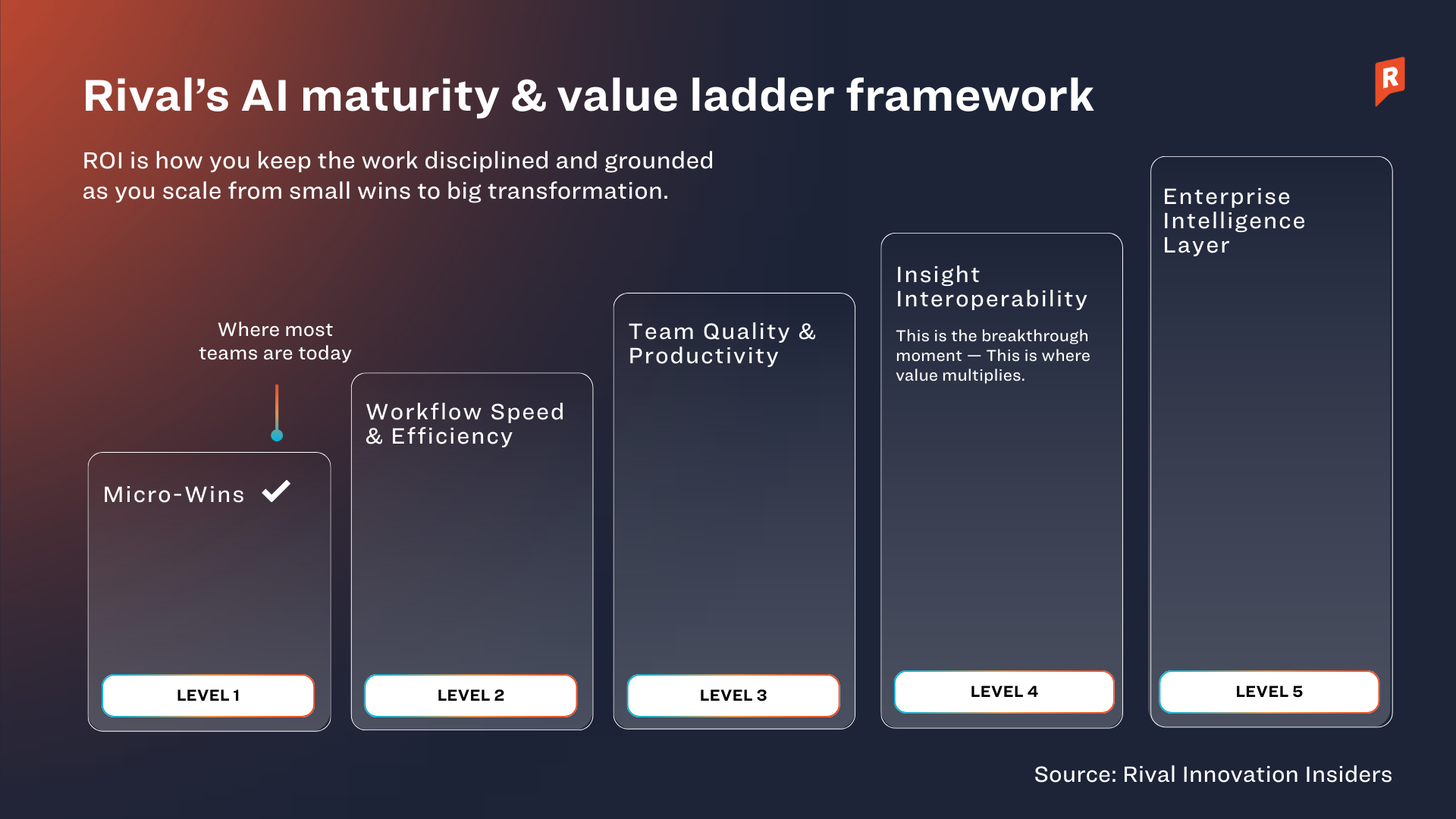
Interestingly, Jason challenged the idea that AI maturity is linear.
“Every three months, there’s a tidal wave of new solutions,” he said. “Even when you think you’re mature, you’re starting over again.”
Instead of chasing everything, his team made a deliberate choice:
- Experiment lightly with a few low-cost tools
- Pilot a small number of solutions
- Fully commit to one or two enterprise platforms
“Otherwise,” Jason said, “you’re just following the next LinkedIn post.”
That discipline — not the tech itself — is what makes AI adoption sustainable.
A quick word on AI slop (because we’ve all seen it)
AI slop came up as both a slide and a shared pain point.
You know it when you see it: Polished, but empty. Confident but ungrounded. Stylistically pleasing but not necessarily substantive.
AI slop is starting to dominate the internet and workplaces, impacting productivity. It's even invading science.
Andrew’s litmus test was refreshingly simple: Would you put your name on it without AI?
If the answer is no, it’s probably not ready — and it’s definitely not helping build trust.
“Use AI all you want,” Andrew said. “Just make sure every word coming out of your inbox is something you can stand behind.”
So… what actually makes AI stick?
After sitting with the deck and the discussion, this is where I landed.
AI sticks when:
- it’s tied to real jobs, not abstract potential
- ROI is defined before scaling, not after
- teams invest in structure, not just tools
- humans stay firmly in the loop
Or, said another way: AI works best when we stop treating it like magic and start treating it like infrastructure.
Unsexy. Powerful. And very much worth the effort.
Bottom line
AI isn’t going to slow down. But the teams that win won’t be the ones chasing every new feature.
They’ll be the ones who pause, ask better questions, and build systems that respect both the technology and the humans using it.
And honestly? That feels like a very on-brand challenge for insight teams.
For more on this topic, watch a recording of our session or check out our guide on agentic AI.































.jpg)






















.jpg)











-1.jpg)




.jpg)

.jpg)