



AI is already changing the insights industry as we know it. The job description of a market researcher today looks nothing like it did five years ago — and in some cases, nothing like it did a year ago. Recent articles from Harvard Business Review and Anthropic have also highlighted different ways AI is reshaping how organizations capture consumer feedback.
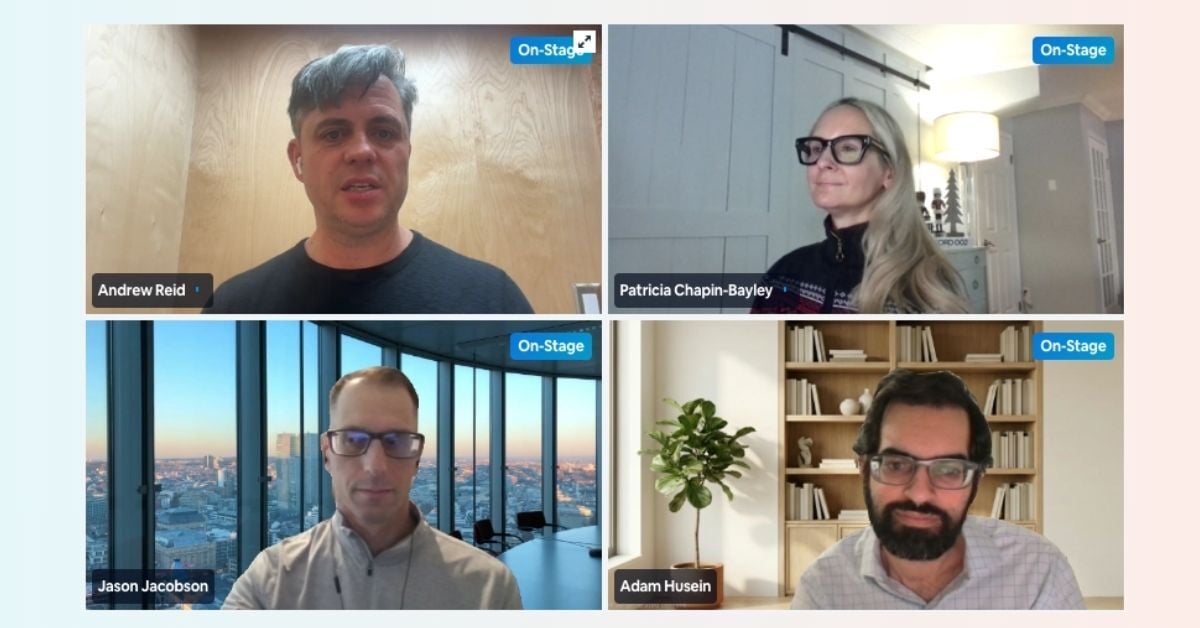
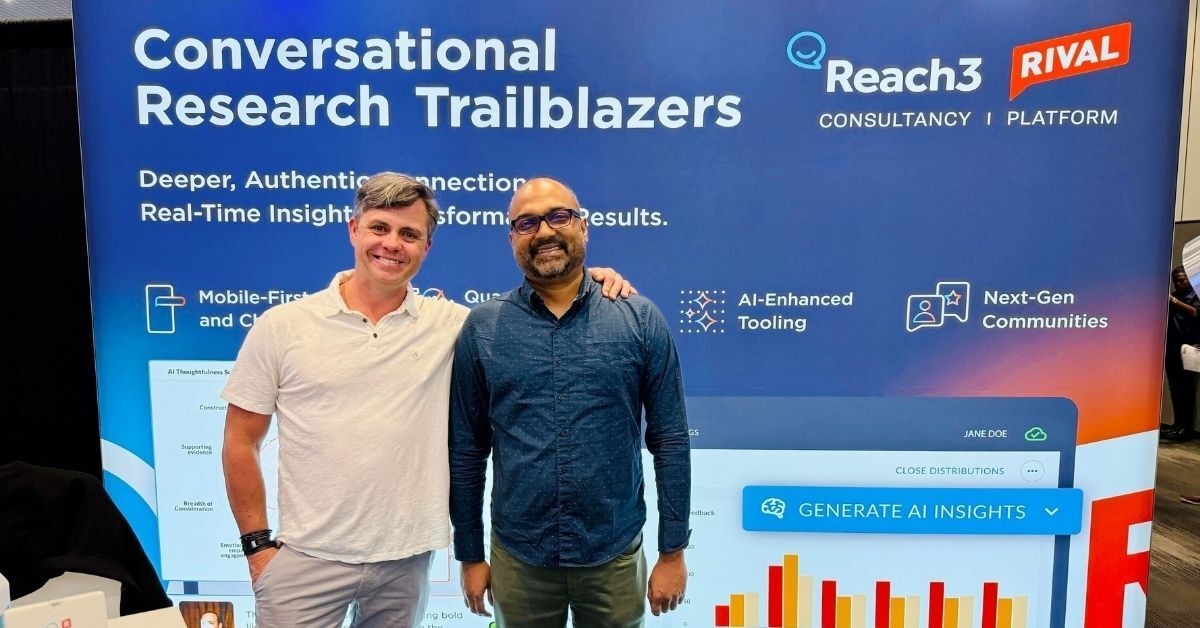
And AI's impact goes well beyond the tactical. In a recent conversation with Greenbook's Lenny Murphy, Rival Technologies Co-CEO and Founder Andrew Reid spoke to the ways AI is reshaping three areas in particular: leadership, talent, and the participant experience.
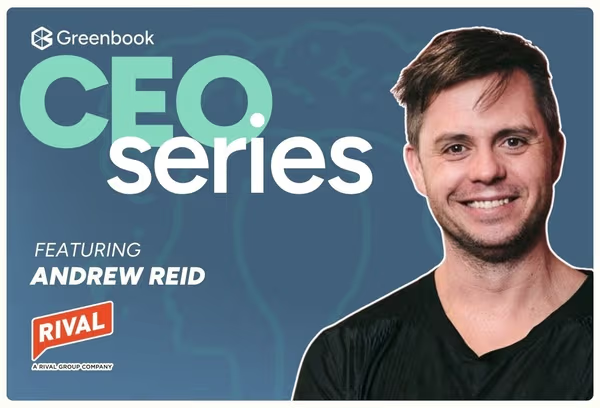
I highly recommend listening to the full conversation. Some key takeaways are below.
1. The "A-Player" insights pro has been redefined
If you're still evaluating talent primarily on process competency, you're measuring the wrong thing. Andrew's view is clear: the qualities that matter most now are adaptability, curiosity (which something Andrew also talked about in a recent Entrepreneur article), and what he calls a "play mindset."
"If you have that curiosity and maybe it's playfulness, which is sort of a weird thing to say... if you don't have a bit of that play mindset, that 'we're going to continue to try new things and this is going to be fun' versus 'that is the painful part I have to go through to get to the goods' — that's something people don't talk about."
This isn't just a hiring philosophy observation. It has direct implications for how research organizations build teams. Process-heavy roles are increasingly automatable. The people who will thrive are those who get excited when the goalposts shift, who lean into new tools without waiting to be told, and who bring genuine intellectual curiosity to their work.
At Rival Group, Andrew described accelerating the careers of younger team members who took initiative on AI adoption and showed up three days later with a functioning product — not a slide deck about a product.
His advice for insight pros today: be proactive: "If you work at a firm that isn't quite yet embracing AI, don't wait around. Lift your hand up, start a club, start a weekly — get that motion moving."
2. The participant relationship remains a competitive advantage
As AI takes on more of the analytical and operational work in research, what's left — the quality of the human connection — matters more than ever. Andrew made this point through a story that will resonate with anyone who has sat through a bloated survey at the wrong moment.
"I had this amazing trip. It was one of those like all-tens, fantastic. I'm on the plane on the way home and the survey comes in... and then they start asking me about food and beverage 17 different ways. By the time they do it the fifth different way with a big cascading battery scale of grid questions — I'm not happy with Disney anymore."
His point isn't just that long surveys are annoying. It's that bad methodology actively destroys the goodwill that brands spend millions building. In an environment where consumers have more agency than ever — and where AI agents may soon be answering surveys on their behalf — the firms that win will be the ones that make participation feel worthwhile.
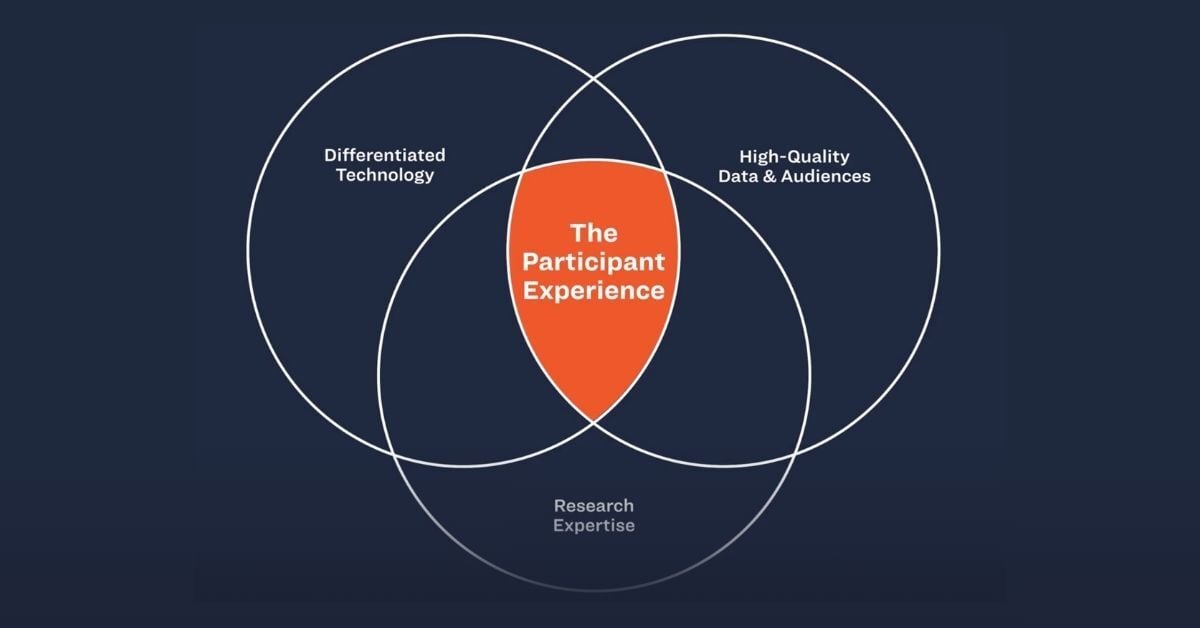
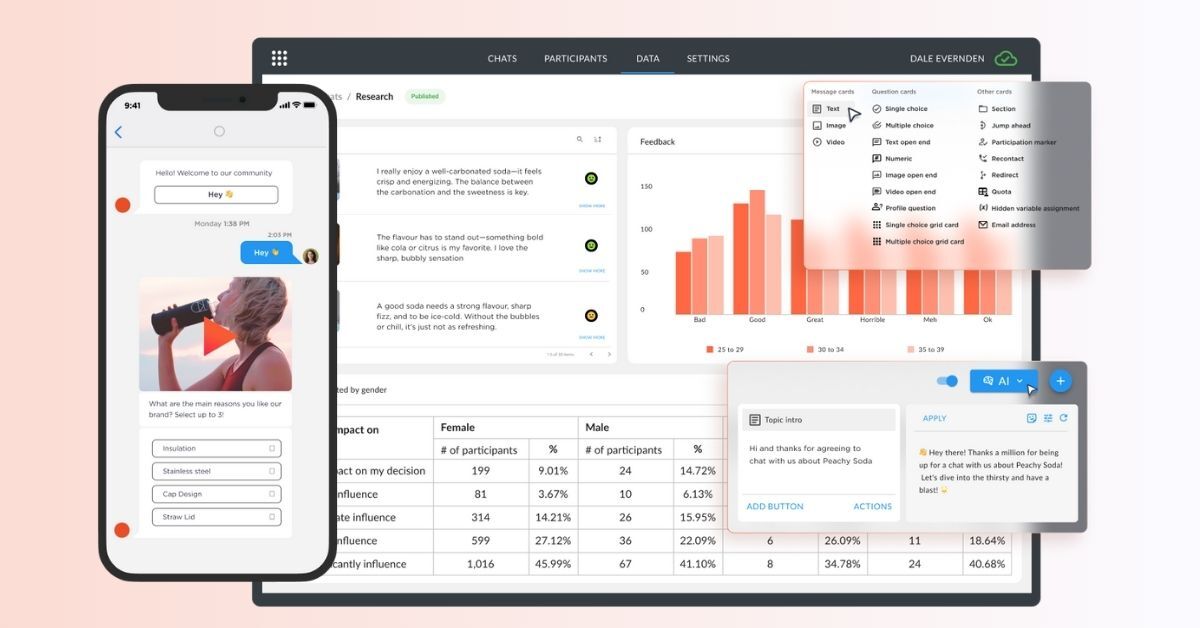
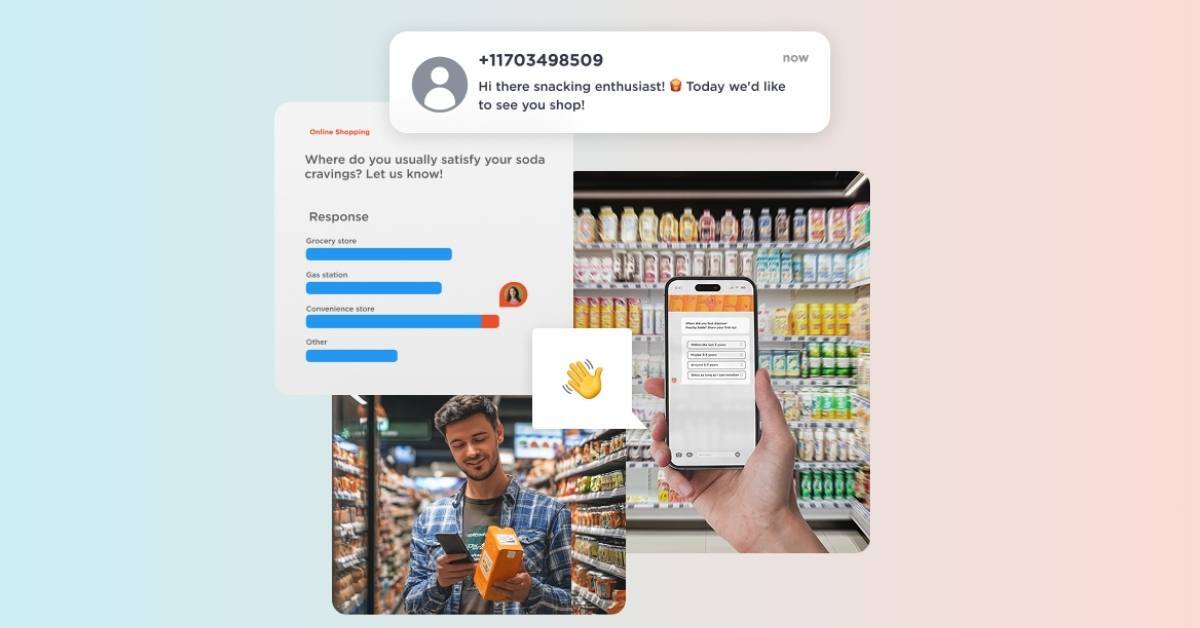
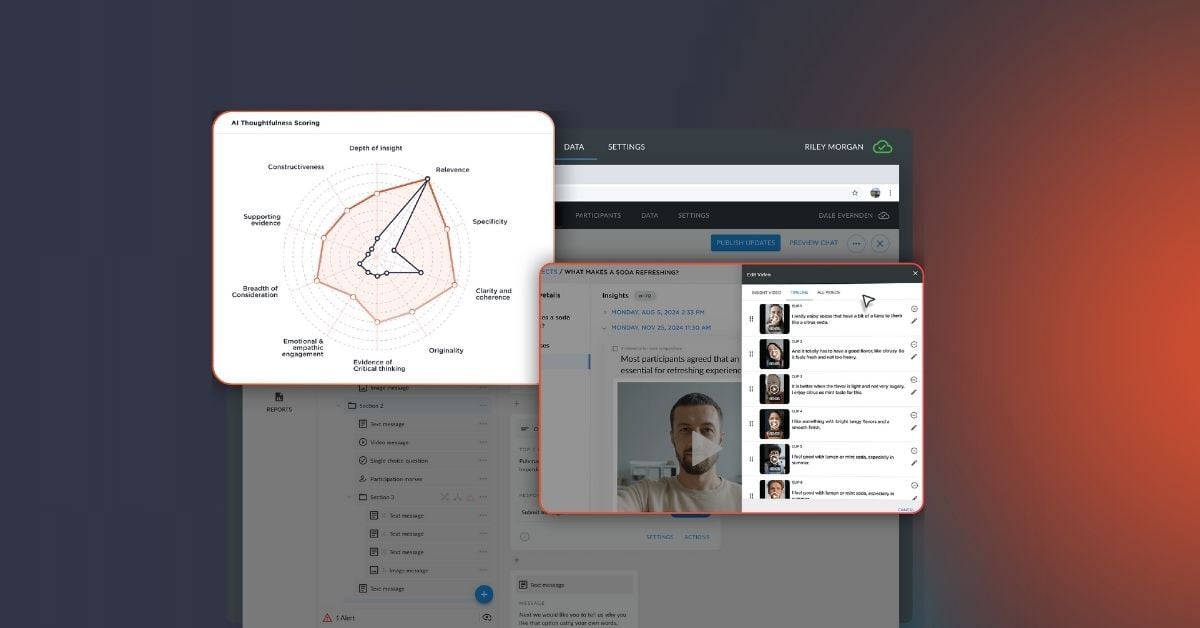
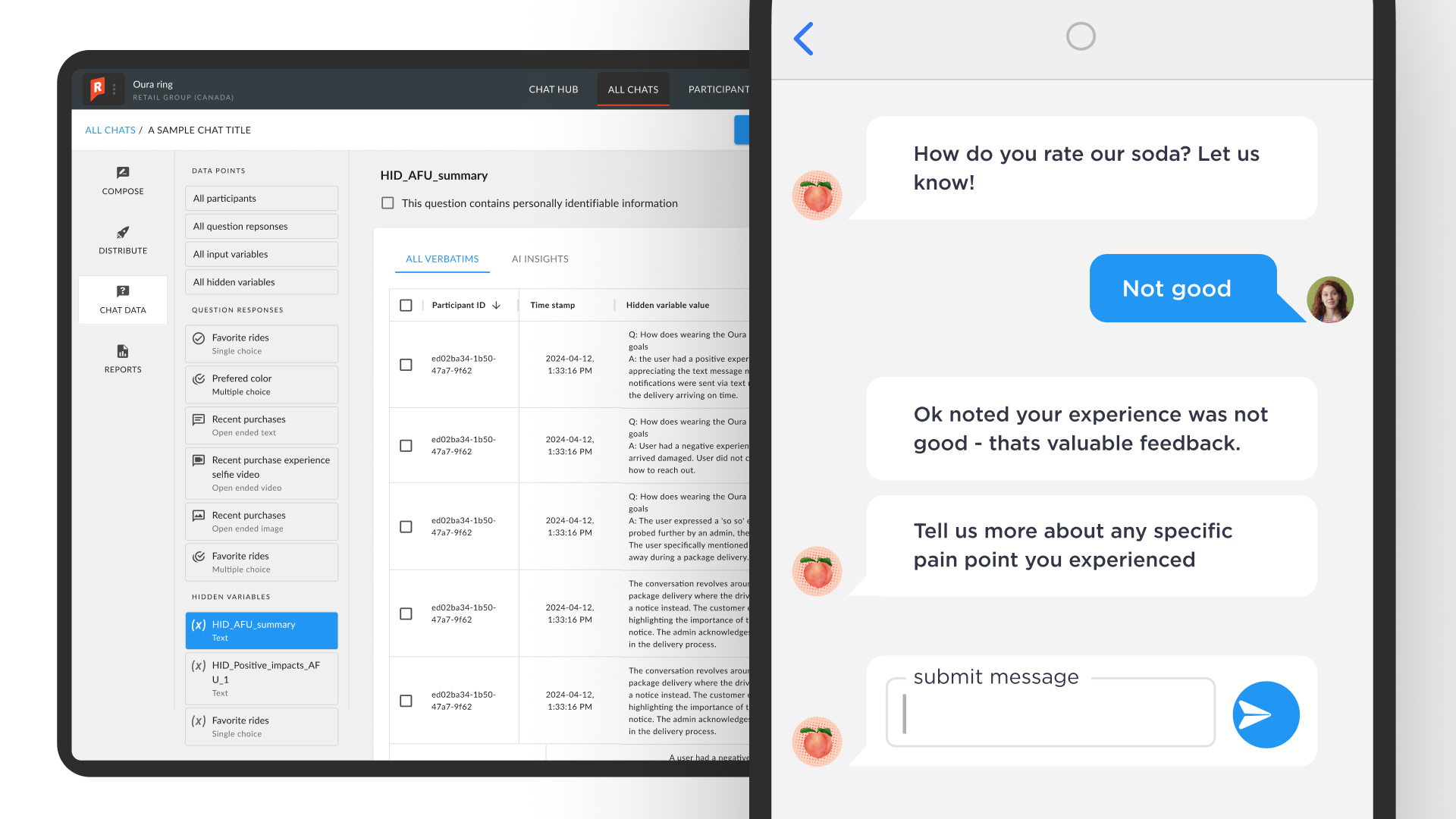
Andrew's framing: research should involve a genuine mutual exchange of value, delivered in the moment, that makes participants feel like they matter. That's not a soft goal. It's increasingly a strategic differentiator. The methodology has to catch up to the relationship. This mindset is exactly what conversational research is all about — putting the participant experience at the core to capture deeper insights.
.svg)
3. Synthetic data and real Humans are a partnership, not a competition
Synthetic data and personas remain one of the top market research trends in 2026, so it's no surprise that this topic came up during this conversation.
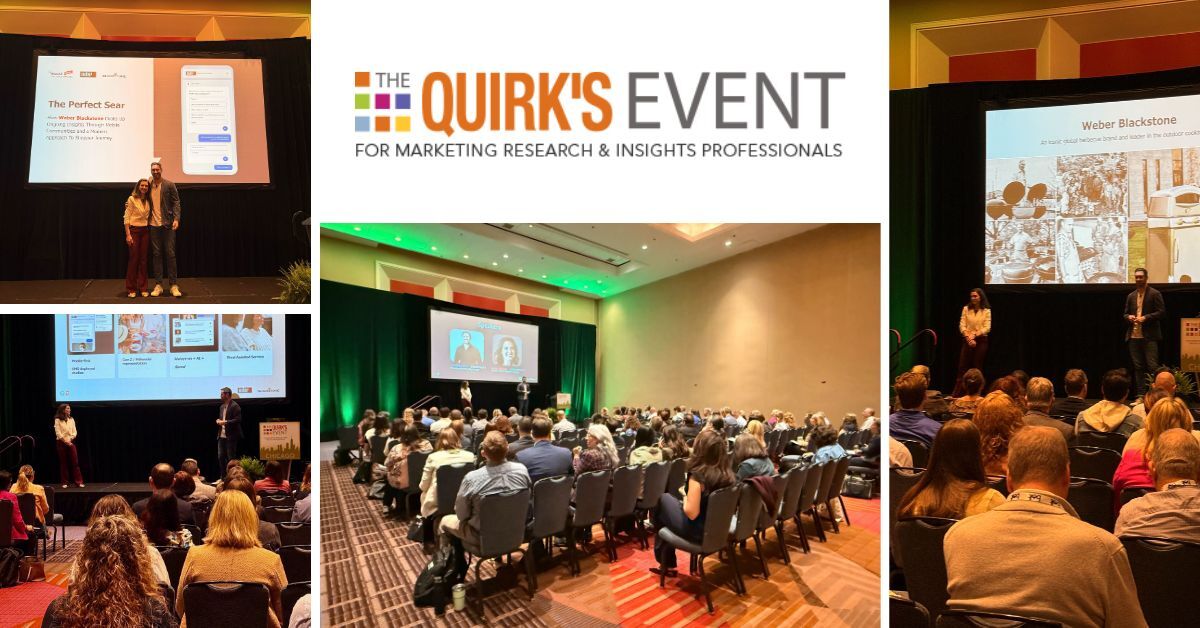
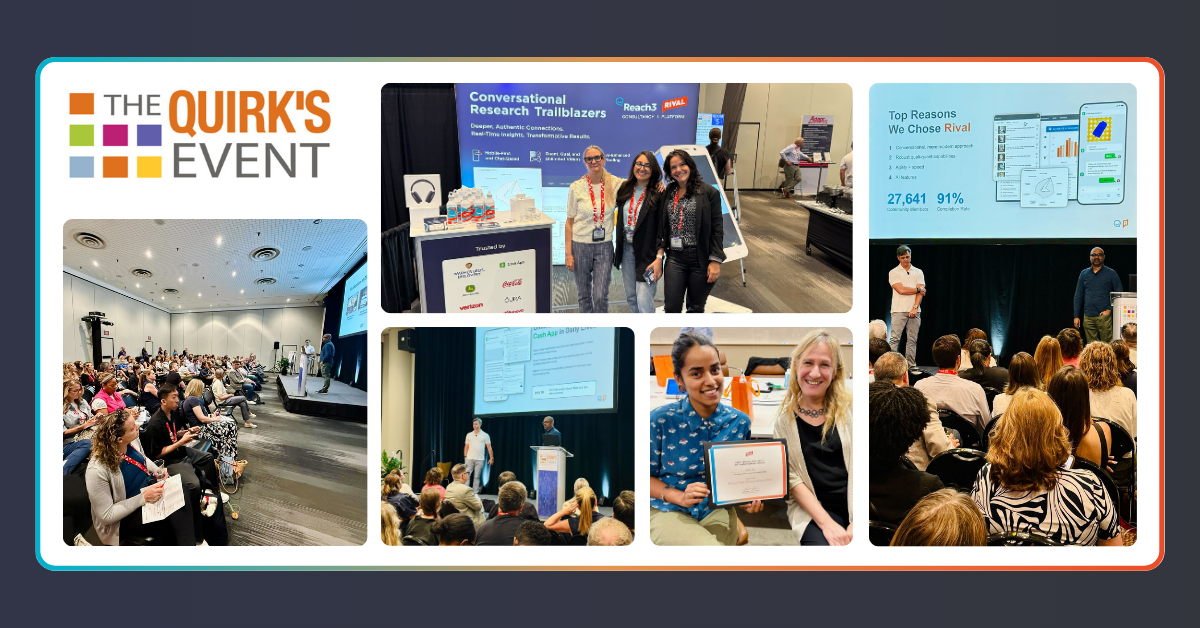
Andrew pushed back on the binary framing of "synthetic vs. real" that dominates debate around this topic at conferences like Quirk's Chicago. His position: both are necessary, and the smarter question is knowing which to use when.
"You really are going to need these two things together. You need to talk to real people and you want to take the corpus of information you have and use that in a collaborative nature — it's not an if, it's not an or, it's an and."
Where synthetic makes the most sense, in his view, is high-volume, low-incidence scenarios — early-stage ideation, hypothesis testing, getting directional signal quickly. But for the nuanced, high-stakes decisions that blue-chip brands bring to top market research firms like Rival Group, Reach3 Insights, and Angus Reid, there's no substitute for verified human response.
He also raised an emerging complexity worth watching: as consumers increasingly delegate routine decisions to personal AI agents, the industry will need new frameworks for authenticating whether a survey response reflects a human's actual perspective or their agent's inference. That question isn't hypothetical — it's arriving now.
The throughline across all three insights is the same: While AI is changing the job description of insights pros today, it isn't eliminating the need for real human expertise. It's raising the bar for what that expertise looks like. The firms and individuals who recognize that shift early — and build toward it — are the ones who will define what the industry looks like on the other side.






























.jpg)






















.jpg)











-1.jpg)



.jpg)

.jpg)