

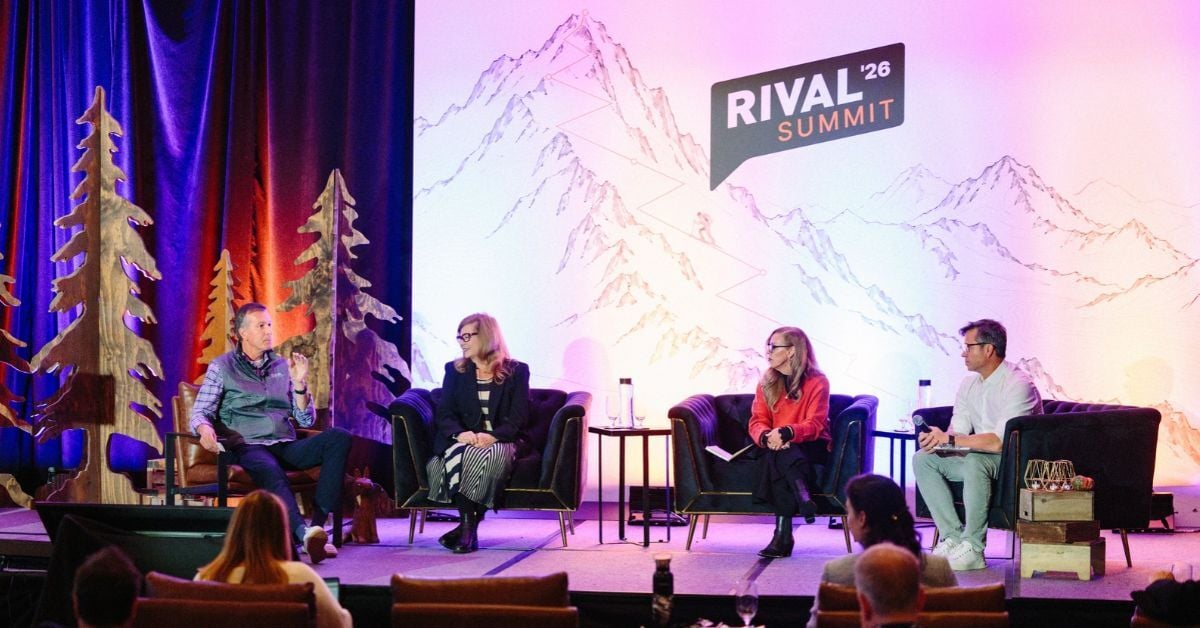
For our first-ever Rival Summit, we brought insight leaders to Whistler, BC, our hometown. It’s best known for its beauty and its turn as a 2010 Olympics co-host, and it turned out to be the perfect backdrop for the conversations that followed.
Those conversations are what stuck with me. Between 7 customer case studies, 2 panels, 2 guest keynotes and an AI product showcase, the Rival Summit schedule was packed, but the hallway chats were just as good.
We’ll share deep dives on individual sessions over the next couple of weeks. For now, here are the themes I kept hearing from insight leaders, and the practical advice behind them.
1. Pair AI with real people
No surprise here, but AI was naturally everywhere, but what struck me was how these brands talked about it. Nobody was chasing AI for its own sake. They were using it to understand their customers better.
Sofia Gomez Garcia, Executive Director at Warner Bros., described working with Reach3 on dynamic demand space segmentation, visual semiotics and an AI Listening solution to understand how people discover content. The goal is to maximize revenue, and the approach still involves talking to real people through Warner Bros.’ insight community.
This innovative approach helps them understand how AI is changing content discovery — which is critical because of the "black box" nature of many AI platforms.
“AI facilitates a new human-in-the-loop innovation opportunity,” she said. “We should always keep it in consideration for any work that we do.”
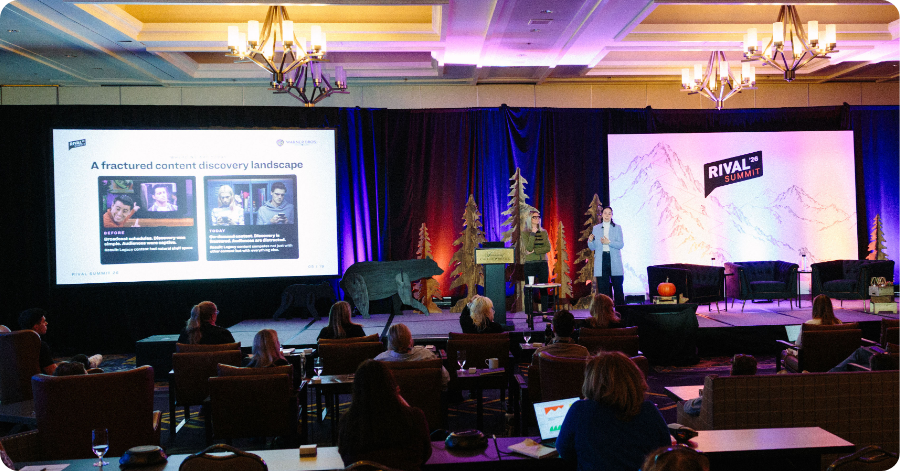
Oura takes a similar approach. Kate Bucher, Consumer and Product Insights professional, shared that the team has moved to a continuous learning system. “We leverage both our research community, which we call Inner Circle, with Rival, and then also AI tooling to keep the consumer at the center of everything.”
Oura is an early adopter of using AI and synthetic data in product innovation, but Kate was quick to add that they’re deliberate about it. “We have humans both at the front and the back end of our innovation... We always start in discovery with real humans.”
2. Bring the customer’s voice into the room, on video
If humans belong at the start and end of the process, the next question is how to make their voices impossible to ignore. Several speakers pointed to the same answer: video feedback.
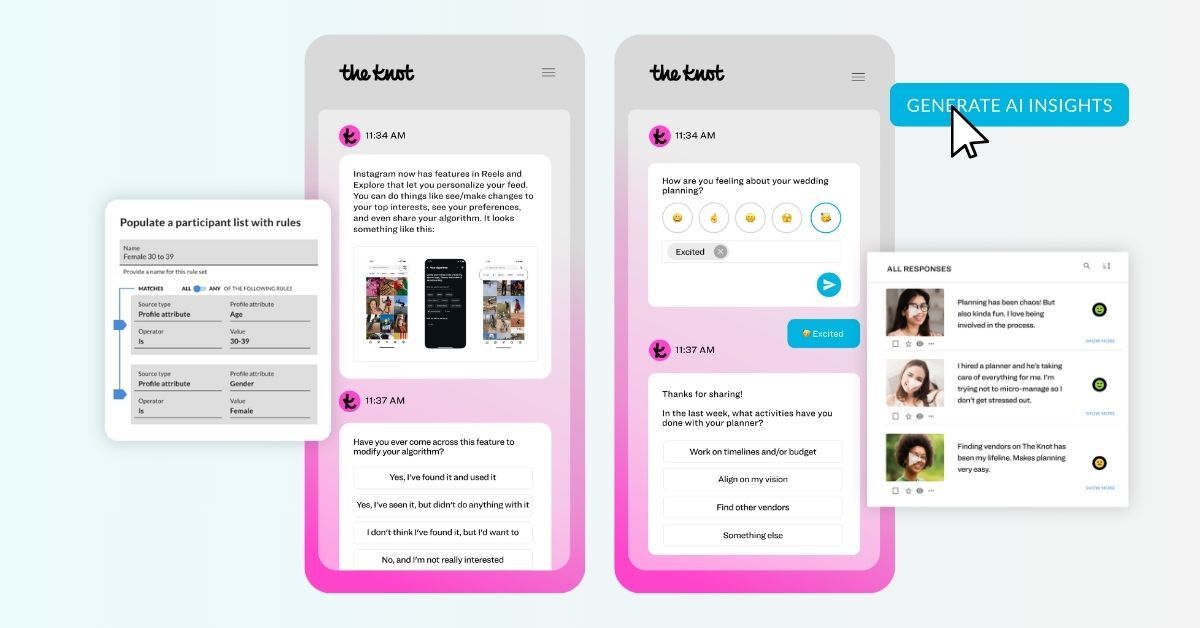
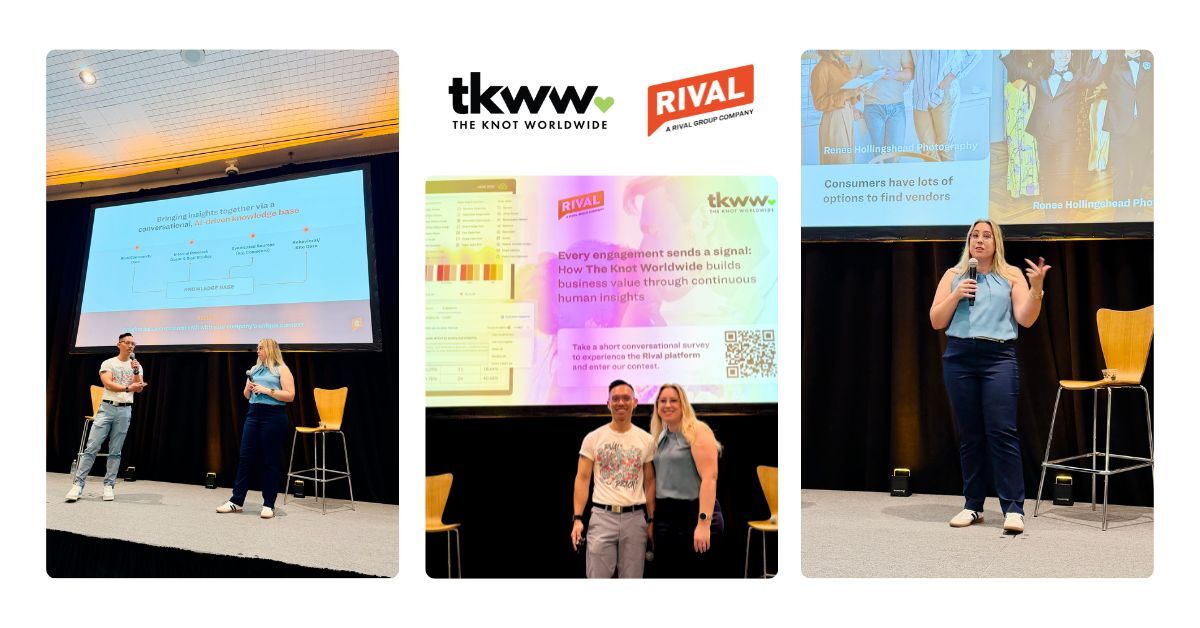
“Embedding customer video has been an unlock for us,” said Sam Joneswood, Insights Lead at The Knot, who finds that video makes the customer feel real to stakeholders — an important tool in effective storytelling.
Mary Anne Fitzgerald, Director of Consumer Insights at Balsam Brands, shared a case study where video made pain points hard to miss. “Having the videos, having the testimonials, and understanding pain points in the moment was so valuable,” she said. “We shared it with our internal folks and did workshops around it.”
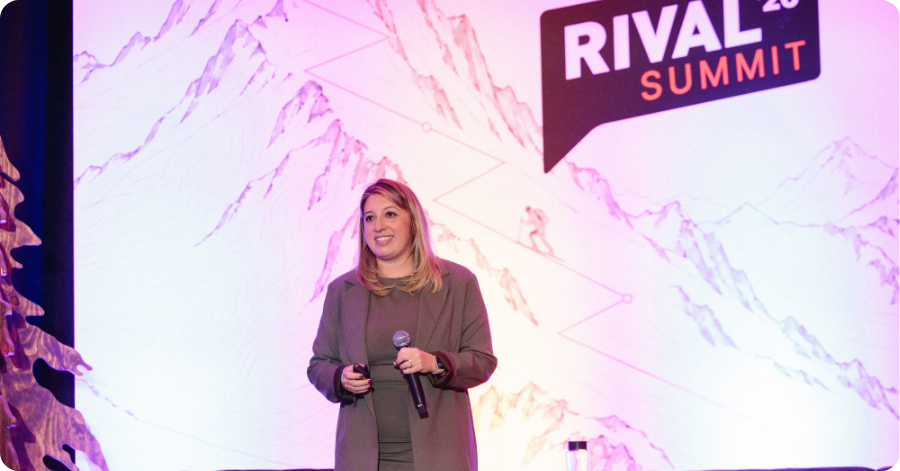
Ryanne Miller, Senior Director of Insights & Analytics at CAA Consulting, had a fun example from her experiential measurement work: “We enabled video testimonials. One attendee was so excited to give his opinion that we included it in the sizzle reel to our clients.”
3. Give something back to your participants
Great customer voices don’t happen by accident. They come from people who enjoy taking part and feel heard, so how you treat your participants matters.
It starts with the experience. Dairy Farmers of America (DFA) reports a 97% completion rate in its insight community, which it credits to variety (different topics and chat styles) and a conversational approach instead of a formal one.
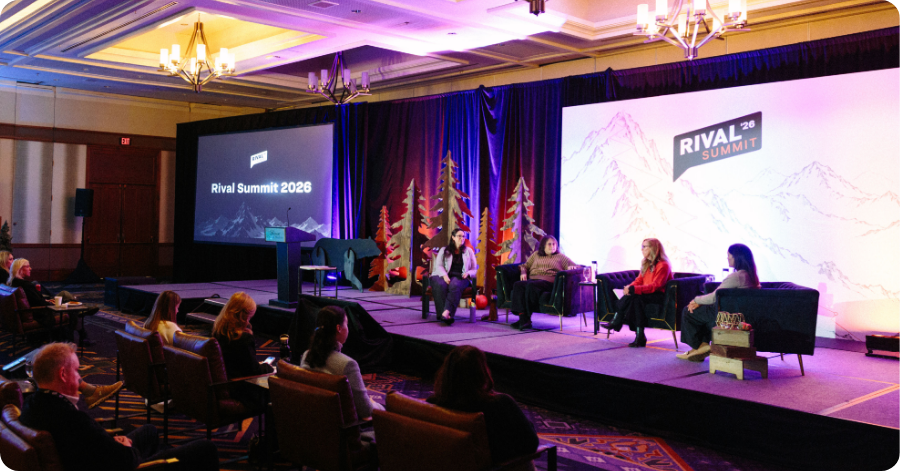
Tangible rewards help too, and a lot. “Incentives help, points help,” shared Abby Clayton of Research and Insights at Britebound. But she stressed that closing the loop matters just as much: “We tell them how important their feedback is.”
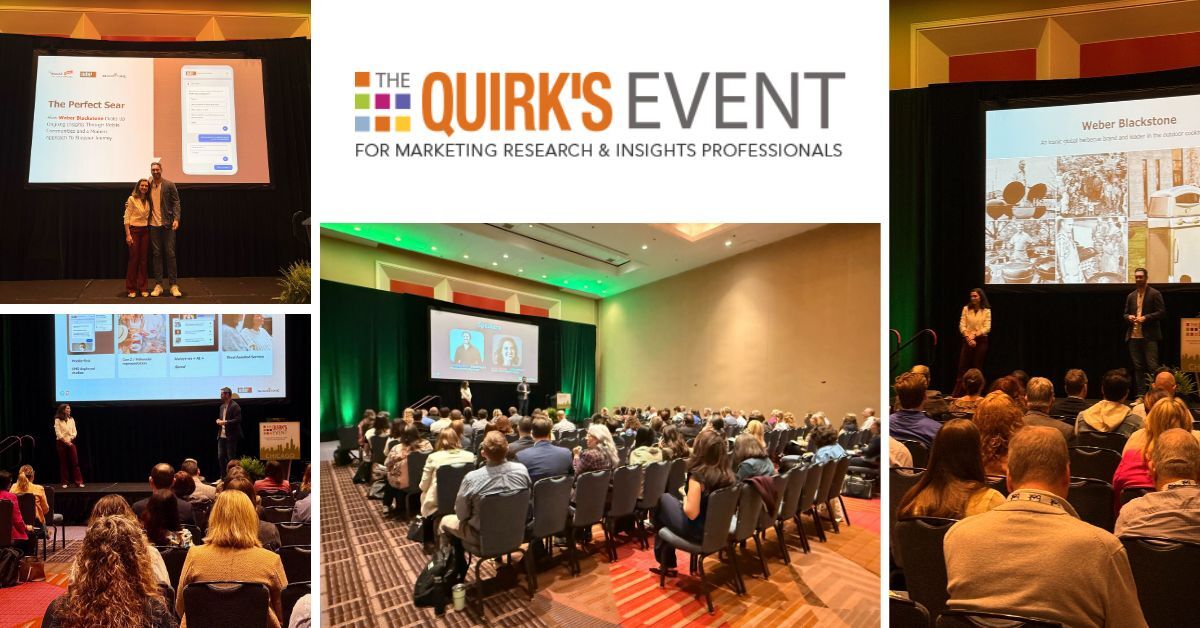
Rushan Theunis, Senior Manager of Consumer Insights at Weber Blackstone, which runs 4 global insight communities, shared how they keep people engaged. “We try to do share-backs pretty regularly, so members can find out what other people were saying in the community chats.”
Sam from The Knot summed it up best: “When you prioritize the experience, people are more willing to engage candidly.”
4. Win buy-in with value, patience and a little fun
Reports like Greenbook’s GRIT suggest research budgets are under pressure, which makes launching new programs harder. Still, speakers shared plenty of ways to get stakeholders on board.
Mary Anne’s starting point is relevance. “It’s all about relevance. How is this going to help you do your job? If the research can impact more than just one function, it has more value.”
Sometimes it also takes time. Greg Czerknick, VP of Insights and Analytics at Dairy Farmers of America (DFA), had to “shop it around” and share a vision for what the insights community could do. “It took me about six months of being in certain meetings with the right budget holders to get everybody I needed in the boat,” Greg shared. “When I had everybody in the boat, it was, ‘Boom, let’s get this thing up and running.’”
And buy-in isn’t only about the serious stuff. DFA knew people would be more likely to use the research community if it had personality, so they named it Cow-Moo-nity. “Branding it and giving it a personality and identity goes a long, long way in a large organization,” Greg reiterated. “People latched onto it, and they know exactly what it is.”
5. Earn your seat at the table with outcomes
Once you have buy-in, you keep it by driving outcomes that matter to the business.
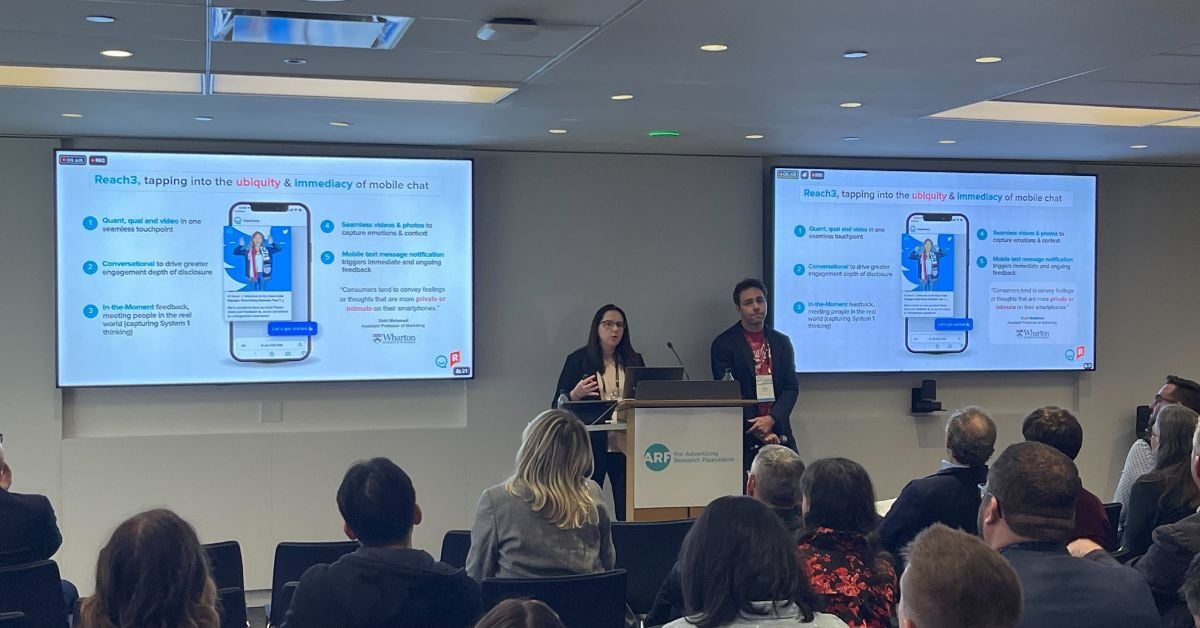
For Ryanne at CAA Consulting, that means going beyond vanity metrics to show clients the real impact of their experiential marketing. Her team works with Reach3 Insights to run the Brand Experience Predictor on the Rival platform. “We measure beyond the foot traffic,” she explained. “We consider the intent to share, intent to engage, intent to purchase, and overall brand impact.”
Real-time results made a difference, too. “Through the real-time dashboard, we could send clients stats to share with their CMO during the walkthrough, which is a real value add when they’re trying to convince their leadership why they’re even doing this.”
At Southwest Airlines, Katie Boynton, Customer Insights Principal Consultant, says alignment is everything, and her advice is simple: “Be involved early” and bring in the right people fast. Her team has been busy because Southwest is in the middle of a brand transformation that insights is directly supporting. To get the full picture, Katie combines her Rival insight community (to hear from current customers), a massive segmentation study (to understand customers and the broader market) and social listening (to track real-time perceptions).
To make sure the segmentation work is used by the right stakeholders, Katie had to build relationships internally. “We did a massive roadshow of the results, first to the key executives, then to their full staff meetings. Having the core team meant we could tag-team the presentations, because many different departments needed to see this.”
The transformation is still underway, but early signs are promising, and Southwest’s year-over-year revenue is up.
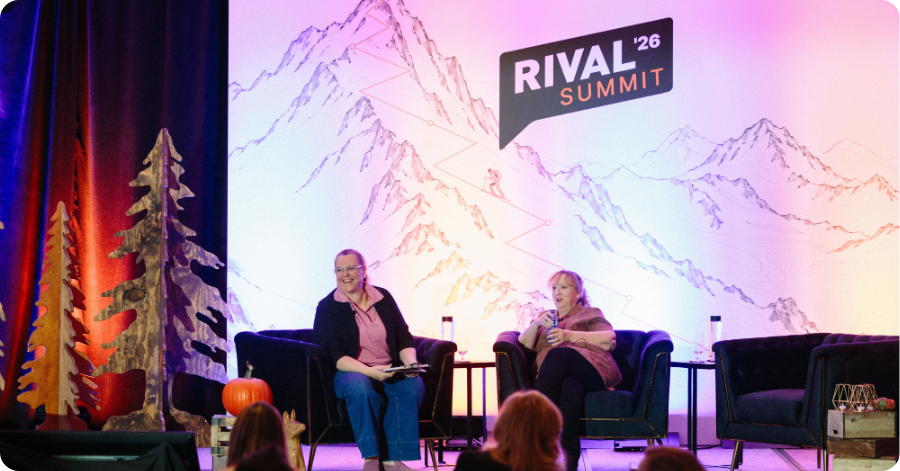
Laura Gross, Senior Vice President of Global Consumer Insights, Data and Strategy at Warner Bros., put the bigger picture well during the leadership panel. “What we really do is help our business make better bets at the end of the day,” she said. “Our division is a significant financial engine for the entire studio, so we take our jobs very seriously.”
6. Keep telling the story
The best insight teams don’t wait to be noticed. They talk about their impact, and they keep talking about it.
Jaden Castinado, Customer Insights Analyst at DFA, says speed is a great selling point. “You can literally watch the numbers tick up as community members interact. The team comes with a question on Monday, we can have a response by Friday, and they can have an informed decision for their meeting next week.”
But he’s quick to add that the value goes beyond speed. The DFA insight community is helping drive sales and revenue. In one case, it gave DFA’s CMO the insights needed for a conversation with a top retailer about marketing.
Sam at The Knot agrees that “research can and should help support key mandates and initiatives.” For her team, that means supporting quick, tactical business questions as well as CEO mandates. “It’s an ongoing work stream where insights is getting in the room early, informing, letting people know what we already know, and then guiding where the questions need to head next to unlock new opportunity for the business.”
That kind of visibility takes consistency. Sam’s team sends a monthly newsletter, produces year-in-reviews and presents slides at bi-monthly all-hands meetings. Jaden adds the personal touch: “There’s always turnover, so we do our own one-on-one calls and keep educating other folks about what the community is and how we can help them.”
The common thread
Whether the topic was AI, video or newsletters, the message was the same: the best insight teams stay close to real customers, treat participants well and make sure the rest of the business can’t miss what they’ve learned.
Thanks to all our customers who spoke at the first ever Rival Summit and to everyone who attended.