


Research and Insight Platforms With MCP Connections (Updated Regularly)
If you've ever exported a spreadsheet from a research platform just to paste it into an AI chat window, this page is for you. We're keeping a running list of the research and insights platforms that have launched Model Context Protocol (MCP) servers, so you can see which MCP connections already plug into your AI assistant and which don't yet. We'll update it as new launches come in.
What are MCP servers?
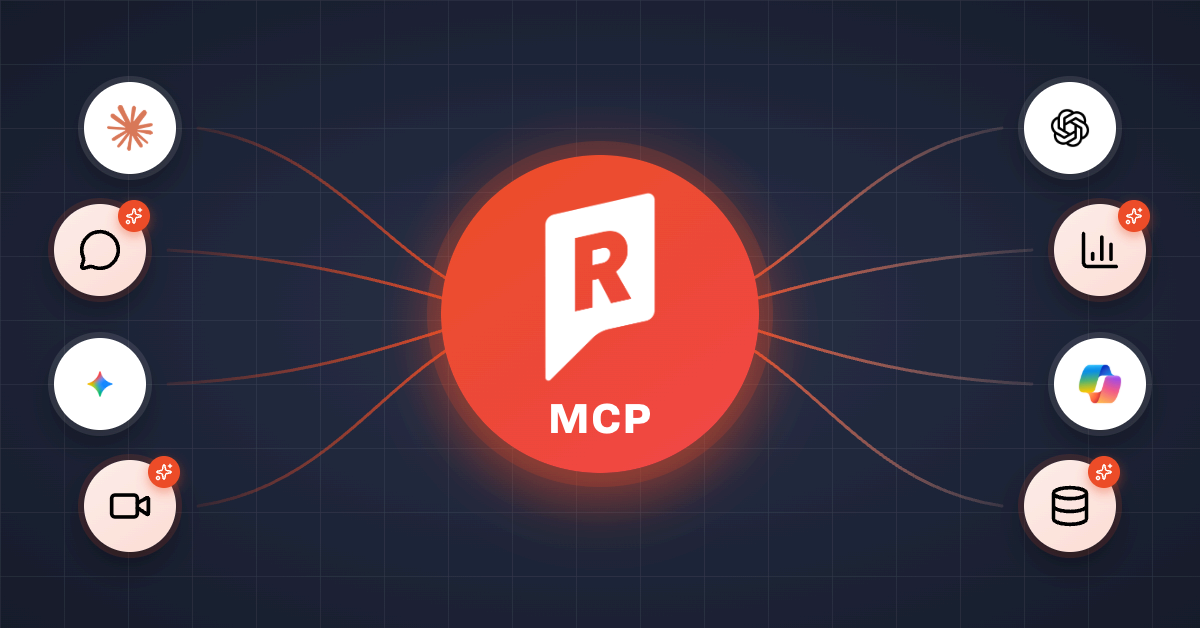
MCP is an open standard, introduced by Anthropic in 2024, that gives AI tools a consistent way to reach approved data and tools. Rather than wiring a language model straight into your database, an assistant like Claude or ChatGPT talks to an MCP server, and that server shares only what its owner has chosen to make available. Think of MCP servers as the front door between your research data and your AI tools.
For research teams, that might mean searching a study archive, pulling the responses to a single question, or exporting a filtered dataset. You ask in plain language, and the assistant picks the right tools, calls them and works with what comes back. If you'd like the full walkthrough, Rival's explainer, MCP Explained: What it Means for Market Research, goes deeper.
Why MCP connections matter for research teams
Most AI-assisted research still follows the same routine: export a file, tidy it up, paste it into a chat and hope you grabbed the right columns. MCP servers swap that for a live connection. Here's what that tends to mean for insights teams:
- No more export and paste. The assistant pulls information on demand instead of relying on a file you exported last week.
- One view of fragmented research. A single program often spans multiple studies, audiences and communities. MCP can make approved portions of that data available without a new export each time.
- Quant, qual and video together. The highest-value tasks, like analyzing open-ended verbatims or tracking themes across studies, are where assistants help most.
- Faster answers to stakeholders. Follow-up questions get answered while they still matter, not after another round of data wrangling.
- Evidence you can check. When the assistant reads real participant responses, a draft summary can quote actual language and be traced back to the source data.
- Governance built in, if the server is built well. Good implementations authenticate users, respect existing permissions, favor read-only access and are explicit about how PII is handled. MCP makes integrations easier to govern, but it doesn't make them secure by default, so it's worth evaluating each server on its own.
Research companies and insight platforms with MCP connections
Rival Technologies
Rival Technologies announced Rival MCP on July 27, 2026, giving organizations a direct way to connect the research data in their Rival platform to the AI assistants and agent tools they already use. Because MCP is an open standard, there's no custom integration work, and the connection can draw on the quant, qual and video collected through Rival's conversational research platform, including insight communities and Voice of Market.
With Rival's MCP, a connected assistant can search your study archive by topic without knowing study IDs, pull full responses with question text, sample size and field dates intact, join responses with participant attributes, and run pulse checks on tracked topics over time. Access follows existing Rival permissions, and any future write tools will be labeled and authorized separately. You can browse the full tool inventory, request early access or book a demo.
Delineate
Delineate's MCP allows its clients to to connect brand tracking data with AI assistants and applications, according to Research Live.
The company said in a press release: "MCP changes brand tracking from something people have to go and interrogate into a live source of intelligence that their AI tools can work with directly."
Typeform
Typeform brought its form creation, customer insights and automated workflows into ChatGPT, Claude and other MCP-compatible tools, according to its PR Newswire announcement. The company plans to extend the same capabilities to Research Flow, its AI-moderated research product, in early 2027.
Stravito
The customer intelligence platform launched an MCP server that lets teams use their company's research in ChatGPT, Claude, Copilot and custom agents, Research Live reported. Answers are source-cited, read-only and scoped to each user's permissions, an approach Stravito calls "glass box."
Potloc
Potloc's connector covers more than data retrieval. According to its GlobeNewswire release, consultants and deal teams can scope a study, draft a questionnaire, revise question logic, generate dashboards and export results from Claude, ChatGPT, Microsoft 365 Copilot or Gemini Enterprise, with every action running through the user's own permissions.
Caplena
The customer feedback analysis firm added an MCP so client data can flow into existing AI tools, documents and workflows, MRWeb reported. Caplena says the connection respects the roles and object-level permissions already set up in the platform.
YouGov
YouGov added MCP support at the end of June, starting with YouGov Profiles and custom research data in its Crunch analysis tool, as covered by Research Live and MRWeb. In October it extended the connection to BrandIndex, which Research Live noted lets users ask how perception of a brand shifted after a campaign, launch or news event and get answers from daily-updated data.
Guidepoint
Guidepoint launched an MCP server with Claude that brings its library of more than 100,000 expert interview transcripts into AI-enabled research workflows, with each insight attributed and linked to its source.
GWI
GWI has offered MCP access to its consumer data since 2025. In October, Research Live reported that it had expanded its agentic offer with tools that identify the right customer and datasets, plus guided workflows and global filters. GWI says its Spark MCP is also now live in Gemini Enterprise as of November 13.
Spotted a launch we've missed? Let us know and we'll add it.
Qualtrics
While it didn't announce an MCP officially, Qualtrics has a page about it.
"The Qualtrics MCP server lets an AI application work in your Qualtrics account through the Qualtrics API," the page states. "Its tools are for setting up and managing programs: surveys, directories and contacts, mailing lists, contact transactions, samples, libraries and imported data projects. It can also read your distribution history."
If this set up sounds complicated to you, there are many Qualtrics alternatives in the market.
Looking for a Qualtrics alternative?
See how Rival compares.
Compare us
What to ask vendors about their MCP connections
An announcement tells you a connection exists, not what it can do. MCP standardizes how an assistant connects, but each vendor decides which tools to expose, so two platforms can both "support MCP" and offer very different experiences. The first request to make is the tool list. Then check whether the tools let an assistant:
Discover where the answer lives. Can it search across studies by topic or keyword, or do you need to know a study's name or ID first?
Understand what it found. Does it return the exact question wording, field dates, study version, bases and routing logic along with the responses?
Narrow the request before retrieving data. Can it filter by question, segment, date or keyword rather than pulling a whole study?
Hand the data off. Do exports preserve the filters and identifiers applied during the conversation?
Stay in its lane. Is access read-only, and will any future write tools be labeled, separated and authorized independently?
Rival's guide to these questions is What to ask research vendors who launch MCP support.