


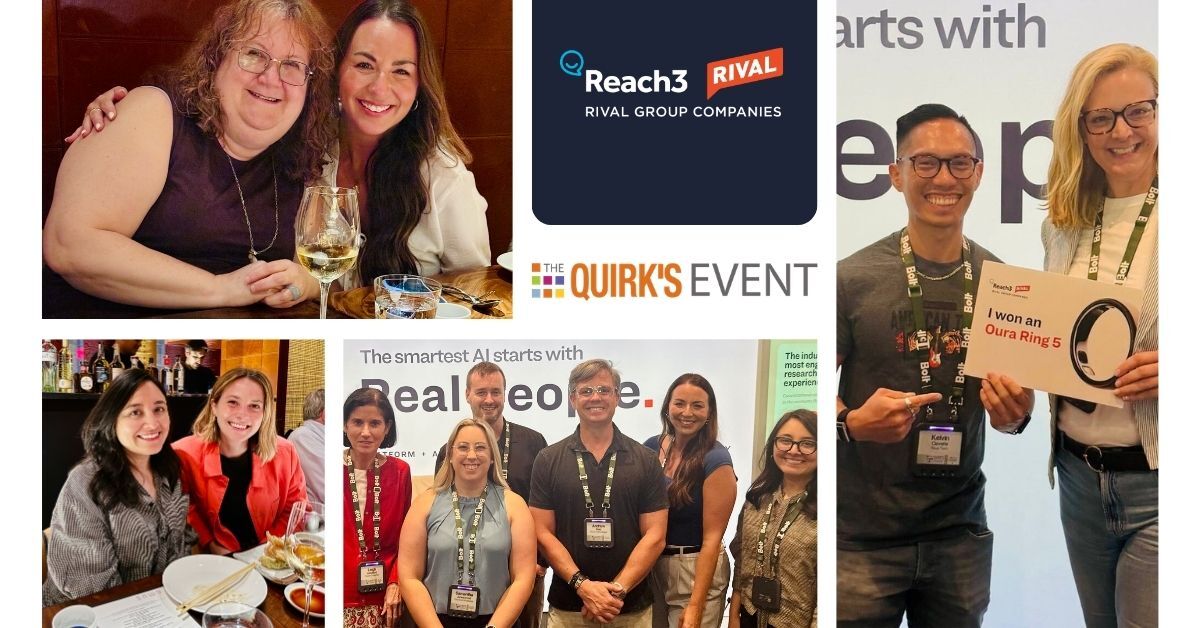
Market research conferences have been a fascinating place to watch the AI story unfold. When ChatGPT arrived, everyone was hungry to learn, and for a year or two nearly every vendor reworked its messaging around AI tooling. Lately the mood has shifted, with some fatigue setting in and the conversation moving from tools to proving ROI.
At Quirk's New York 2026, it evolved again. The question in the room wasn't "do we need AI," or even "how do we prove its value." It was "OK, we're using AI, what's next?"
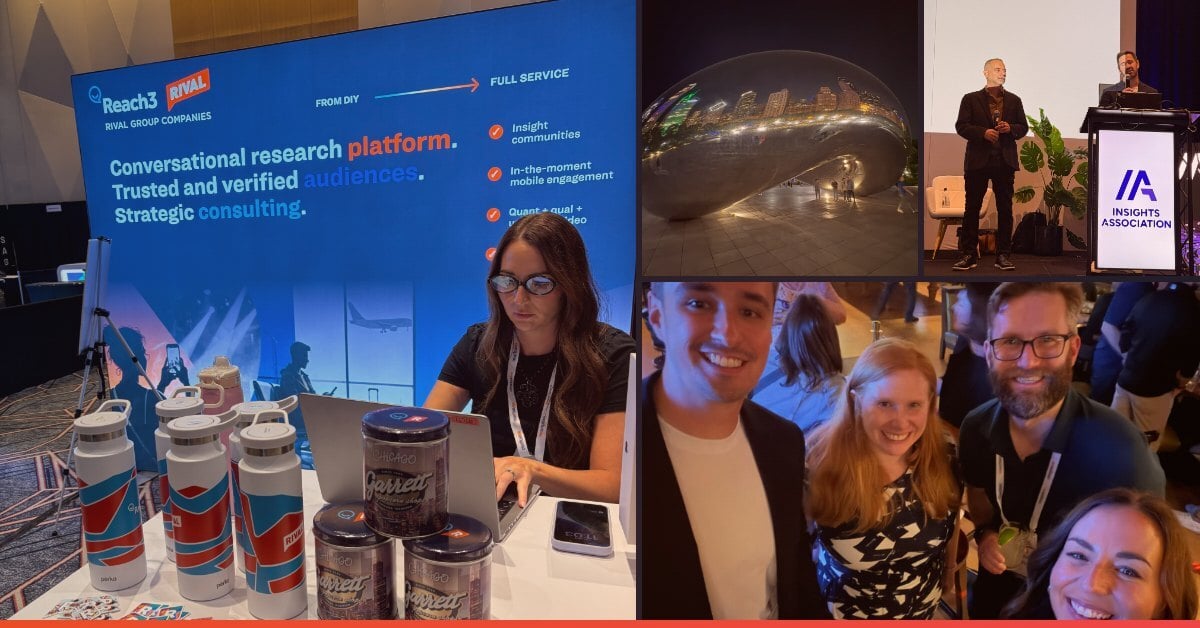
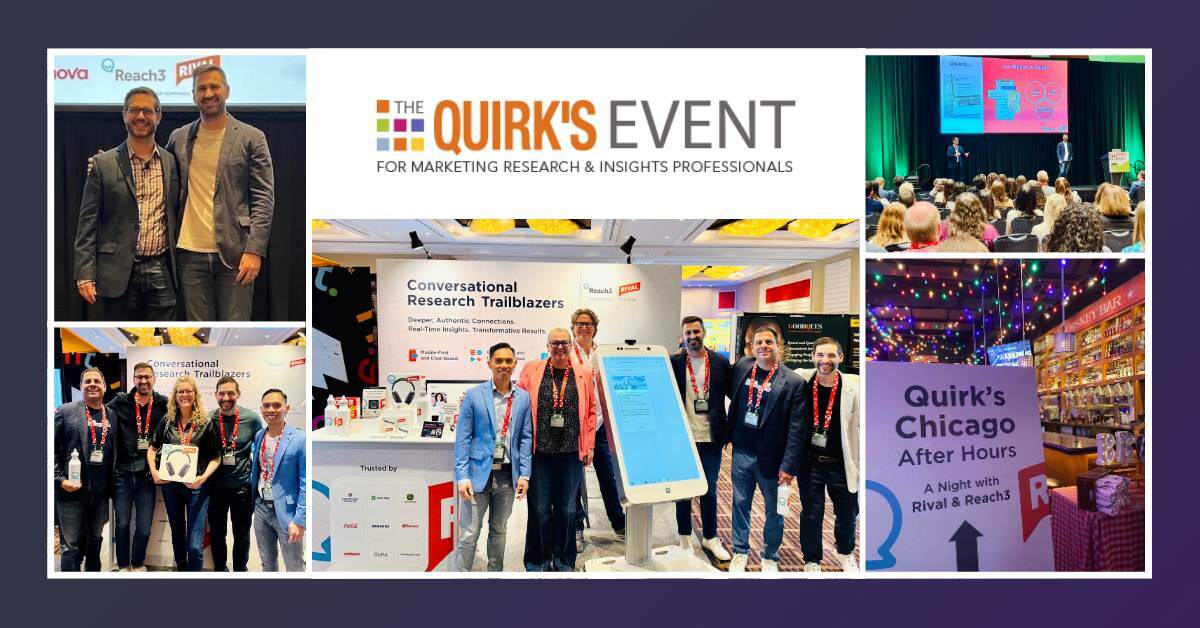
With 1,949 registered attendees and many top market research companies in attendance, Quirk's New York 2026 is the largest Quirk's Event to date. Here's what stood at this this year's conference.
Using AI-driven knowledge bases to get insights to stakeholders
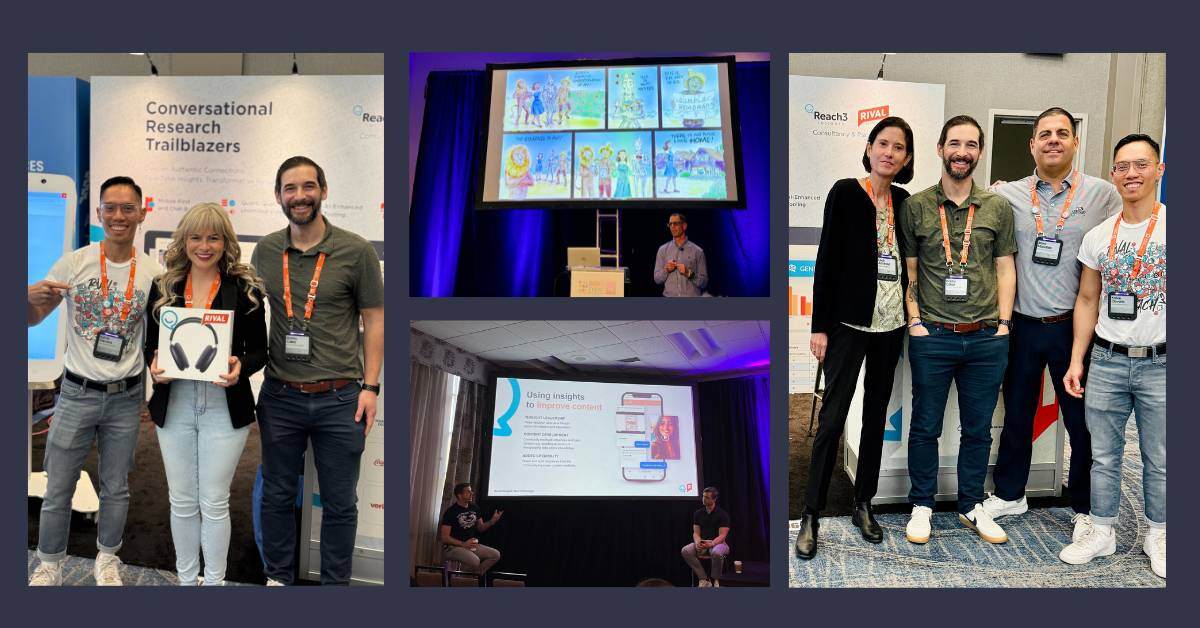
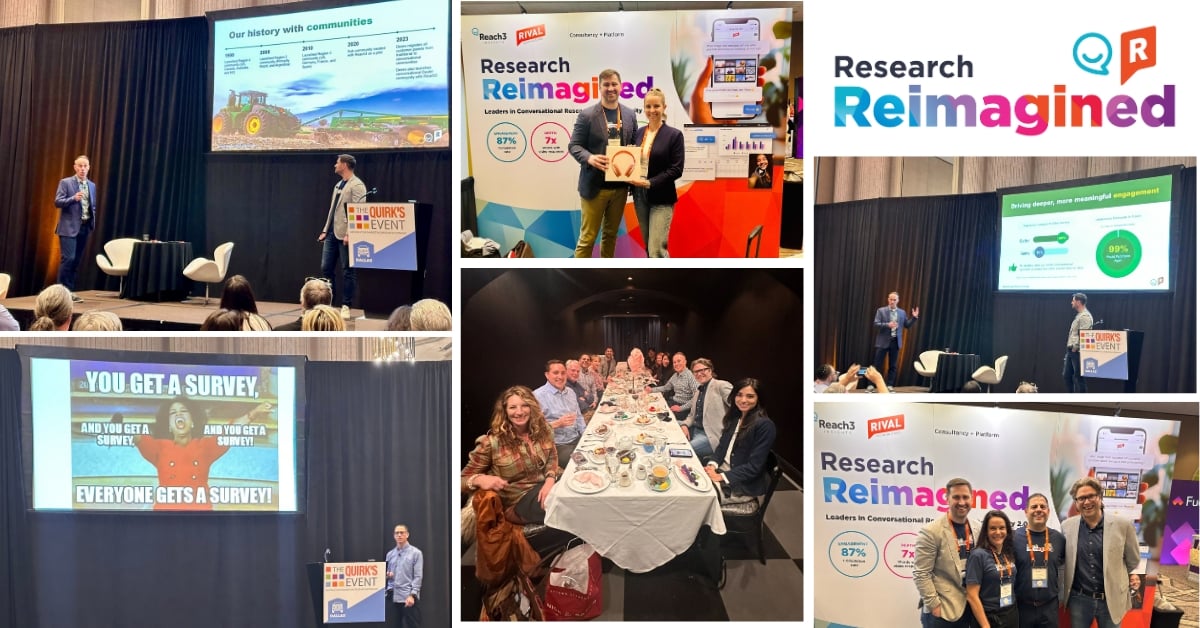
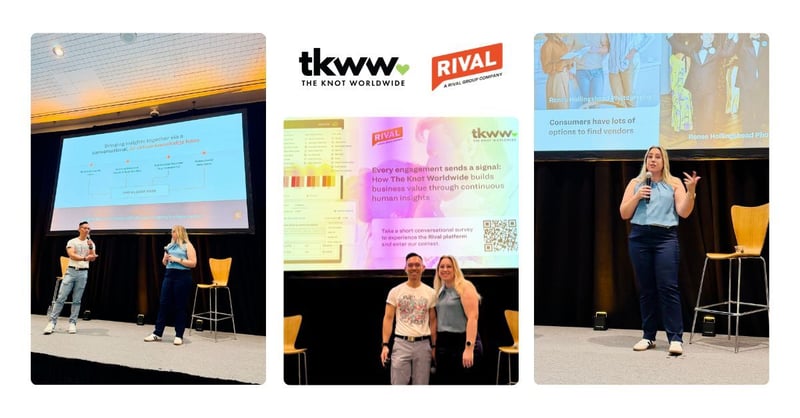
I had the unexpected pleasure of presenting with Sam Joneswood, Insights Lead at The Knot Worldwide. We showed how The Knot uses its insight community for strategic and quick-pulse decisions, then explored the value of an AI-driven knowledge base: a way to surface insights grounded in research and your company's own context. Built well, it connects the dots across your community, syndicated research, ad hoc studies, web analytics and transactional data.
Sam's key point: insights teams need a hand in setting the guardrails. Her advice: "Control the inputs, limit the scope, add explicit caveats on guiding folks what they're reading about, and emphasize the role of researchers as the solution."
Taking a product mindset to AI
In a session hosted by QuestionPro's Dan Fleetwood, insight leaders got candid about what AI tools can and can't do right now.
"We take on a very product mindset within my team in terms of building insights products that we deliver for our clients and internally," shared David Iudica, Head of Global Measurement and Insights Analytics at Uber Advertising. His team builds orchestration agents that streamline workflows rather than piling onto the billion dashboards a company already has.
Michelle Auguste, VP of Global Media Insights at the NBA, keeps it practical: synthesizing, "gut-checking" insights so they land correctly, and finding efficiencies.
Iudica emphasizes the need to get your hands dirty and find new opportunities to solve problems with AI. “Invent use cases where there are none,” he encouraged the audience
Scaling the impact of small research teams
Presenting with Outset's Aaron Cannon, Kimberly Bromann, Senior Market Researcher at HubSpot, showed how a two-person team punches above its weight inside a 9,000-employee company, with help from an AI tool.
The team was too slow for the market, its qualitative data too shallow, its analysis painfully manual. The fix: the "Growth Gabby Listening Post," an always-on program powered by AI that runs autonomous interviews with intelligent probing, synthesizes hundreds of queryable transcripts, and builds custom stakeholder reports.
Her verdict? Easier than training an intern. "It really has shifted the cognitive overhead as well," she added.
Future-proofing the business
A thread ran through the event: insight leaders see their job as helping the company navigate what's next. In our session, Sam described helping The Knot's leaders look ahead to the life stage customers enter after marriage, and to faster-moving trends like shifting social algorithms, all tracked longitudinally through a flexible insight community.
James Wycherley of the Insight Management Academy (and a former guest in our webinar "Leading Insight Into The Future") made a similar case. Shourav Sen, VP of Strategic Insights and Analytics at Colgate-Palmolive, said that even inside a mandatory stage-gate process, he protects time for big questions: portfolio evolution, innovation roadmaps, category growth. Maria Amenta, Corporate VP of Research at New York Life Direct, aligns with C-suite priorities but reserves 15 to 20% of her team's annual capacity for what executives aren't thinking about yet.
Foresight may be the hardest thing to hand to AI. "I don't think AI is great at looking around corners yet," said Wycherley, "but it's fabulous at doing lots of scenario testing if you put in different parameters."
It's important not to lose sight of what the insights team is all about: Making an impact.
Future-proofing whole categories
Looking ahead isn't only about a single company. Researchers are thinking about the future of entire categories, too.
Two Mondelez researchers made the case with Mintel's Emily Matterson. Innovation cycles there once took 18 months, long enough to miss trends by launch. So the insights team built something faster and cheaper, pairing social prediction (early consumer signals) with product intelligence (what brands do and how markets respond).
"Each part of this process comes together as our blueprint for growth, but it's not a one-time thing," said Lisa Balban, Senior Director of Insights and Analytics, Savory and Foresights at Mondelez. "It's an iterative process that we just move through very, very quickly."
The approach leans on a maturity curve mapping where snacking trends sit. "There are so many drivers that consumers are talking about," shared Maria Rondon, Senior Director of Category Insights and Analytics, Sweets, at Mondelez. "The maturity curve really helps us focus."
The results speak for themselves. Mondelez is gaining ground with key demographics and chasing the top spot in several categories. "We've already recruited new young millennial families into the brand," revealed Balban. "It's changed our perceptions already around ingenuity and fun."
For more on Quirk's New York 2026, check out our recap of our session with The Knot here.