

Why Top Market Research Firms Combine Technology, Consulting and Panel

Your participants are tired. Open-ends are getting shorter, dropout is creeping up, and you’re spending more time wondering whether the feedback is real than learning what it says. Your tech vendor, your sample provider and your consultants each own a slice, and nobody is really accountable for he results.
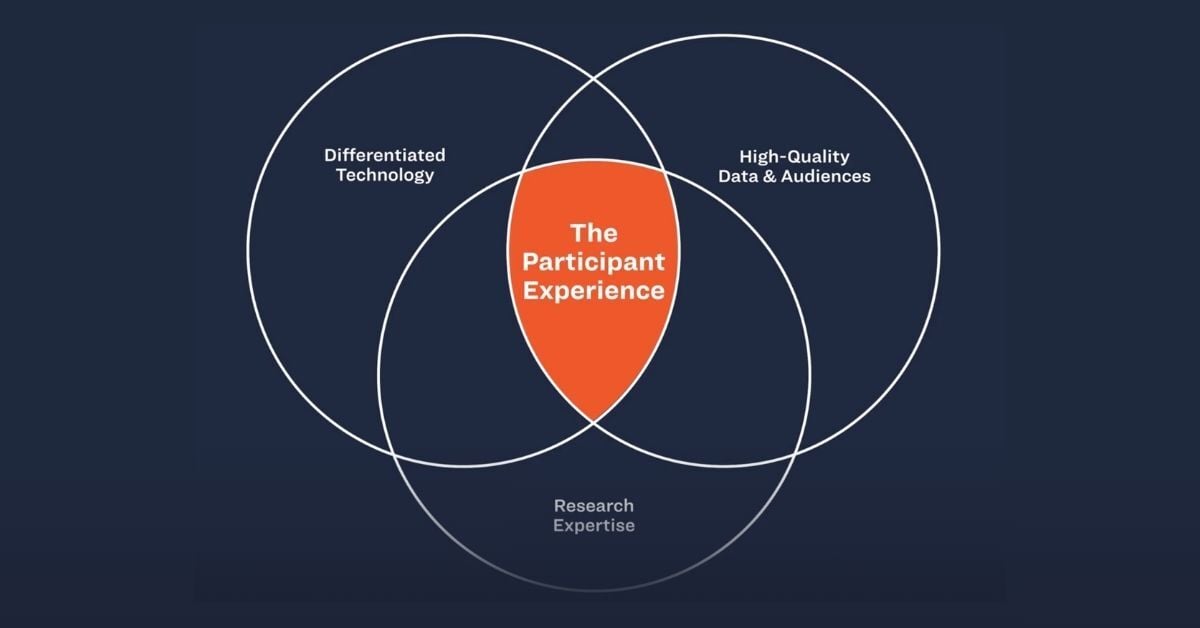
It this sounds familiar, it's because of the way the insights industry has been set up. And in her article for Quirk's, Jennifer Reid, Co-CEO and Chief Methodologist at Rival Group, explores the challenge. Her solution is the “insights trifecta”: combining technology, research expertise and access to high-quality audiences, working as one system.
Why a market research technology platform is only one third of the answer
Many reports in our industry (including Greenbook's GRIT) suggest that client-side researchers are under pressure to deliver more with less. This is why finding the best market research companies that can help your team matters a lot.
In previous decades, the insights industry has split the job many different ways. Technology providers built insight platforms. Sample providers delivered audiences. Consultancies (from boutique agencies to full-service firms) designed the studies and interpreted the results.
Every lane matters, of course. The trouble lives in the handoffs. Recruitment choices shape data quality. Expertise shapes what the data means. Technology touches every step, including how a participant answers a question on their phone. Pull one thread and the other two move.
Who is responsible for the entire thing? If it's left to you as the client, then isn't that adding more work on your plate?
This disconnect is relevant when you're evaluating the best market research platforms in the market. Having the most amazing features and AI tools is valuable. But if the vendor you're working with can't give additional support when you need it, then you may still end up spending time and budget looking for other partners.
A market research panel is only as good as its participants
Now, let's look at another component of the trifecta: panel.
In this area, fraud, bots and survey farms dominate the conversation. It's why data quality is one of the top market research trends of 2026.
An overlooked aspect of this issue is the participant experience. As Jen shares in the article, when you send boring and long surveys, “The ‘good’ people are easy to lose.”
Your research competes with social feeds, streaming, messaging and games for the same few minutes. A survey that feels repetitive or clunky loses, especially with younger audiences like Gen Z. You can see it in the data: thinner answers, less context, higher dropout, and a nagging feeling that someone mentally left three questions ago.
That’s why conversational, mobile-first methods, video feedback and AI-accelerated probing keep gaining ground. Better experiences for participants lead to better information for researchers. It's that simple. Any market research panel that treats its members as a stack of completes will watch engagement slide.
This need for better participants is a huge reason why we launched Rival Audiences, our proprietary, video-verified panel. We've recognized that our clients — whether they're working with Rival, Reach3 or Angus Reid — have a need for sample that they can trust. Built on the Rival platform, this panel is engineered to deliver high quality insights.
” When audiences are viewed as a long-term asset rather than simply a source of survey completes, decisions about recruitment, engagement and respondent experience start to look very different.
Jennifer Reid, Co-CEO and Chief Methodologist, Rival Group
The value for brand-side clients when tech and research expertise share a table
Jennifer points to a program with Weber-Blackstone. A small internal insights team needed to support research across four countries while building engagement among younger grillers. To meet the demands of the business, they built insight communities on the Rival platform. But to support other business needs, they also work with Reach3 and use Rival audiences to conduct shopper journey studies, in-store mobile missions and other types of research.
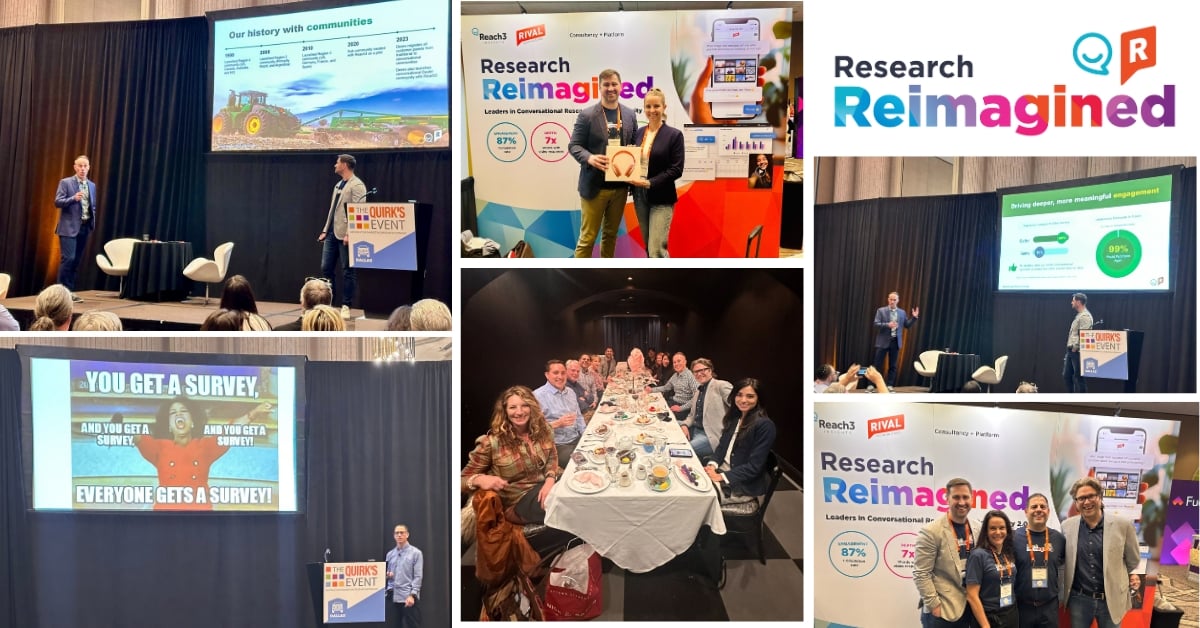
"It's just been a huge, huge help and a very big extension of our team," Laura Ammigan, Global Director of Insights and Analytics at Weber-Blackstone, said about this partnership during a session at Quirk's Chicago.
This example is just one of many that proves having accessing technology and research and industry expertise under one roof is valuable and a huge time-saver for lean insight teams.
AI raises the stakes
AI talk usually starts and ends with speed, and the gains are real. Translation, coding, synthesis and early-stage analysis take a fraction of the time they once did. That leaves more room for interpretation, advice and exploring implications.
Speed alone has a ceiling, though. AI pays off when strong research design and trusted data sit underneath it. Weak inputs still produce weak output, just faster.
” AI becomes more useful when it's supported by strong research design and data that researchers trust.
Jennifer Reid, Co-CEO and Chief Methodologist, Rival Group
How to choose a market research partner: Ask the connected question
The net-net of Jen's article is this: If you are looking for a market research company to work with, see if you can find one that offers an innovative platform, research and industry expertise, and high-quality panel under one roof. Having these pieces of the puzzle together has benefits more than just time savings and money: it creates real synergy and makes sure that your partner is equally accountable to the results.
If you'd like to learn more, check out our webinar on insights trifecta featuring Jen and Greenbook's Lenny Murphy.