










Results
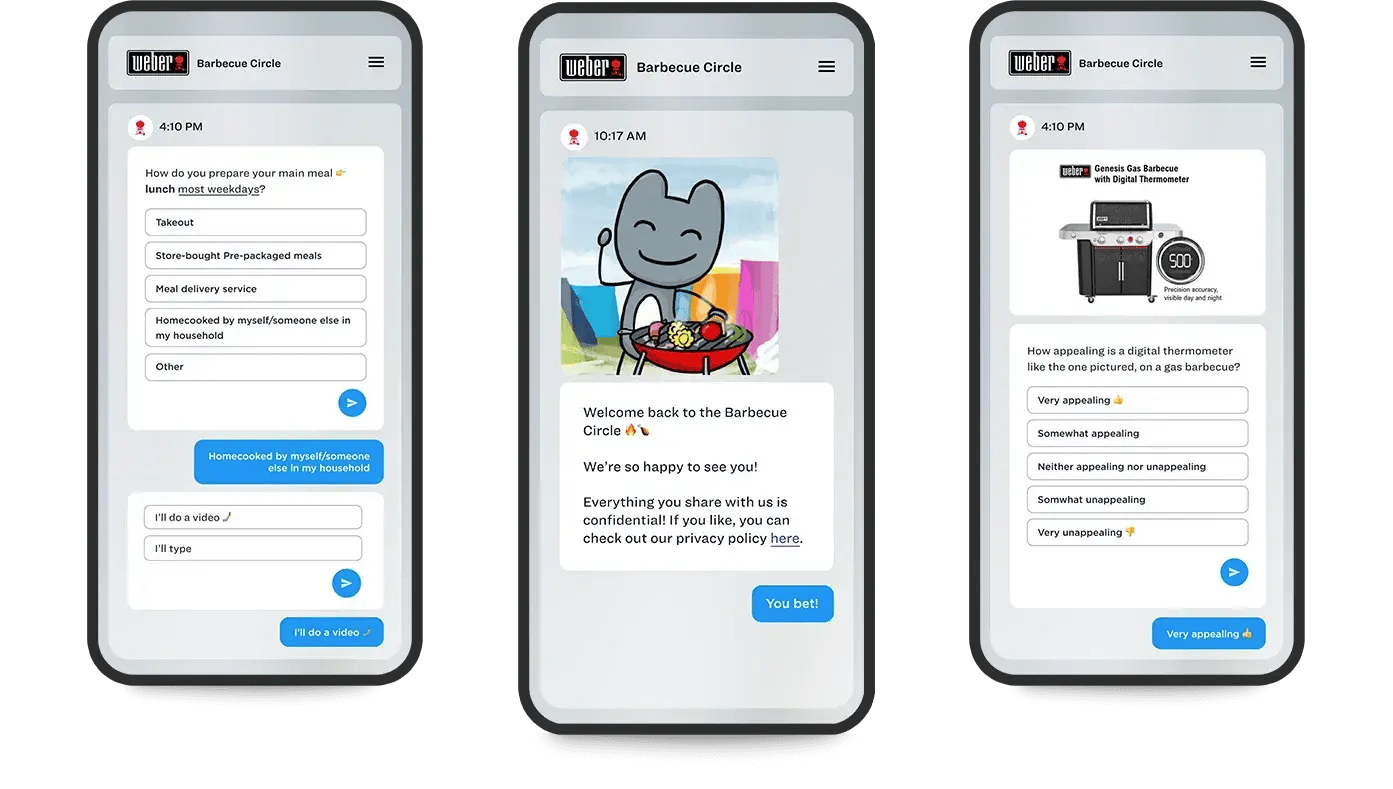
The shift to a more conversational, mobile-first approach has strengthened both community performance and how insights are used across the business.
-
Higher engagement: A 92% completion rate reflects strong and consistent participation.
-
More representative feedback: Improved engagement from Gen Z and millennial consumers has created a more balanced view of the customer base.
-
Faster access to insights: Teams can answer questions as they arise, without waiting for formal research cycles.
-
Richer insights: Video and open-ended responses provide deeper context and make findings more impactful for stakeholders.
-
Stronger internal adoption: The community is widely used across functions and has become a trusted, go-to resource.
Business impact
-
Earlier product direction: The team identified key barriers in new categories, such as perceptions that electric grills lack heat and flavor, early in the development process. In one case, Weber launched a product based on community feedback and later returned to members to show how their input directly shaped the final outcome.
-
More informed marketing: Insights from the community have shaped messaging, partnerships and seasonal strategies.
-
Support for sales and external conversations: Teams have brought community-backed insights into retailer discussions and other key moments where primary data was needed.
-
Broader decision support without added budget: Questions that surface across the business can be answered without launching new research projects.
-
Shift to always-on insight: Research is now embedded in day-to-day decision-making, rather than treated as a one-off function tied to budget and timelines.