


5 best practices for applying an agile research methodology
Getting to know your customers isn’t a one-and-done thing. You are testing what resonates with your customers, all the way from inception to post-launch during your campaign. You need feedback every step of the way if you are to be successful — and an agile research methodology can help.
While agile research gives you the keys to faster feedback, you need the right systems in place to get clear insights. If you’re thinking of leveraging an agile research methodology in your business, here are best practices to keep in mind.
1. Creating a robust, agile market research strategy
Our sister company, Reach3 Insights, is a full-service insights consulting firm that works with global brands like Kimberly-Clark, Tyson Foods, Lenovo and Diageo to capture agile insights that drive better business decisions. Based on many of these high-impact projects, Reach3 has identified five critical steps to implementing an agile research methodology:
1. Discover: understand the problem and sett objectives. This involves identifying new opportunities by talking to your target audience through forums, focus groups and mobile communities.
2. Define: explore and identify high-level themes based on consumer findings through mobile surveys. For example, if you’re an event tech company and want to know what features you need to create a great ticket checkout experience, you can thematically identify the most important features to your customers.
3. Develop: capture participant feedback and find insights from your data. Thanks to mobile research platforms like Rival, this step shouldn’t take days or weeks — today, you can request feedback from a captivated audience on a Friday and work off those findings by the end of the weekend.
4. Deliver: deploy your updated product or messaging into the market. At this stage, it’s important that you have the tools in place to receive sophisticated reports about your consumer feedback.
5. Evolve: iterate and plan the next steps to continually deliver more value to the business. By using an agile market research platform, you can consistently gather and apply feedback to further improve your market research strategy. and get ongoing feedback.
2. Recruit the right mix of people
When developing goals for your agile research program, you’ll likely have varying audiences for different research sprints.
For example, if you’re part of the team responsible for developing your company’s next generation of computers, you’ll likely want to know where your target audience is based, and if they plan to buy a PC in the next year. From there, you may have research activities tailored to different segments, such as gamers, and families who share their computers.
Achieving the right mix of research participants isn’t limited to demographics; you also need to provide an engaging participant experience. For many, the very thought of taking an online survey is a red flag. They have become so overused, long, and boring, that many feel like they’re taking a test when providing their answers.
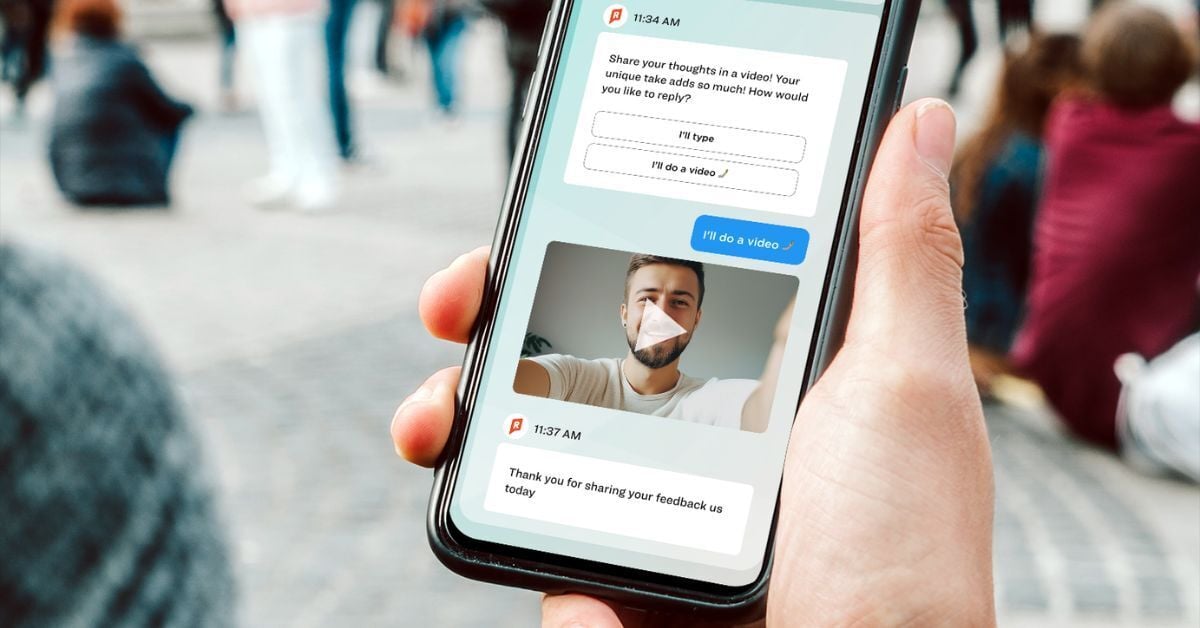
Fortunately, there is a better way. If you wanted to learn something new about your friend, you’d never ask “on a scale of 1 to 10 how much do you enjoy ice skating?”. Crazy looks aside, you’d never get an honest answer, because that’s not how people are designed to communicate! And we all know that without honest feedback, you’ll never get accurate data. That’s why we’re all about conversational surveys — or “chats” as we like to call them — that look and feel like the messages people send to their friends and family.
3. Don’t be afraid to pivot
Your brand may have specific outcomes it’s looking to tackle with an agile research methodology. However, as you engage participants, you may uncover unexpected opportunities to do more research. If so, you need to adjust the questions you’re asking, which we like to refer to as agile learning streams.
For example, a global brand in the tech space recently used our market research platform to ask consumers about their gift giving habits. This included:
- how they think about giving gifts
- what types of gifts they give
- what type of tools would make gift-giving easier
- would they use an AI tool to help recommend gifts
Based on the answers received, we could always adjust our follow-up questions. As a result, while having an overall structure for the general questions you want to ask is important to have, be prepared to gather more questions–and insights– on the fly.
4. Ensure your reporting is agile
Most business leaders don’t have time to sift through a 30-page report to find out the next steps of a major company decision. The reporting your team has in place also needs to be agile and to the point.
In a recent talk at the 2021 Market Research in the Mobile World conference, Pallavi Agarwal, User Researcher from Amazon, shared how her team used agile research to support Amazon Pay. Agarwal said agile research should focus on small data points with reporting that highlights five to six key insights.
Reach3, our sister company, agrees with this approach. Their deliverables include mobile toplines (available in real-time through the Rival platform) as well as an interactive, mobile-first report that highlights the top 3 to 5 things that reveal the “so what” behind the findings. This makes it easy for executives and other decision makers to use and share the insights
5. Engage your customers where they’re already at
Establishing a successful agile research process requires processes and research technologies that uncover deeper insights at scale as fast as possible.
At Rival, we believe that the ability to engage real customers in channels they already use is critical. This is why our platform is built for mobile-first channels — our goal is to reduce the need to rely on email surveys, which are already well on their way to becoming dead tech.
A research study in gaming comes to mind. In this example, we worked with an Instagram influencer to invite Gen Z players to participate in chats on Instagram Stories. These players went from viewing a story on Instagram to answering a few questions about their experience with Fortnite — allowing us to get both qual and quant insights in one frictionless experience. SMS notifications allowed us to easily re-engage these players for follow-up chats.
With chats, your brand can invite consumers via SMS to participate straight from any mobile devices, making it easy to take on an iterative approach. Then when you want to dig deeper on your findings, you can micro-target different audiences and get new feedback. When these mobile notifications hit your audience’s phones, you can get in-the-moment responses and get quant and qual data in minutes, not days, weeks or months.
With a mobile community, you have an already captivated audience you recruited looking to hear from you. You also have a general sense of how responsive they are to your questions, unlike other platforms where you are working off a cold email list or paying for each completed survey (which can end up being very expensive very quickly).
Summing it up
An agile research methodology can help high-impact teams deliver more value to the business, but it requires setting clear goals and being open to what else you might discover. By having the right technology and mindset in place though, the sky's the limit when it comes to the business ROI of this approach.
Looking to deliver deeper insights at scale — and at speed? Reach out to our sales team to see how you can use our platform to level up your agile research methodology.