


Social media isn’t just a place for memes and trends—it’s one of the most powerful tools available for recruiting market research participants today. Whether you’re trying to build an insight community or gather quick feedback for message testing, social sampling gives researchers the ability to reach people where they already are—scrolling, tapping, and engaging on platforms like YouTube, Instagram, TikTok, Facebook, Reddit, and LinkedIn.
While Gen Z is often seen as the primary target for this approach, social sampling is effective across all age groups—from Millennials and Gen X to even digitally savvy Boomers. After all, practically everyone is on at least one social media, according to Pew Research. The key lies in understanding how to tailor your recruitment approach for each audience, platform, and project.
What Is Social Sampling?
Social sampling is the practice of using social media platforms to find and recruit real people for market research studies. This can be done organically (by tapping into your existing follower base) or through paid campaigns (using highly targeted social media ads).
Unlike traditional market panels, social sampling offers:
-
Greater diversity of participants
-
Faster recruitment timelines
-
More authentic engagement
As we shared in our Insight Community Recruitment Guide, our research-on-research shows that social media recruitment tends to deliver more “sticky” participants—those who stay engaged longer and better represent your target audience compared to traditional panel recruits. This is why social media can be a great source of high-quality sample and improve the overall quality of your data.
Why Use Social Sampling for Market Research?
Reach people panel can't. Many modern consumers aren’t part of research panels. Social sampling helps you go beyond "professional survey takers" and connect with people that far better represent the people you want to talk to.
Build diverse, engaged research cmmunities. Paid and organic social recruitment allows you to connect with a broader demographic—ethnically, geographically, and psychographically—resulting in richer, more representative insights.
Recruit in real-time. Social ads and influencer campaigns let you engage people while they’re actively interacting with content—giving you a more relevant and timely sample.
Best Practices for Successful Social Sampling
1. Pay to Play (and Be Precise)
Social media platforms limit the reach of organic brand posts. If you want your study to gain traction, paid ads are essential.
“You have to pay for attention,” explains Jennifer Reid, Co-CEO and Chief Methodologist at Rival Group, parent company of Rival Technologies and Reach3 Insights. Even with a large social following, boosting posts is often necessary to drive enough traffic to your recruitment survey.
Of course, paid advertising can be costly. That's why if you're working with one of the top insight community platforms, you have to make sure they have capabilities to help you understand how many recruits are coming from your paid programs.
💡 Tip: Use A/B testing to optimize your ad creative—images, headlines, copy, and call-to-actions—to find out what resonates most with your audience.
2. Use Pixel Tracking
If you have colleagues in social media marketing, they'll tell you that the key to understanding conversions when it comes to your paid ads is by having pixel tracking.
Unfortunately, even some of the top market research platforms do not offer pixel tracking. This is a huge gap since it not only reduces the potential effectiveness of your ads—it also makes it really difficult to understand if your ads are attracting the right people at a volume that you need.
At Rival, we believe it's important to go where your customers and audiences already are. That's why our conversational research platform has easy pixel tracking for social media sites like Meta (including Facebook and Instagram) and Reddit. Our customer success team also has in-house experts who can help you with your creative and campaign execution, maximizing your success in social sampling.
3. Craft Strong Incentives
Whether you’re recruiting Millennials for a customer journey mapping study or Boomers for financial service feedback, people need to know what’s in it for them. Offer clear, relevant incentives—like gift cards, product samples, or branded swag.
Make sure your ads and posts prominently feature the incentive both visually and in copy.
“Incentives work—but only when you talk about them,” says Jen. Clarity is key.
4. Include a Clear, Motivating Call to Action
On social media, people are often in browse mode—not looking to participate in research. That’s why it’s crucial to have an explicit and compelling CTA that tells them exactly what you want them to do (e.g., "Join our quick survey and earn a $10 gift card").
Your CTA should stand out and align with the platform’s tone—for example, casual and mobile-friendly for Instagram, but more professional on LinkedIn.
If you need help crafting your copy, get help from your customer success team or use AI to get or refine ideas.
5. Match the Research Experience to the Platform
Don't recruit from TikTok and then drop people into a clunky desktop survey. The experience needs to be:
-
Mobile-first
-
Quick to complete
-
Conversational in tone
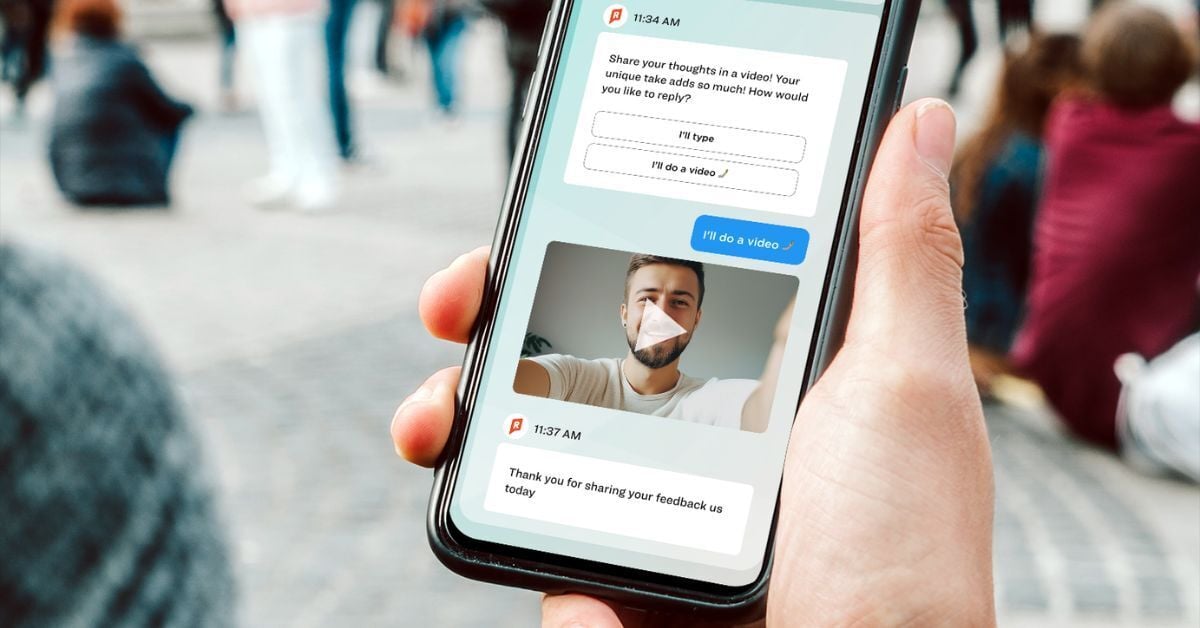
That's why conversational surveys often work very well for social sampling: not only are they engaging, they also work seamlessly coming off different social networks.
Using a market research platform that can mimic the look and feel of social media experiences helps increase engagement and reduce drop-off rates.
Bonus tip: Keep the Profiling Questionnaire Short
On social media, people are used to quick, engaging interactions. If they don't like something, they can go to the next TikTok video or close the app altogether. So, if you capture people's attention, you have to be respectful of their time.
We recommend avoiding traditional (and super boring) profiling questionnaires when doing social sampling. It's better to have just a few engaging questions, tell people about the incentive, and then invite them to keep in touch. For younger generations like Gen Zs, inviting them to subscribe via mobile is usually a great option as it enables you to reach them in-the-moment and conduct agile research.
This ability to recontact is crucial for many research community and customer insights platforms today. It lets you have a more iterative, ongoing conversation with your audience without burdening them with 20-minute surveys (which no one loves).
-4.png?width=2171&height=1316&name=ReContact%20(1)-4.png)
Is Social Sampling Just for Gen Zs?
While Gen Z is a natural fit for social recruitment, other age groups also respond well to social sampling—especially when the platform and messaging are adapted to their behaviors.
-
Millennials: Responsive to Instagram and Facebook ads, especially when incentives are tied to their lifestyle.
-
Gen X and Boomers: Reachable via Facebook and YouTube, particularly when recruiting for topics like healthcare, homeownership, or financial planning.
-
B2B Audiences: Use LinkedIn or targeted Facebook ads to engage professionals for B2B market research, especially in industries like tech, finance, or healthcare.
Don’t underestimate your existing follower base, either. If your brand has a decent social presence, you can recruit organically by posting with clear messaging, incentives, and CTAs—though boosting is still often needed. If you're a researcher, work closely with your marketing team and create a plan that makes sense for your brand and audience.
Want to Get Started with Social Sampling?
If you'd like to learn more about leveraging social media for market research recruitment, we're here to help!
Check out our Insight Community Recruitment Guide or request a demo to see how you can use Rival's conversational research platform to reach and engage your audience.