


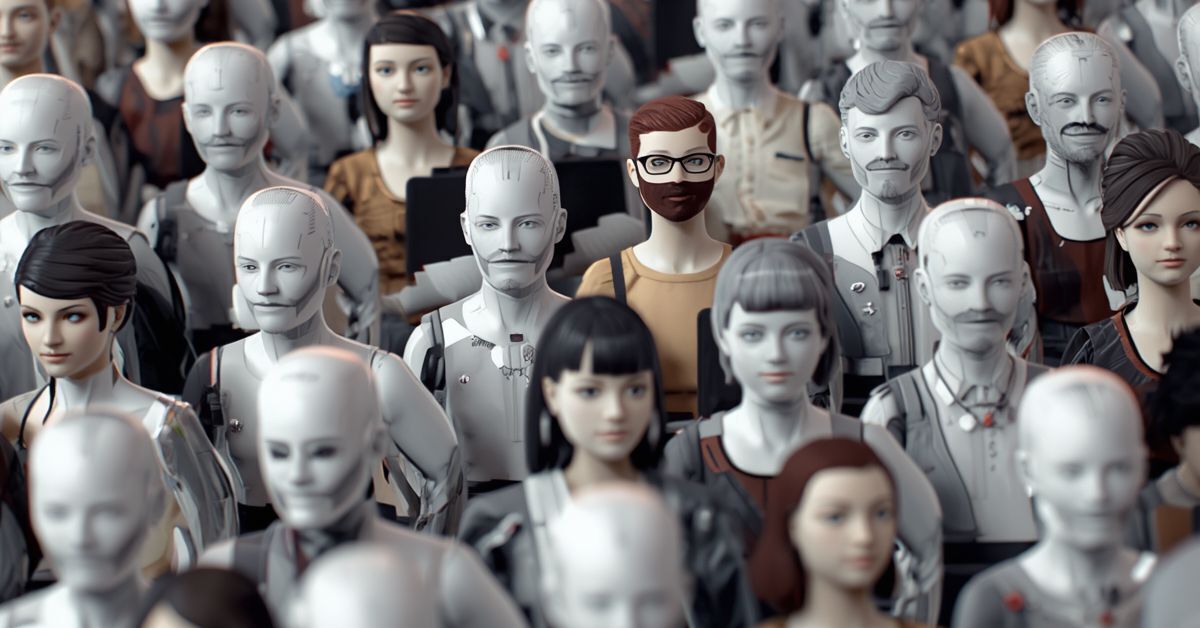
Synthetic personas ranked among the top market research trends heading into 2026, so it was no surprise they dominated conversation at this year's Quirk's Chicago.
What was notable, though, was a shift in tone. Unlike in previous years, the discussion felt more grounded. Across the two sessions we attended, the message wasn't "this changes everything" — it was "we're learning, we're testing, we're figuring out where it fits." One theme came through clearly: using synthetic personas or synthetic respondents isn't going to replace connecting with real people.
Panelists from Warner Bros. Discovery, Tropicana, and Newell Brands walked through real-world applications and case studies — almost always running synthetic in parallel with human panels and communities to see where results aligned, where they diverged, and what those gaps revealed.
Where synthetic personas are showing promise in market research
Use case 1: Rank-order accuracy
Kristen DeGraaf at Tropicana ran a parallel test across six ads and saw synthetic match human results on five. Randee Keating at Newell is three rounds into a Paper Mate innovation process and said she's "more confident about the innovation we have than I have in the last several years."
The outputs aren't identical to what you'd get from a traditional panel or insight community — but the rank order is close enough to be trustworthy.
Use case 2: Better discrimination between ideas
A familiar pain point in concept testing is that ideas tend to cluster at the top, leaving teams with a group of equally strong-looking concepts and no clear path to a decision. Synthetic personas tend to spread results further along the distribution, creating sharper gaps between top performers and the rest — making it easier to prioritize what moves forward.
Use case 3: Speed to iterate
Paper Mate compressed three rounds of testing into a matter of weeks. Amber Willis's team at Coleman used synthetic to test multiple cuts of an already-produced ad — 6s, 15s, and 30s, lifestyle vs. functional — on a timeline that traditional panels couldn't match. The six-second cut won.
Use case 4: A smarter screening layer before human testing
Nearly every panelist described the same workflow: use synthetic to narrow a long list down to a short list, then take the short list into human research. The human step doesn't get smaller — it gets more focused and more valuable.
Use cases where synthetic personas fail in market research
This is where the panelists were refreshingly candid.
Tropicana's one miss out of six came down to distinctive brand assets. The ad featured an orange with a red-and-white striped straw — to a human, that's instantly recognizable Tropicana iconography built over decades. To synthetic personas, Kristen noted, it registered as a straightforward object: a straw, an orange, with no implicit brand meaning attached. The model saw what was there; it didn't carry the association. That gap showed up as a real scoring miss on branding KPIs.
Sofia Gomez Garcia at Warner Bros. Discovery encountered something similar in a MaxDiff exercise on movie special features. Synthetic nailed the negatives — features audiences clearly didn't want — and performed well on top priorities, but seriously under-indexed on gag reels, one of the highest-rated features in her historical human data.
"You go on YouTube and you're watching the bloopers and the cast laughing — there's a comedic cachet," Sofia explained. "Synthetic personas don't pick up on that." She also flagged talent recognition as a gap: a poster featuring a major actor versus a landscape isn't always distinguishable to the model, even when it's immediately obvious to any human respondent.
Her framing was worth holding onto: "I would almost put synthetic resources in a different category than whatever you're doing right now with traditional research and human studies. I would remove the thinking of 'this is a replacement for my human studies.' This is actually a different tool — and I need to understand what it's best at and what I can do with it."
That framing surfaced repeatedly, in different words, across both sessions: synthetic augments; it doesn't replace.
Can synthetic personas change how insights are generated?
The most interesting takeaway from the conference wasn't about the technology — it was about where insights teams now get to sit in the process.
In the traditional model, consumer testing often landed at the end of the development cycle, just before the sales deck, with the insights lead functioning as a gatekeeper: approving or blocking what moved forward. Because synthetic is fast and affordable enough to deploy early, insights teams can now show up at the front end with a consumer-informed perspective — contributing to ideation rather than just validating it. That's a shift from consumer-validated to consumer-informed, and it represents a more meaningful structural change than any single methodology win.
In short, just like many AI-powered tools today, synthetic is starting to change the job description of researchers.
The key takeaway from Quirk's Chicago
What I heard from Quirk's Chicago mirror what we're hearing from many insight leaders today about AI adoption: everyone is still learning and still building a clearer picture of where the use cases are strongest. What's evident is that it won't replace genuine consumer connection — real people, in the real moments where brand meaning actually lives.
What it can do is reshape the work: funnel more ideas through earlier, test faster, iterate sooner, and give insights teams a seat at the strategy table before decisions have already been made. As a distinct tool alongside traditional research, it's a meaningful addition. As a wholesale replacement, it risks quietly stripping out the very associations and emotional depth that give brands their power.
The teams on stage had it right: keep testing, keep learning, and keep talking to real people.
To learn more about the use of synthetic respondents or personas, check out our annual Market Research Trends report.