



(…and no — sadly, fun does not mean adding confetti GIFs to your next tracker — though I’m not not suggesting that.)
Surveys have a PR problem. In a world where people are one thumb-swipe away from TikTok, group chats, or that dog-with-a-hat filter we all secretly love, the humble questionnaire too often shows up as the least exciting option in someone’s day. And when respondents disengage, everything downstream suffers — data quality, completion rates, thoughtfulness… all the things that researchers depend on.
That’s exactly why Jennifer Reid, Co-CEO and Chief Methodologist at Rival Group, is making the case for something the industry has historically rolled its eyes at: fun. Yes, fun — and as her recent piece for Research Live highlights, fun isn’t frivolous. It’s foundational.
The impact of fun on data quality
Jennifer cuts right to the core of the problem: today’s participants are easy to distract and even easier to lose. As she puts it,
If a survey feels conversational, light, and even a little fun, you’ll hold their attention and get more thoughtful answers back.
At Rival, that’s exactly why we asked this question in our recent research-on-research study: Was this enjoyable? Not because we’re trying to gamify your Tuesday, but because enjoyment signals something far more valuable — attention.
We’re measuring the moment when someone decides to stay with us instead of drifting off to TikTok, email, or the fridge. That decision is engagement in action — and engagement is one of the clearest indicators of data quality.
Fun is a proxy for engagement, attention, and ultimately, better data.
This is where the conversation gets interesting. Fun isn’t about gimmicks. It’s about designing for the real world — the overstimulated, multitasking, fragmented-attention world that everyone, including our respondents, is navigating.
What the data says about “fun” surveys
Our team compared conversational surveys with traditional online surveys. The results? Conversational research won out in all aspects of the participant experience:
- More engaging: 69% vs 50%
- More enjoyable: 65% vs 55%
- Easier to complete: 64% vs 55%
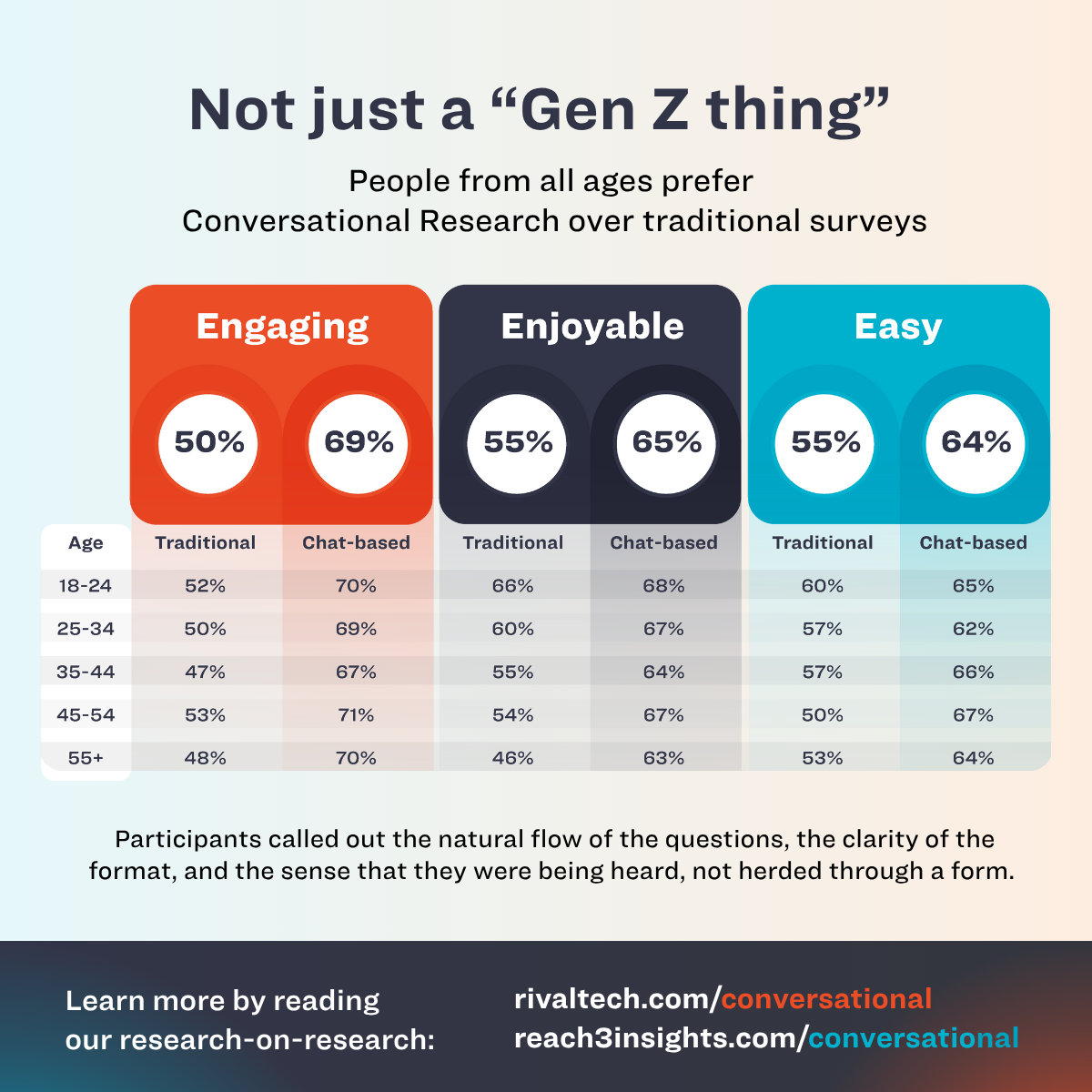
And this wasn’t just Gen Z. Even respondents 55+ scored conversational surveys as significantly more engaging (70% vs 48%).
But here’s the real mic drop: the quality shift.
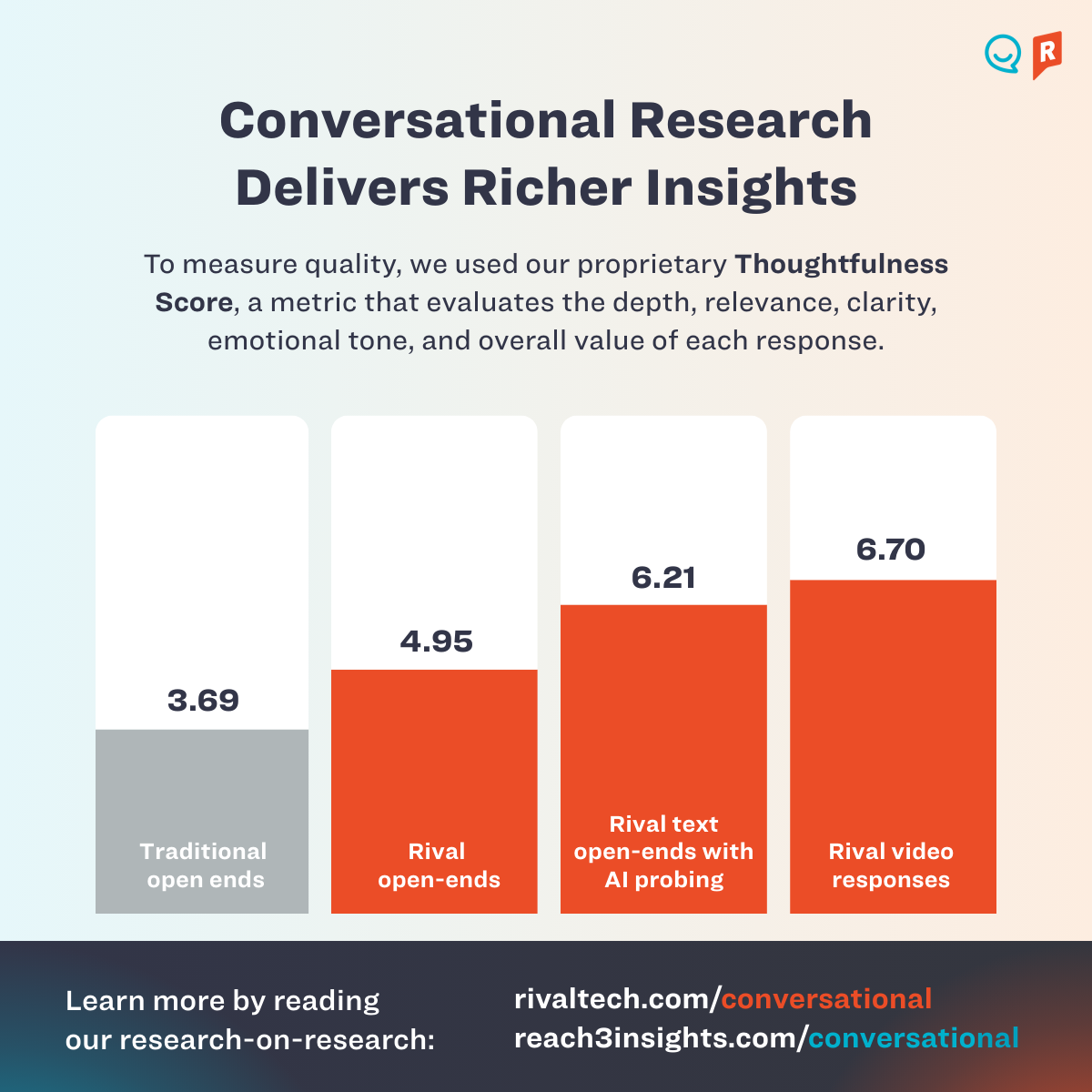
Open-ends were:
- 2.5× longer in conversational formats
- 5× longer when AI probing was added
- 8× longer in video responses, which also scored highest on thoughtfulness
This survey felt more like a conversation… which let me focus more on what I wanted to say.
Longer, richer, more emotional — that’s the coveted trifecta of qualitative gold.
How fun improves survey-data quality: The psychology of enjoyment
Jennifer’s point is backed by decades of cognitive science. Barbara Fredrickson’s broaden-and-build theory shows that positive emotions literally widen our attentional scope and increase cognitive flexibility (read: the brain goes from “tunnel mode” to “panoramic view”) — the exact mental conditions that lead to richer, more thoughtful responses
On top of that, multiple large-scale reviews of curiosity research have found a consistent pattern: when tasks are enjoyable and spark curiosity, people engage more, remember more, and perform better overall.
So yes — if people are having a better time, they really do provide better responses. (Same for me, frankly. My strategic thinking and performance increases in direct proportion to the quality of the snack situation.)
The fun you can implement
Here’s where Jennifer’s guidance becomes immediately useful. Fun doesn’t require dancing hamsters or AR filters (but it COULD… some of us have not moved on from hamsterdance.com circa 1997 😅).
Fun is about small, intentional design choices:
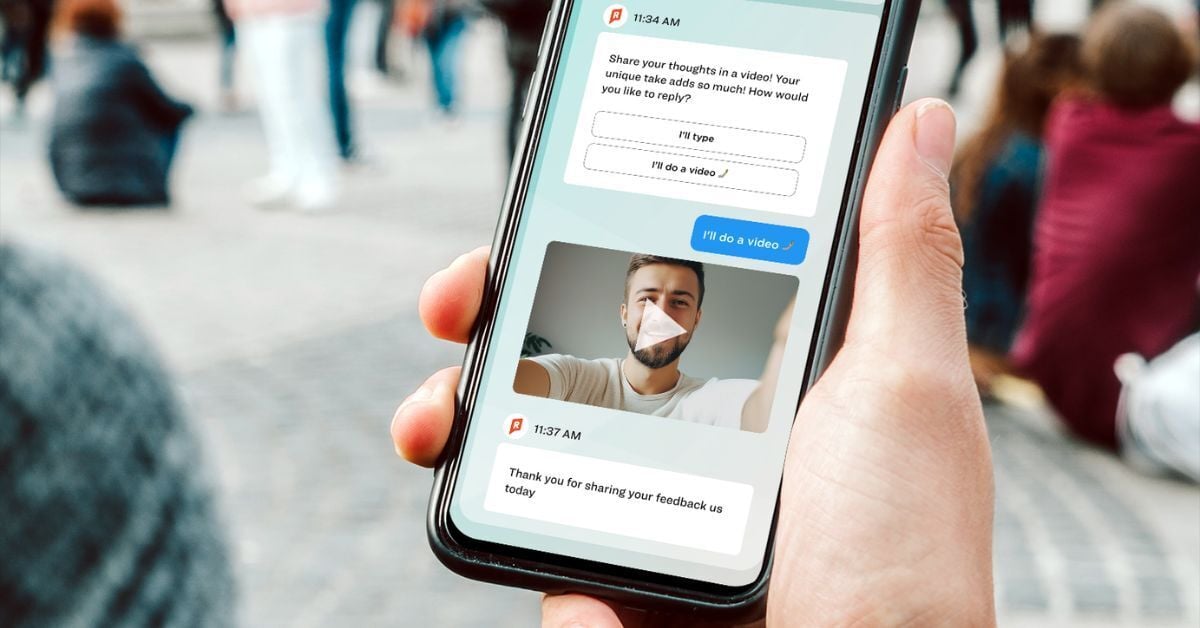
- Ask people to show instead of only tell (photos, videos).
- Let respondents introduce their pet before asking food-routine questions.
- Lean on conversational flow rather than rigid, form-feeling structures.
- Use modern AI probing — the kind that listens before asking the next question.
(If this is new to you, our Agentic AI webinar breaks it down.)
And yes, even seasoned researchers notice. As Jennifer notes, when people try these surveys at conferences, they often say: “Hey, that was kind of fun.”
As Rival’s resident Senior Events Specialist, what always stands out to me is how consistently that feedback shows up in our Slack channels and event debriefs. You can run the most polished booth in the world, but nothing lands quite like genuine, unprompted reactions — those moments when someone experiences the tech and immediately calls out that it feels different. You see it in the demos, the recordings, the team’s recaps: a shift from polite interest to actual engagement.
A call to the industry: Respect the respondent
Jennifer leaves us with a reminder that cuts deeper than it first appears:
If people describe your survey as fun, what they’re really saying is that they stayed with it and gave you a little more of themselves.
It’s a subtle but important reframing. In an industry obsessed with data quality, panel health, and respondent fatigue, fun isn’t a throwaway descriptor — it’s a signal. A signal that the experience respected their time, held their attention, and invited more thoughtful participation.
And honestly, that feels like the shift the industry has been tiptoeing toward for years: designing research that acknowledges the human on the other end, not just the dataset they produce. Fun isn’t fluff. It’s evidence that the design is working — that people didn’t just complete your study, they engaged with it.
So… what can researchers do today?
- Start measuring fun.
If you don’t track it, you can’t improve it. - Shift from forms to conversations.
This is the future of respondent experience — especially as AI makes personalized, adaptive flows seamless. - Add one “show, don’t tell” moment to your next study.
The uplift in emotional richness is immediate.
Designing research that feels enjoyable isn’t “being cute” — it’s being intentional. It’s acknowledging the real conditions people are living in and designing with that reality, not against it.
From where I sit — constantly thinking about experience design, flow, and the small moments that make people lean in — Jennifer’s reminder hits home. If we want better data, we have to create better experiences. Full stop.
Fun just happens to be the most underrated place to start.