



COVID-19’s impact on consumer behaviors and attitudes cannot be understated.
A global crisis can either paralyze a marketing team or galvanize it to thrive. In the wake of the COVID-19 pandemic, that’s exactly what we’re seeing: some companies are cutting back on marketing (in some instances, laying off the entire marketing team), while others are being more agile and coming up with interesting ways of engaging their audience during these difficult times.
If you want to stay in business, you can’t stay idle for long. As a business owner myself, I understand why many entrepreneurs would want to cut down completely on marketing activities. Being conservative feels like the safe choice when there’s uncertainly on how long the crisis will last. But we have to balance financial responsibility with the need to keep consumers informed and engaged when things get tough.
In fact, long-term studies show that the right approach during an economic uncertainty is to increase—not decrease— your marketing spend. The last thing you want is to be caught flat-footed and find yourself lagging your competitors when the economy revs up again.
43% of consumers find it reassuring to hear from brands
For the most part, consumers are receptive to some marketing at this time. A recent study from the American Association of Advertising Agencies found that 43% of consumers find it reassuring to hear from brands. In addition, 56% said they like learning how brands are helping their communities during the pandemic. Only 15% said they’d rather not hear from companies.
That said, marketing during these times requires sensitivity to what’s going on in people’s lives and flexibility to keep up with swift and swooping changes.
Start with customer empathy
COVID-19’s impact on consumer behaviors and attitudes cannot be understated. An ongoing study we’re conducting with our sister company Reach3 Insights recently found that 76% have recently picked up new habits, behaviors and routines in the wake of COVID-19. Of those people, 89% said they plan on keeping some of their new habits. Consumers are also trying new products, with 36% planning to continue using new brands they’ve tried after COVID-19.
Now is not the time to rely on assumptions. Any data you have from 6 weeks ago—let alone 6 months ago—is already out of date. As the consulting firm Gartner recently advised, CMOs must be proactive in monitoring changes to customer behaviors and purchasing needs while the crisis is unfolding.
Now is not the time to rely on assumptions.
Businesses must move forward but do so with genuine empathy. Marketers can help C-suite executives take the right action by acting as a lighthouse for consumer understanding. Many companies already have existing Voice of Customer and research programs—these can be leveraged at this time to uncover the emotions underlying people’s shifting attitudes and behaviors. Doubling down on customer engagement and listening programs can help provide insights on how to best move forward.
Tell relevant, authentic stories—and give, give, give
Impressively, some brands have already produced compelling campaigns that speak to the realities of the pandemic. Dove, for example, created a spot shining a light on the courage of health care workers. Some brands, like Budweiser and Burger King, are focusing on social distancing and encouraging people to do their part by staying home. One of my favorites is Sam’s Club, which recently created a 60-second spot thanking its employees and calling them “retail heroes.”
Every organization and person have the capacity to contribute in their own way.
It’s great to see creativity in storytelling at this time, but marketers must push their companies to do even more. This is the time to pay it forward and provide as much value as possible to your customers and communities.
Every organization and person have the capacity to contribute in their own way. The most important question companies should ask themselves is this: “what can I do to help?”
Giving back can take several forms. For instance, Jägermeister is hosting a virtual event to help raise funds for New York restaurant owners. In tech, companies like Apple quickly mobilized their resources to produce much-needed PPEs. In my home country of Canada, big-box retailers such as Loblaw and Save-on-Foods have increased the wages of their front-line staff to show appreciation for their efforts. Following the lead of many software companies, Nike has temporarily eliminated its subscription fees for its app to help people stay fit while quarantining.
These moves transcend marketing and may not increase sales immediately, but they’ll build goodwill and help drive long-term loyalty. Giving back is simply the right thing to do. The faster the world can beat the COVID-19 pandemic, the better chance all companies have in surviving the crisis.
Be agile for the new normal
Some entrepreneurs and marketers are holding off action, thinking that things will be back to “normal” in a few weeks or months. I do not hold the same view.
For one, some scientists are predicting that some form of social distancing may need to happen until 2022. That’s a long time to put any type of marketing on hold. A more important consideration is the fact that the pandemic will have a long-term effect on the psyche and outlook of consumers. In our own COVID-19 study, 86% of Americans and 81% of Canadians agreed that the crisis will create a new normal and have a lasting impact on society.
After this comes to pass, companies can’t go back to their old playbooks.
Regardless of how long the crisis actually lasts, COVID-19 will forever change the consumer landscape. After this comes to pass, companies can’t go back to their old playbooks. Personas, messaging and even your product strategy may need to significantly evolve for the realities of the post-COVID-19 world.
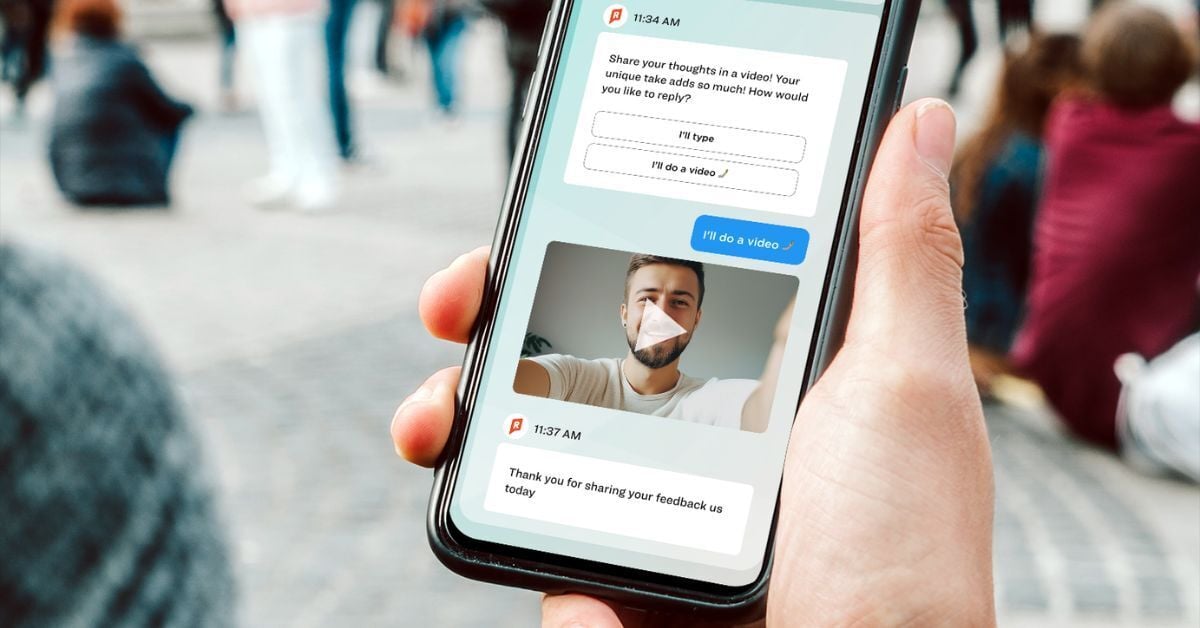
For various reasons, some CMOs are hesitant to engage consumers in research at this time. But as Gartner’s Frances Russell points out in a recent article, many marketers who have deployed surveys specifically about COVID-19's impact on customer experience have seen actionable responses. We see this in our own research as well: Not only are people answering our conversational chat surveys, they are also providing detailed selfie videos, which is really helping us and our clients and partners understand the human impact of the pandemic.
The bottom line is that fresh data and accurate insights have never been more important. In these uncharted territories, relying on instincts alone is dangerous. If you haven’t reached out to your customers in the past month, now’s the time to do so.
While it’s important to recognize the uncertainties and fears surrounding COVID-19, don’t let this crisis paralyze you. Enabling your team to really understand your customers and act based on timely insights is key to navigating your way through this crisis both for your marketing team and your company.
A version of this article first appeared on Entrepreneur.com on May 10, 2020. Copyright 2020 by Entrepreneur Media, Inc. All rights reserved.