



How to grow your insights team and increase its strategic impact
Being customer-centric is a no-brainer today. But many market research leaders still find it hard to make the business case for growing their insights team.
Why is that? And, more importantly, what can insight leaders do to successfully convince executives to invest more in market research?
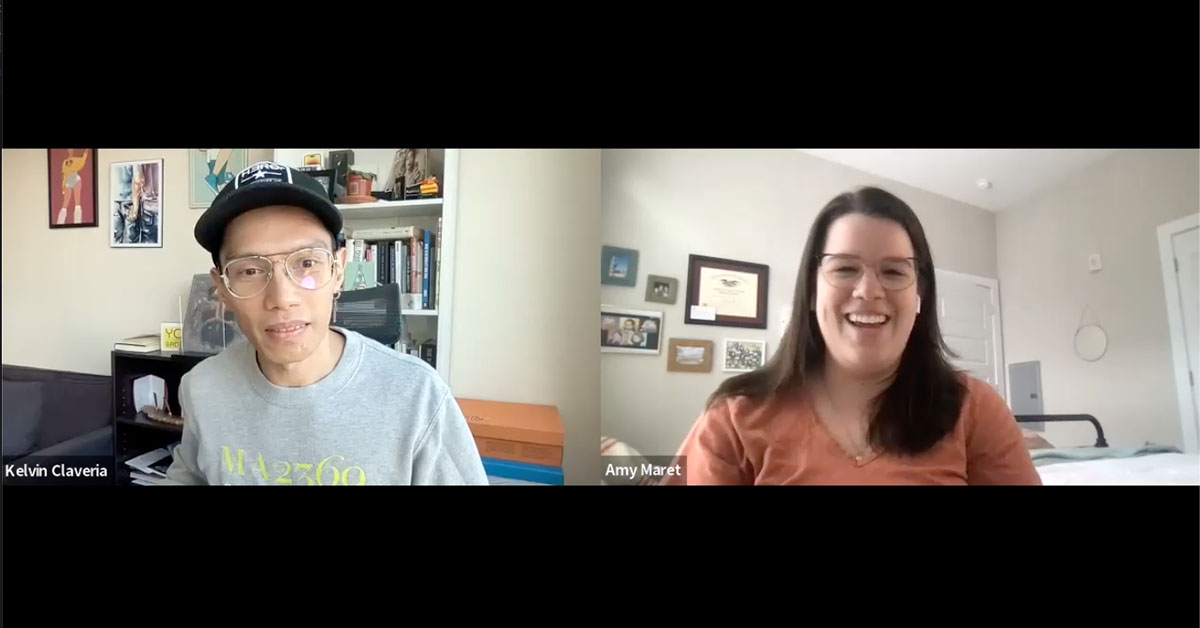
To get some answers, I recently invited Amy Maret, Manager of Insights and Thought Leadership at HubSpot, to share her perspective. When Amy started at HubSpot, she was the only full-time market researcher. Today, she has a team that’s responsible not just for research but also for helping infuse thought leadership in the company’s content marketing strategy.
My conversation with Amy was part of Outliers, an educational event series featuring some of the top market research leaders today.
Check out a recording below or scroll further for my key takeaways.
Start with a vision
Before Amy’s time, market research at HubSpot was set up as an internal agency that serviced the needs of different departments. Amy wanted to change that structure—and she said so during her interview.
Her vision was to make market research more self-directed, partnering with different business units to better understand HubSpot’s growing customer base.
To make the transformation, Amy had to help the business re-imagine what market research can do. Counterintuitively, this required saying no frequently, including to projects that seemed like obvious tasks for insights. Amy had to decline requests for new surveys, for example, when it seemed to her that stakeholders could get answers to their questions using existing data such as product usage.
By establishing that the insights team wasn’t just there to push out surveys, Amy was able to free up her time and focus to tackle juicier—and more important—business problems.
Don’t skip the fundamentals
One of the key things that Amy had to do in her initial days at HubSpot was to establish checklists, process documentation and file-naming conventions. These may sound super basic, but they were critical to laying the right foundation for the eventual growth of her team. They ensured the proper execution of projects, allowing her and her collaborators to hit agreed-upon timelines and budget.
If you're a market research team of one, establishing processes and documentation early can make onboarding easier later when you’re ready for new team members.
Be proactive and exceed expectations
Early in her time at HubSpot, Amy invested right away in establishing and fostering relationships throughout the business. This required talking to leaders who weren’t using or collaborating with market research yet.
“I wanted to spread our wings a little bit and get into some other parts of the organization,” Amy says. “I wanted to try to figure out what opportunities there were for the research team that weren't immediately surface to us all the time…I wanted to come in and be a strategic partner to people.”
Today, Amy is connected to everyone from product marketing to brand to go-to-market teams at HubSpot.
To help other teams see how insights can help them, Amy aims to deliver more than what stakeholders are asking for. When designing surveys, for example, she makes sure the basic questions are covered, but she also adds additional questions that may uncover interesting insights. For example, she might ask participants about a related pain points or a “big picture” question. She then put these insights together and share them internally.
Sometimes these insights challenge widely held assumptions about HubSpot customers and may, therefore, ruffle some feathers. But that’s exactly the point.
Surfacing insights that stakeholders aren’t asking for helps build the reputation of Amy’s team, while helping teams in the organization to be more customer-centric as well.
Track your impact
To be able to secure additional headcount or unlock more resources, you need to be able to demonstrate market research ROI. It’s that simple.
Amy points out that while attribution isn’t perfect, insight leaders need to start somewhere. At HubSpot, it could be as simple as asking current customers if they’ve made a buying decision based on a piece of research from the company.
Since Amy’s team is also responsible for original research that’s used for content marketing, Amy keeps an eye out for mentions of their research in other publications and keeps a record of them.
But of course, the ultimate goal is to tie market research activities to revenue and sales. For that, Amy works closely with her collaborators in the business. She asks them what metrics they are tracking, and she aligns with those KPIs.
At HubSpot, the insights team also helps influence bigger, multi-department projects like product repositioning. Amy doesn’t shy away from highlighting their contribution to these initiatives.
Tying insights to revenue and sales is not a perfect science, Amy admits, but by documenting both the small and the big wins, she’s able to make the case for more investments in market research
Hire the right people
Once you get the go-ahead for additional headcount, the next next step is to hire market researchers.
Amy says having a clear job description is key here—both for you as the hiring manager and the candidates.
Amy advice? Prioritize attitude over technical know-how.
“I also focus a lot on hiring for curiosity, potential, and passion,” Amy says. “It's a lot easier to teach someone the technical skills of how to do a specific type of research than to convince someone to care about something they don't care about.”
Finally, to have an effective team, hire for your weaknesses.
“Don’t try to hire your clone,” Amy offers. “I'm looking for people who think differently than I do, for people who approach problems differently than I do.”
With this approach, every new hire adds something unique and valuable to the team as opposed to simply replicating what the team already has, Amy says.
More resources for growing your market research team
If you enjoyed Amy's thoughts from this conversation, check out her perspective on market research trends or check out HubSpot's research on the Crisis of Disconnection.
For more news and perspectives on the future of market research, check out our Outliers series or subscribe to our blog below. 👇